
By submitting you consent to receive service-related texts from Drastic Drainage. Reply STOP to opt out. Msg & data rates may apply. Consent not required to book service.
Useful Links
Here is what cesspool services in Fort Salonga looks like once the work is done. When your cesspool is working the way it should, you stop thinking about it, and that’s exactly the point. No slow drains. No unexplained odors drifting through the yard. No wet patches showing up near the leaching pool after a hard rain. For Fort Salonga homeowners, that peace of mind carries more weight than it does in most places.
Here’s why: the majority of homes in this hamlet were built around 1964. Neighborhoods like Highview Estates, the “T section” off Fort Salonga Road. Were developed in the late 1960s and early 1970s. The cesspools that went in alongside those homes were designed to last 20 to 40 years. Many are now at 55 to 60 years of continuous service with little to no documented maintenance. A properly serviced system doesn’t just function better. It protects the financial value of a home that, in this market, is likely worth well over a million dollars.
There’s also something more direct at stake here. Most Fort Salonga properties run on private wells drawing from the same glacial aquifer that cesspool systems discharge into. When a system is overdue or failing, the risk isn’t just a backed-up drain. It’s effluent reaching the groundwater your household is drinking. The state recognized this specifically, water infrastructure at the Wayne Court well field right here in Fort Salonga received dedicated state funding because groundwater quality in this hamlet is a documented, active concern. Keeping your system maintained is the most direct thing you can do about that.
The honest answer is that most homeowners can’t tell the difference without a professional assessment, and that’s not a criticism, it’s just how these systems work. A cesspool can be 90% full with no visible symptoms at all. By the time you notice slow drains, gurgling pipes, or a soft wet area in the yard, the system is already in significant distress.
In Fort Salonga specifically, the concern is amplified by the age of the housing stock. If your home was built in the 1960s or early 1970s, which describes most of Highview Estates and much of the hamlet, your cesspool is operating well past its original design life of 20 to 40 years. That doesn’t mean it’s failed, but it does mean the margin for error is thin. A video pipe inspection can tell you exactly what’s happening underground before anything becomes an emergency. It’s the most direct way to know whether you’re looking at a pump-out, a repair, or a more significant conversation about replacement.
A cesspool receives all household waste directly, solids settle at the bottom, and liquid effluent seeps out through the walls and bottom into the surrounding soil. A leaching pool, also called a drywell or overflow pool, is a secondary chamber that receives the overflow from the cesspool and allows it to disperse further into the ground. Many Long Island homes, especially those built in the 1960s and 1970s, have both.
Whether your property has one or both depends on when it was built, how large the household is, and how the original system was designed. In Fort Salonga, where homes sit on larger lots with more soil area available, it’s common to find multi-chamber systems. The leaching pool is often the first component to show signs of stress, because it handles the overflow load and can become saturated over time, especially in areas with clay-heavy North Shore soils that don’t drain as freely as the sandy South Shore soils do. If your system hasn’t been fully assessed in years, it’s worth knowing what you actually have underground.
Fort Salonga does not have municipal sewer service. Like the vast majority of Suffolk County, roughly 75% of homes countywide, every single-family home in the hamlet relies on a private on-site system. There’s no public sewer connection to fall back on if your cesspool fails. That makes routine maintenance more important here than it would be in an area with sewer access, because when the system goes down, the only solution is a service call.
This is worth understanding clearly before a problem develops. A cesspool backup that gets addressed quickly, a pump-out that costs a few hundred dollars, becomes a very different situation if it overflows into a finished basement or saturates the soil around your foundation. Remediation for a sewage backup runs $3,000 to $7,000 on average, before any structural repairs are factored in. Routine maintenance isn’t just about the system. It’s about protecting the rest of the property.
In most cases, yes. Suffolk County real estate transactions commonly require cesspool inspection and certification documentation as part of the transfer process, and many buyers’ attorneys will request it before the deal moves forward. If you’re listing a home in Fort Salonga, it’s worth getting this handled early, not because the inspection itself takes long, but because if a problem is found, you want time to address it before it becomes a negotiating issue or a reason for the buyer to walk.
Given that homes in Fort Salonga are regularly transacting above $1,000,000 and moving in an average of 28 days, there isn’t much room for delays caused by a cesspool that wasn’t looked at before listing. We provide the detailed inspections and written documentation that Suffolk County requires for property transfers. We’re familiar with what both the Town of Huntington and Town of Smithtown require depending on which side of Fort Salonga your property sits on, and we can work around your closing timeline.
Yes, and the program has recently gotten significantly better. Under Suffolk County’s 2019 cesspool ban, any failed conventional cesspool must now be replaced with an Innovative/Alternative (IA) advanced treatment system, these systems reduce nitrogen in wastewater by up to 70%, which matters a great deal in Fort Salonga, where private wells and the North Shore aquifer are directly connected to cesspool system performance.
The 2024 Suffolk Water Quality Restoration Act increased the county’s reimbursement program from 50% up to a maximum of $10,000, to 75% of the project cost up to a maximum of $25,000. When combined with available state programs, some qualifying homeowners have seen combined funding reach up to $30,000 toward a replacement system. Eligibility requirements apply, the property generally needs to be owner-occupied, and the system needs to meet certain criteria. Before you assume a replacement is out of reach financially, it’s worth having a conversation about what your specific property qualifies for. We can walk you through that before any work is proposed.
The general guidance for Long Island cesspools is every one to three years, depending on household size and system capacity. A two-person household with a larger system might go three years without issue. A family of five in a home with a 500-gallon cesspool might need service closer to every 12 to 18 months. Most Long Island cesspools hold between 500 and 1,500 gallons, so the math shifts considerably depending on what you have.
For Fort Salonga specifically, there are a few factors that push toward the more frequent end of that range. The clay-influenced North Shore soils can reduce the absorption rate of leaching pools over time, meaning effluent doesn’t disperse as freely as it would in sandier South Shore soils, and the system fills more quickly as a result. Older systems in neighborhoods like Highview Estates may also have reduced effective capacity simply due to decades of accumulated solids. Suffolk County now also requires that systems be inspected every three years and that inspection reports be submitted to the county, so even if your system seems fine, staying on a regular service schedule keeps you compliant and keeps the documentation current.
Free, no-obligation estimates on cesspool, sewer, and drain work.
We get there quickly. No waiting days for a callback.
Backups don’t wait for business hours. Neither do we.
Fully licensed and insured across Long Island.
Up-to-date trucks and tools for cleaner, faster jobs.
Straight quotes, no surprises on the bill.
Hear from Our Customers

Here is what cesspool services in Fort Salonga looks like once the work is done. When your cesspool is working the way it should, you stop thinking about it, and that’s exactly the point. No slow drains. No unexplained odors drifting through the yard. No wet patches showing up near the leaching pool after a hard rain. For Fort Salonga homeowners, that peace of mind carries more weight than it does in most places.
Here’s why: the majority of homes in this hamlet were built around 1964. Neighborhoods like Highview Estates, the “T section” off Fort Salonga Road. Were developed in the late 1960s and early 1970s. The cesspools that went in alongside those homes were designed to last 20 to 40 years. Many are now at 55 to 60 years of continuous service with little to no documented maintenance. A properly serviced system doesn’t just function better. It protects the financial value of a home that, in this market, is likely worth well over a million dollars.
There’s also something more direct at stake here. Most Fort Salonga properties run on private wells drawing from the same glacial aquifer that cesspool systems discharge into. When a system is overdue or failing, the risk isn’t just a backed-up drain. It’s effluent reaching the groundwater your household is drinking. The state recognized this specifically, water infrastructure at the Wayne Court well field right here in Fort Salonga received dedicated state funding because groundwater quality in this hamlet is a documented, active concern. Keeping your system maintained is the most direct thing you can do about that.
We’ve been doing this work across Nassau and Suffolk Counties for over 30 years. That’s not a number to fill a headline. It means we’ve worked on systems in Fort Salonga and communities throughout the region through every phase of their lifecycle. We know what a 1960s cesspool looks like when it’s been well-maintained and what it looks like when it hasn’t. We know the difference between a system that needs a pump-out and one that’s quietly heading toward failure.
We’re licensed (License #LW-63684), insured, and bonded. Fort Salonga straddles the Towns of Huntington and Smithtown, and cesspool work requiring permits has to go through the right municipality depending on exactly where your property sits. We know which is which. That kind of local knowledge isn’t something you pick up from a service area map. It comes from actually doing this work here, for a long time, for real people with real deadlines.
Free estimates before any work begins. A real person answers when you call.
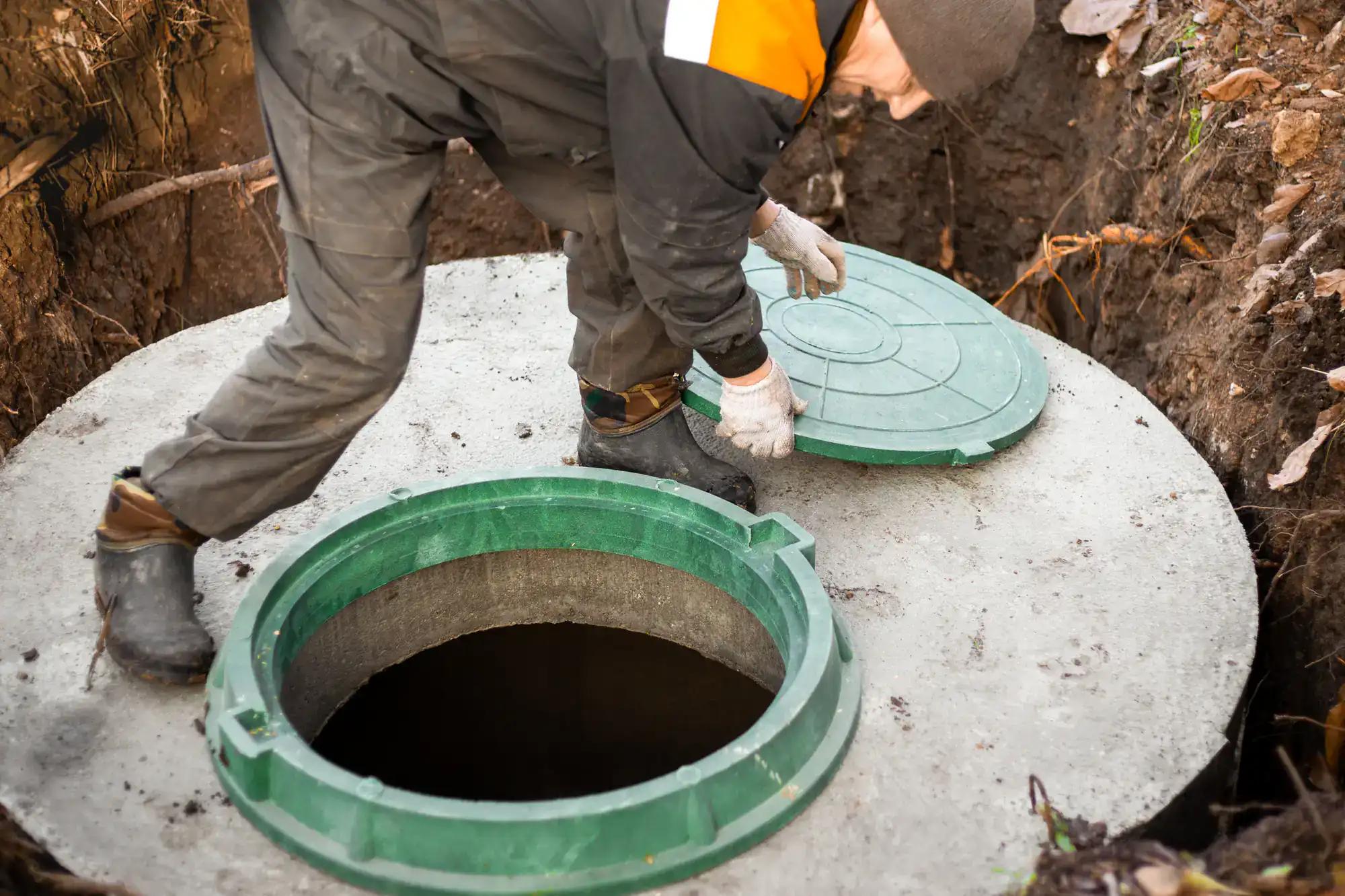
It starts with a call. When you reach out to us, you talk to a real person, not an answering service, not a form submission that sits in a queue. We ask a few straightforward questions about what you’re seeing, when you last had service, and what the property looks like. From there, we give you a real timeframe and a free estimate before anyone sets foot on your lawn.
When we arrive, we don’t assume. Fort Salonga’s North Shore terrain is hilly and irregular, and the soil composition here, including clay-heavy layers that reduce drainage capacity over time, affects how a cesspool performs and how we approach the work. Many older homes in the hamlet have no visible access point above the cesspool at all. If that’s your situation, we locate the system first using professional methods, so we’re not guessing and you’re not watching us dig up half your yard.
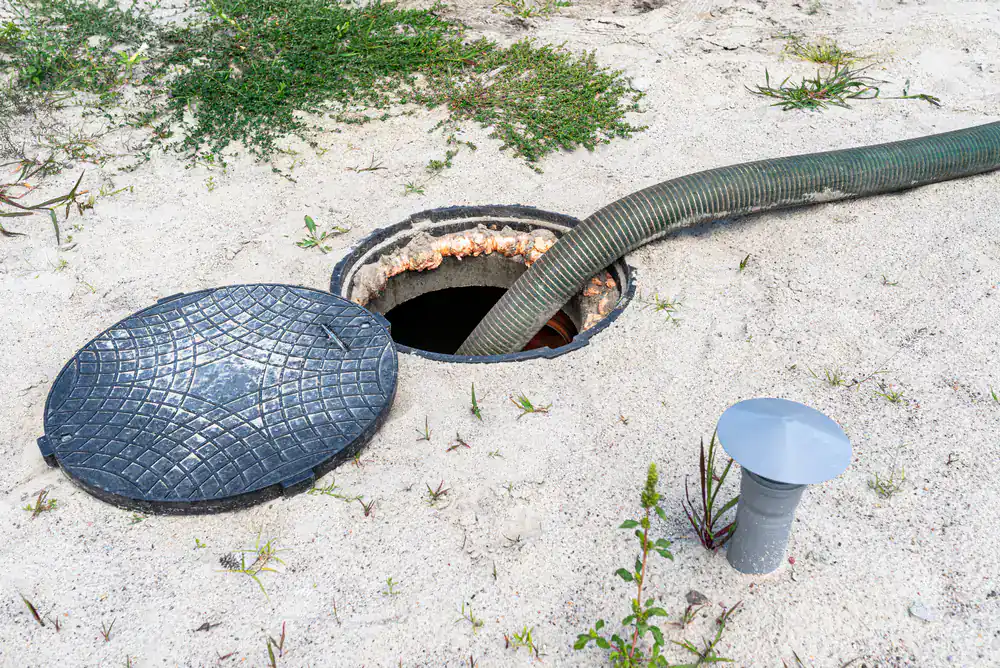
If the job calls for a video pipe inspection before any excavation, we do that. A waterproof camera goes underground and shows us exactly what’s happening, a cracked distribution box, a collapsed leaching pool wall, a line with root intrusion. You see what we see. Then we pump, repair, or install based on what’s actually there, not what’s easiest to assume.
If your property is in the Huntington portion of Fort Salonga, permits go through the Town of Huntington. If you’re on the Smithtown side, they go through Smithtown. We handle that routing correctly, every time.
Ready to get started?
We handle the full scope of cesspool and drain work, routine pump-outs, leaching pool service, video pipe inspections, cesspool location, drywell cleaning, house trap replacements, main sewage line cleaning and replacement, storm drain cleaning, and full system installations. For Fort Salonga specifically, a few of these deserve a closer look.
Real estate certifications are a significant part of what we do here. With median list prices around $1,085,000 and homes moving in an average of 28 days, sellers need accurate cesspool documentation before they can close, and buyers’ attorneys often require inspection records before the deal moves forward. We provide the detailed inspections and written documentation that Suffolk County real estate transactions require, on the timeline your closing actually demands.
For homeowners whose cesspools have reached the end of their usable life, Suffolk County’s 2019 ban means a failed system cannot be replaced with another conventional cesspool. It has to be replaced with an Innovative/Alternative (IA) advanced treatment system. The 2024 Suffolk Water Quality Restoration Act now offers qualifying homeowners reimbursement of up to 75% of the project cost, with a maximum of $25,000. We can walk you through what your property qualifies for before any work begins, so you’re not leaving money on the table when a replacement becomes necessary.
Emergency cesspool service is available around the clock, including after the kind of heavy rain events that saturate Fort Salonga’s North Shore soils and push a marginal system into failure overnight.
