
By submitting you consent to receive service-related texts from Drastic Drainage. Reply STOP to opt out. Msg & data rates may apply. Consent not required to book service.
Useful Links
Most Middle Island homeowners don’t think about their cesspool until something goes wrong. The yard smells off. The drains are slow. A wet patch shows up near the house. By that point, the system has usually been struggling for a while — and in a community built on coarse, sandy Pine Barrens soil, that struggle doesn’t stay underground for long. The same porosity that keeps your yard from flooding after a storm is the same quality that moves cesspool effluent straight toward the groundwater table with almost no filtration in between.
When your system is properly maintained, that risk disappears. You’re not guessing whether something is wrong. You’re not dealing with a backup that turns a $300 pump-out into a $3,000 cleanup. You know the condition of your system, you know when it was last serviced, and you have documentation to prove it — which matters more than most homeowners realize until they’re trying to close on a sale.
Middle Island is a community of long-term homeowners. A lot of the housing stock here dates back to the 1950s, 1960s, and 1970s, and the cesspools that came with those homes have been underground ever since. A maintained system runs quietly in the background. An ignored one becomes the most expensive problem on the property.
The sandy, coarse soil that defines Middle Island’s Pine Barrens geology drains water quickly — which sounds like a good thing until you think about what else it drains quickly. In clay-heavy soils, contaminants from a failing or overfull cesspool are slowed and partially filtered before they reach the groundwater. In the porous glacial outwash soil that underlies Middle Island, that filtration buffer barely exists. Effluent from an overdue or failing system moves toward the aquifer faster here than in most other parts of Suffolk County.
This is why the recommended service interval — typically every one to three years depending on household size and system capacity — matters more in Middle Island than it might in a community with heavier soil. It’s also why a system that seems to be “working fine” based on drain speed alone can already be contributing nitrogen to the groundwater beneath your property. The Carmans River, which begins its headwaters at Cathedral Pines County Park right here in Middle Island, is a nitrogen-priority waterway for exactly this reason. Regular cesspool maintenance is the most direct thing a Middle Island homeowner can do to protect both their property and that waterway.
Honestly, if you don’t have paperwork and you’ve never had it done yourself, there’s a reasonable chance it hasn’t been serviced in a very long time — or possibly ever under your ownership. That’s not unusual in Middle Island. A significant portion of the hamlet’s housing stock was built in the 1950s, 1960s, and 1970s, and many of those homes have changed hands multiple times without any formal cesspool service documentation passing between owners.
The first step is finding the system. Homes built before 1970 in Middle Island frequently have cesspools with no visible access cover and no records of where they were installed. We have the equipment to locate those systems before any work begins. Once it’s located and accessed, a visual inspection and pump-out will tell you what you’re working with — whether the walls are intact, whether the leaching rings are still functioning, and whether the system is anywhere near the end of its service life. From there, you’ll have a documented baseline and a real sense of what ongoing maintenance should look like going forward.
A cesspool emergency is any situation where the system has backed up into the home, sewage is surfacing in the yard, or toilets and drains have stopped functioning entirely. These aren’t situations you wait out until morning — sewage in a basement or surfacing in a yard creates health risks and, in some cases, legal liability if it’s reaching a neighboring property or a drainage area. In Middle Island, where the soil moves contaminants quickly and the Carmans River watershed is close by, a surfacing backup has environmental implications beyond just the property line.
We operate 24-hour emergency cesspool service. When you call (631) 422-4122, a real person answers — not a voicemail, not an answering service. You’ll get a real response time and a technician dispatched. One thing to keep in mind: Middle Island’s sandy Pine Barrens soil saturates faster than it looks during sustained rain events, and a system that’s been marginal for a while can tip into active failure quickly when the ground is wet. If you’ve been noticing slow drains or occasional odors, don’t wait for the emergency — address it before the next nor’easter makes the decision for you.
Free, no-obligation estimates on cesspool, sewer, and drain work.
We get there quickly. No waiting days for a callback.
Backups don’t wait for business hours. Neither do we.
Fully licensed and insured across Long Island.
Up-to-date trucks and tools for cleaner, faster jobs.
Straight quotes, no surprises on the bill.
Hear from Our Customers
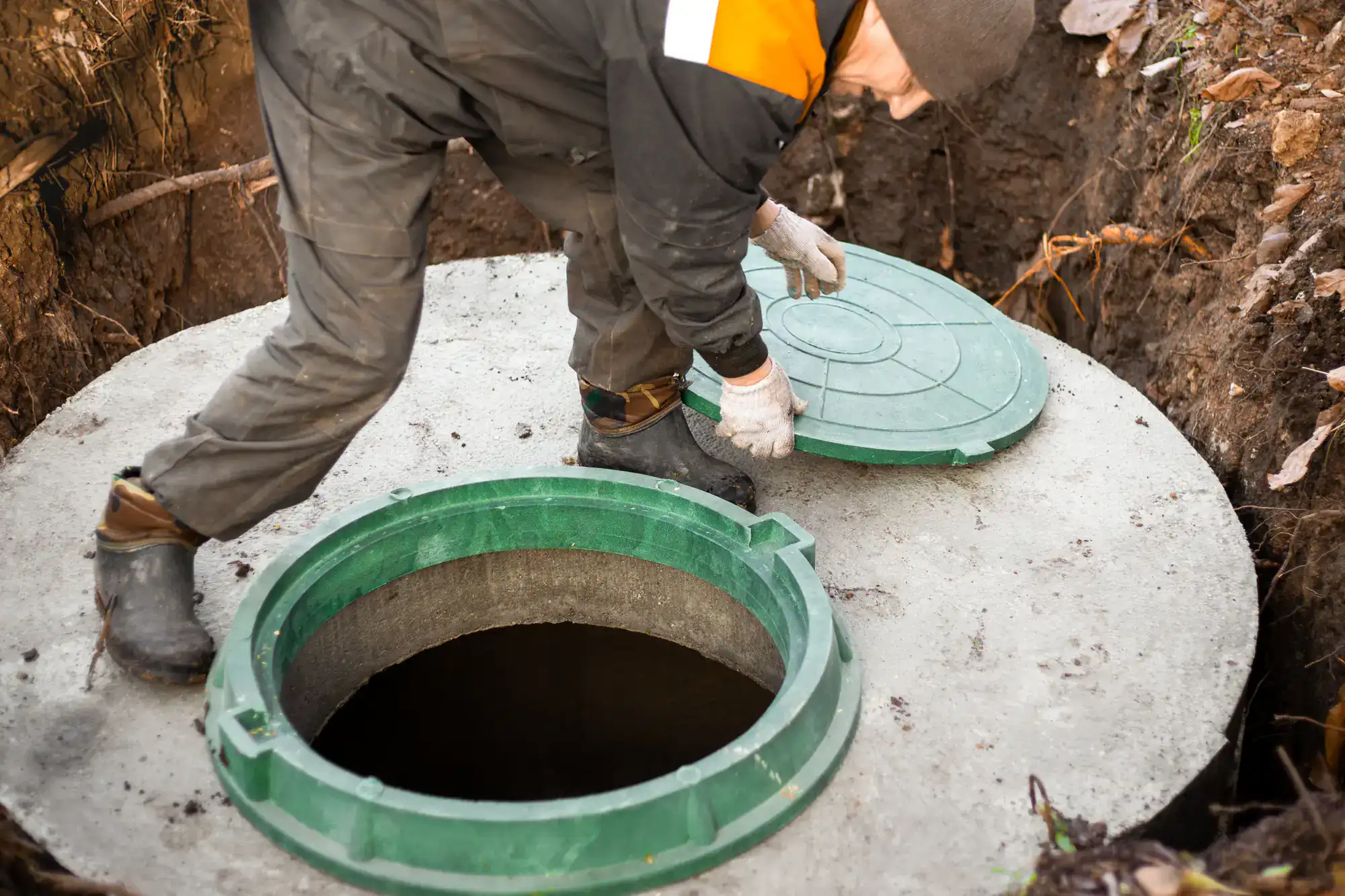
Most Middle Island homeowners don’t think about their cesspool until something goes wrong. The yard smells off. The drains are slow. A wet patch shows up near the house. By that point, the system has usually been struggling for a while — and in a community built on coarse, sandy Pine Barrens soil, that struggle doesn’t stay underground for long. The same porosity that keeps your yard from flooding after a storm is the same quality that moves cesspool effluent straight toward the groundwater table with almost no filtration in between.
When your system is properly maintained, that risk disappears. You’re not guessing whether something is wrong. You’re not dealing with a backup that turns a $300 pump-out into a $3,000 cleanup. You know the condition of your system, you know when it was last serviced, and you have documentation to prove it — which matters more than most homeowners realize until they’re trying to close on a sale.
Middle Island is a community of long-term homeowners. A lot of the housing stock here dates back to the 1950s, 1960s, and 1970s, and the cesspools that came with those homes have been underground ever since. A maintained system runs quietly in the background. An ignored one becomes the most expensive problem on the property.
We’ve been servicing cesspools and drainage systems across Nassau and Suffolk Counties for over 30 years. That’s not a number meant to impress — it’s context. In three decades of working in central Brookhaven, we’ve seen what aging systems in Middle Island actually look like: cracked walls, root intrusion from decades of tree growth, leaching rings that stopped functioning years ago, and systems installed in locations nobody ever documented. No maps, no records, sometimes no visible cover.
We’re licensed (License #LW-63684), insured, and bonded. When you call, a real person picks up — not an answering service. Estimates are free and given before any work begins, so the number you hear on the phone is the number you pay. For a community where the Carmans River headwaters run through Cathedral Pines County Park just up the road, proper cesspool service isn’t a minor household task. It’s environmental stewardship that starts in your own backyard.
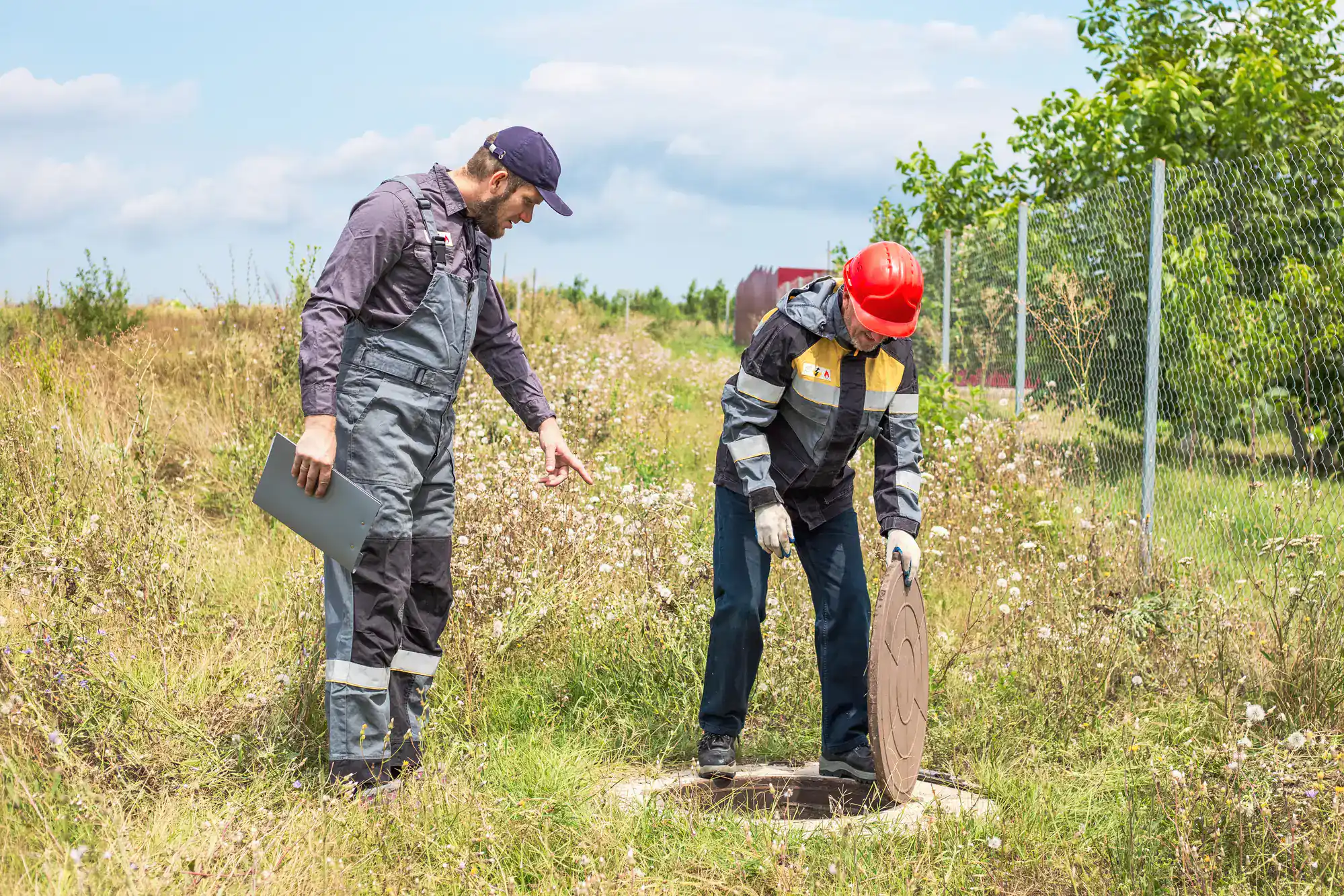
It starts with a call. You describe what you’re seeing — slow drains, an odor, a soggy patch in the yard, or nothing at all because you’re just overdue — and we give you a real timeframe and a straight answer on what to expect. No vague “we’ll get someone out there” without a window. A real person, a real time.
When our crew arrives, the first step is locating and accessing the system. In Middle Island, this step alone is often more involved than homeowners expect. Homes built before 1970 frequently have cesspools with no visible access point and no documentation of where they were installed. We have the equipment and the experience to locate systems that other companies would walk away from. If the situation warrants it, a waterproof camera goes in before anything else — giving a clear picture of what’s happening underground before a single shovel touches the ground.
From there, the system is pumped, inspected, and assessed. You’ll hear what was found, what condition the system is in, and what — if anything — needs attention. If you’re in the process of selling your home, the inspection documentation required for a property transfer in Suffolk County is handled in-house. No second company, no extra scheduling. When the job is done, you know exactly what was done and why.

Ready to get started?
We handle the full scope of cesspool and drainage work — not just the routine pump-out, but everything that tends to surface when you’re dealing with systems that have been in the ground since the Kennedy administration. Cesspool cleaning and pumping, cesspool installation, leaching pool service, drywell cleaning, house trap replacements, main sewage line cleaning and replacement, storm drain cleaning, video pipe inspection, and cesspool location are all handled directly.
The cesspool location service is worth calling out specifically for Middle Island. A large share of the hamlet’s older homes have systems with no documented location — no permit records, no visible covers, no indication of where to start. We locate those systems before any work begins, which is the only responsible way to approach a property with no service history.
Real estate certifications are also handled in-house. Suffolk County requires documentation of cesspool condition for property transfers, and with Middle Island’s median homeowner age sitting well above the state average, a meaningful number of residents are approaching the decision to sell. That documentation needs to be accurate, complete, and done by a licensed operator. We provide exactly that. And if your system has failed and requires replacement under Suffolk County’s post-2019 rules — meaning an Innovative/Alternative system rather than a conventional cesspool — we can walk you through what that involves, including the county grant program that can offset a significant portion of the cost.
