
By submitting you consent to receive service-related texts from Drastic Drainage. Reply STOP to opt out. Msg & data rates may apply. Consent not required to book service.
Useful Links
When a cesspool is working the way it should, you stop thinking about it. No slow drains. No smell drifting through the yard on a warm afternoon. No wet patch showing up in the grass after a rainstorm. That’s the baseline — and it’s exactly what a properly serviced system delivers.
For North Babylon homeowners specifically, the stakes are a little higher than most people realize. The housing stock here was built during a single concentrated decade, which means the cesspools were all installed around the same time and are all aging on the same timeline. A system that was designed to last 20 to 40 years and was put in the ground in 1958 is now 67 years old. It may still be functioning, but functioning and healthy are two different things. Getting ahead of it — before a backup forces your hand — is almost always cheaper and less disruptive than waiting.
There’s also the soil to consider. North Babylon sits on glacial outwash plains, which means sandy, fast-draining ground beneath every yard. That sounds like a good thing for a cesspool, but fast drainage in sandy soil also means contaminants move quickly toward the groundwater. Regular maintenance isn’t just about protecting your home — in this part of Suffolk County, it’s about protecting the water supply that every household depends on.
The signs overlap enough that it’s hard to tell from the surface — which is exactly why guessing isn’t a great strategy with a system this old. Slow drains, gurgling pipes, a persistent odor in the yard, or a soggy patch of grass that doesn’t dry out after rain are all warning signs. But a cesspool can also be operating near or past capacity with no visible symptoms at all, which is actually the more common situation in North Babylon where many systems haven’t been serviced in years.
The only reliable way to know what you’re dealing with is a proper inspection — and that means getting a camera underground before drawing any conclusions. A video pipe inspection will show whether the issue is a straightforward buildup that pumping will resolve, or whether there’s something structural happening that needs a different approach. For a system that’s been in the ground since the 1950s or 1960s, that distinction matters a lot, because the difference between a pump-out and a system replacement is significant — both in cost and in what Suffolk County regulations now require.
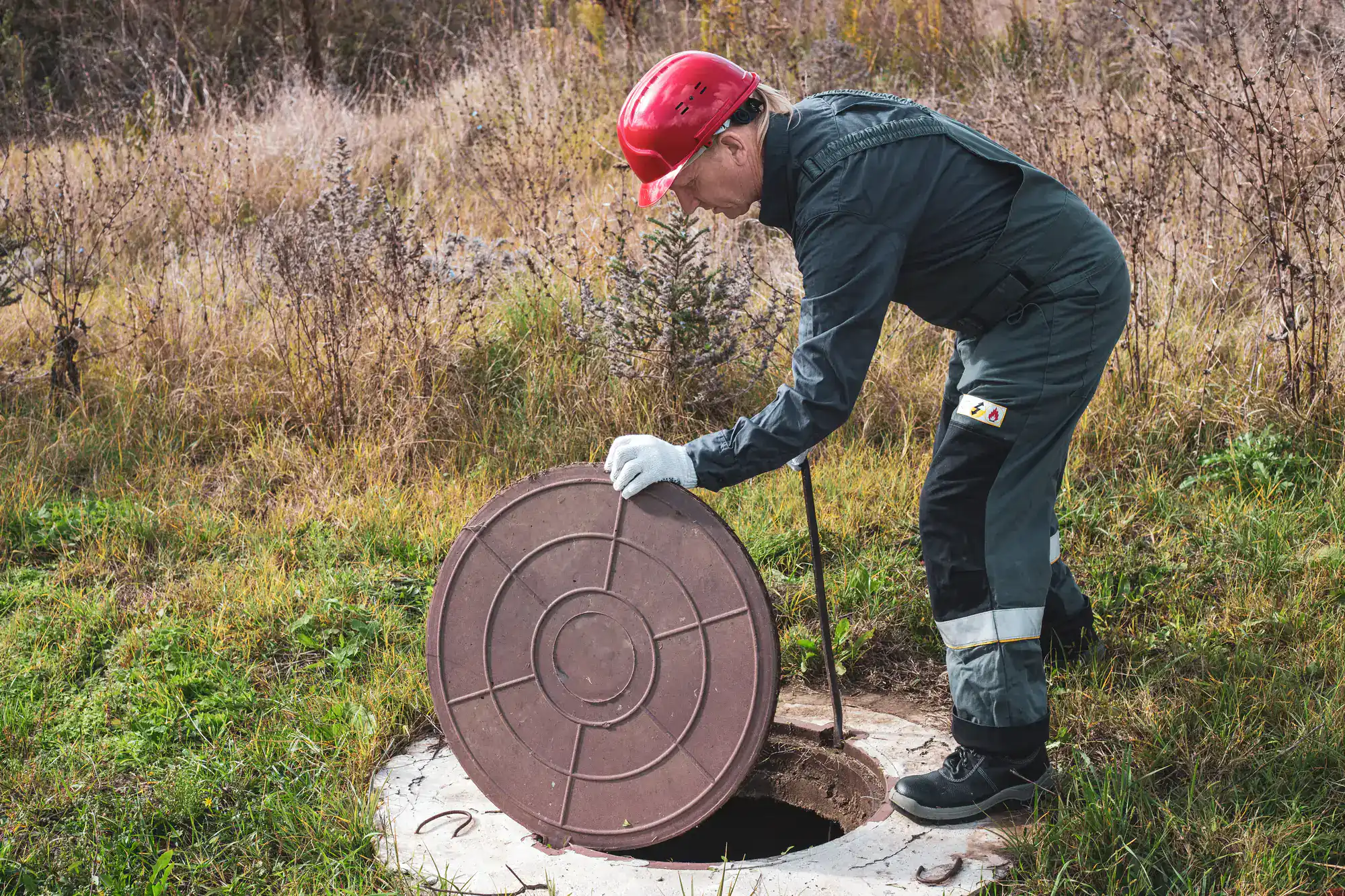
This is one of the most common situations in North Babylon, and it’s not a problem unique to your property. When these systems were installed during the postwar building boom, the concrete lids sat near grade. Over the following six decades, lawns got re-graded, gardens got planted, and soil accumulated — and a lot of those lids ended up buried under a foot or more of earth. Some homeowners have lived in their house for 20 years and have never seen the lid.
We specialize in locating cesspools with no visible access point. The process involves finding the system before any digging starts, so you’re not paying for exploratory excavation across half your yard. Once the system is located, if excavating the lid is necessary to access it, you’ll get a clear cost estimate for that work before anyone starts digging. The goal is no surprises — which is especially important when you’re already dealing with the stress of a system that may be overdue for service.
The general recommendation for most Long Island households is every one to three years, depending on household size and how much water the system handles on a daily basis. For a home built in the 1960s in North Babylon, that baseline matters — but so does the age of the system itself. A cesspool that’s been in the ground for 60-plus years and has never been formally inspected is a different conversation than one that’s been on a regular maintenance schedule.
If you don’t know when your system was last pumped — which is the case for a lot of long-term North Babylon homeowners who bought their home from someone else — the right starting point is an inspection, not just a pump-out. Understanding the current condition of the system tells you how often it actually needs service, whether there are any early warning signs worth monitoring, and whether anything needs attention now versus in a year or two. Suffolk County also requires systems to be inspected and reported on every three years, so staying current keeps you in compliance as well.
Free, no-obligation estimates on cesspool, sewer, and drain work.
We get there quickly. No waiting days for a callback.
Backups don’t wait for business hours. Neither do we.
Fully licensed and insured across Long Island.
Up-to-date trucks and tools for cleaner, faster jobs.
Straight quotes, no surprises on the bill.
Hear from Our Customers
When a cesspool is working the way it should, you stop thinking about it. No slow drains. No smell drifting through the yard on a warm afternoon. No wet patch showing up in the grass after a rainstorm. That’s the baseline — and it’s exactly what a properly serviced system delivers.
For North Babylon homeowners specifically, the stakes are a little higher than most people realize. The housing stock here was built during a single concentrated decade, which means the cesspools were all installed around the same time and are all aging on the same timeline. A system that was designed to last 20 to 40 years and was put in the ground in 1958 is now 67 years old. It may still be functioning, but functioning and healthy are two different things. Getting ahead of it — before a backup forces your hand — is almost always cheaper and less disruptive than waiting.
There’s also the soil to consider. North Babylon sits on glacial outwash plains, which means sandy, fast-draining ground beneath every yard. That sounds like a good thing for a cesspool, but fast drainage in sandy soil also means contaminants move quickly toward the groundwater. Regular maintenance isn’t just about protecting your home — in this part of Suffolk County, it’s about protecting the water supply that every household depends on.
We’ve been doing this work in western Suffolk County for over 30 years. That’s not a number pulled from a marketing brief — it’s the length of time spent learning how postwar cesspools behave in South Shore soil, how water tables shift during nor’easters along this stretch of Long Island, and what a 1960s concrete block system looks like when it’s starting to go.
We’re based in West Babylon, which puts us right next door to North Babylon — same Town of Babylon, same roads, same housing stock, same conditions. When our crew pulls up to a home near Deer Park Avenue or off Phelps Lane, we’re not orienting ourselves to a new area. We’ve been here.
License number LW-63684. Fully insured and bonded. Free estimates before any work begins. Named technicians — Mike, Lucas, George — who show up, explain what they’re seeing, and don’t disappear after the truck leaves. That’s the standard every job is held to.
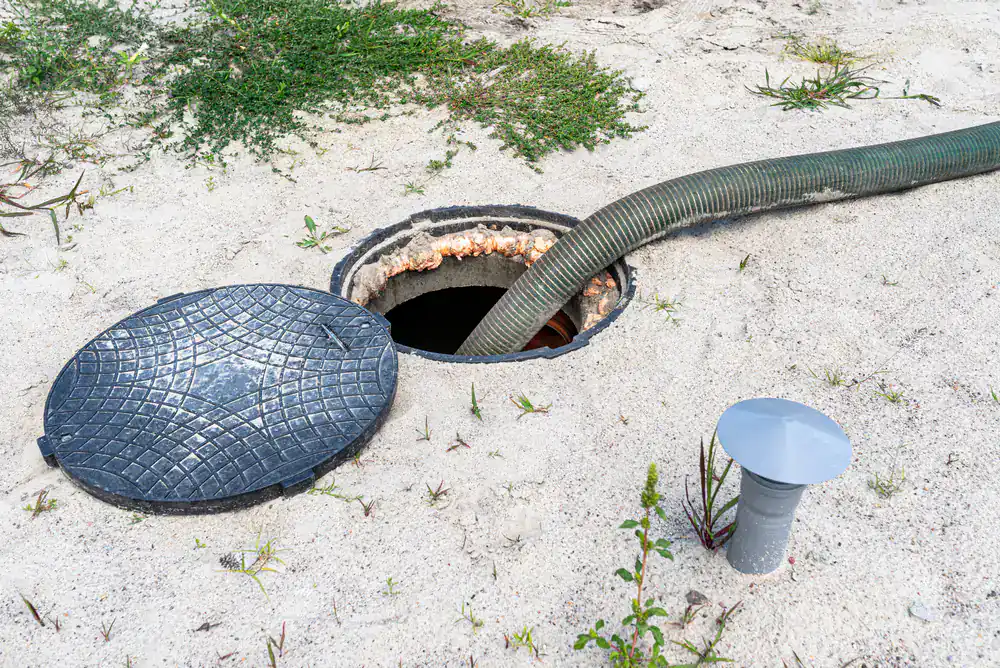
It starts with a phone call — and a real person picks up. Whether it’s a planned maintenance visit or a 2 AM situation with toilets backing up, someone answers and gives you an actual timeframe. Not a callback window. Not a form submission. A time.
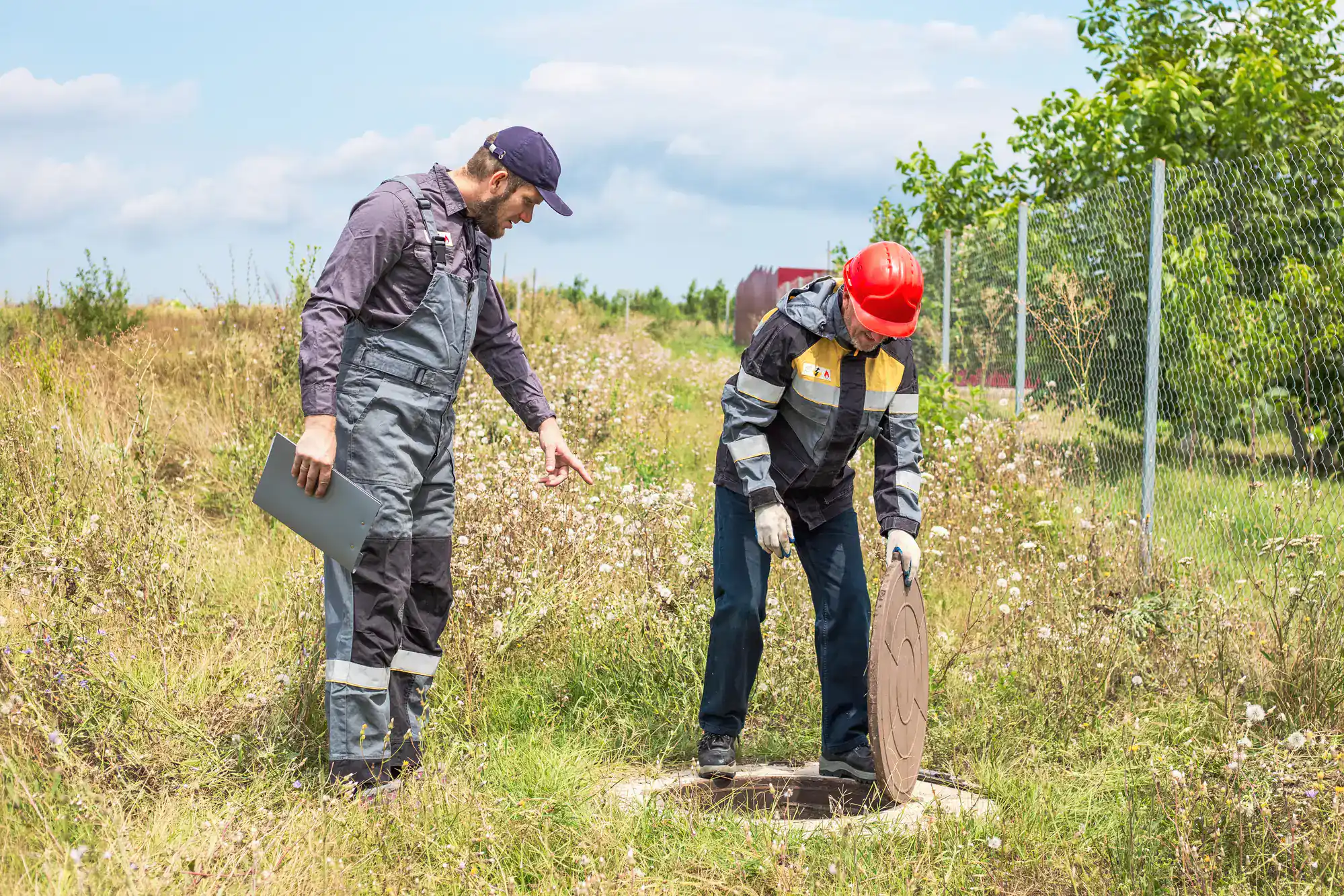
When our crew arrives, the first step is locating the system if there’s no visible access point. In North Babylon, this is more common than people expect. Sixty-plus years of lawn maintenance, re-grading, garden beds, and soil accumulation have buried a lot of cesspool lids under a foot or more of earth. We specialize in finding systems with no visible cover — using proven locating methods before any unnecessary digging begins. If excavation is needed to access your lid, you’ll know what that costs before anyone picks up a shovel.
Once the system is accessible, a waterproof camera goes in before anything else happens. Video pipe inspection lets our crew see exactly what’s going on underground — whether it’s a straightforward pump-out, a blockage, early signs of structural wear, or something that needs a closer look. You get an honest picture of the system’s condition, not a guess. From there, the work gets done — pumping, cleaning, repairs, or whatever the assessment calls for — and you get a clear explanation of what was found and what, if anything, comes next. No vague recommendations, no pressure.
Ready to get started?
We handle the full scope of cesspool and drain work — which matters in a community where the systems are old enough to have multiple components all aging at the same time. Cesspool cleaning and pumping, cesspool installation, drywell cleaning, house trap replacements, main sewage line cleaning and replacement, storm drain cleaning, video pipe inspections, and cesspool location services are all handled in-house. One company, one call.
For North Babylon homeowners dealing with older systems, the cesspool and leaching pool often need to be looked at together. A cesspool that’s been pumped but has a saturated or structurally compromised leaching pool will keep showing the same symptoms. Getting both assessed at the same time saves time and avoids repeat service calls.
Real estate certifications are also part of what we provide. If you’re selling a home in North Babylon — where median sale prices are sitting around $600,000 — the cesspool inspection and documentation required for a property transfer is not something to hand off to whoever’s cheapest. It needs to be done correctly, and it needs to hold up at closing. We handle that with the same detail as any other job. And if your system is at the point where replacement is on the table, Suffolk County’s 2024 Water Quality Restoration Act now offers qualifying homeowners up to 75% reimbursement — or up to $25,000 — for approved system upgrades. That’s worth knowing before you make any decisions.
