By submitting you consent to receive service-related texts from Drastic Drainage. Reply STOP to opt out. Msg & data rates may apply. Consent not required to book service.
Useful Links
Close to 28% of homes in Patchogue were built before 1939. That’s a lot of underground infrastructure that’s been quietly doing its job — until it isn’t. When a cesspool that’s never been properly serviced finally gives out, you’re not looking at a pump-out. You’re looking at a backup, a mess, and a bill that could run anywhere from $3,000 to $7,000 before any structural repairs even enter the conversation. Staying ahead of that is exactly what regular cesspool maintenance is for.
Patchogue’s location on the South Shore adds a layer most homeowners don’t think about until after a storm. The sandy glacial soil under your property moves wastewater fast — straight toward groundwater, and from there, toward the Patchogue River and Great South Bay. A USGS study found nitrate levels in local wells reaching 40 mg/L, four times the EPA’s safe limit, traced directly to on-site wastewater systems in this watershed. What happens underground on your street has a measurable effect on the water this community has always depended on.
The good news is that most cesspool problems don’t start as emergencies. They start as slow drains, a faint smell in the yard, or a patch of unusually green grass near the tank. Catching those signs early — and having a licensed company that knows Patchogue’s Suffolk County systems handle the inspection — is what keeps a manageable maintenance call from turning into a full system failure.
Yes — and this is one of the most common misconceptions in Patchogue right now. The village’s sewer expansion project has been underway for years, and many homeowners in areas not yet connected have adopted a “wait and see” posture, assuming their cesspool is fine in the meantime. The problem is that a cesspool that’s been deprioritized while you wait for the sewer to reach your street is also a cesspool that may not have been serviced in years. Systems that are neglected during that waiting period are the ones most likely to fail before the sewer ever arrives.
The homes furthest from the current sewer expansion footprint — which includes much of East Patchogue and North Patchogue — may remain on cesspools for a decade or more. Routine maintenance every one to three years, depending on household size and system capacity, is what keeps those systems functional in the meantime. If your street is eventually connected, proper abandonment is required by village code within 90 days of notification — and that’s a licensed job regardless of the condition of the system.
The signs are often subtle at first. Slow drains in multiple fixtures at once — not just one sink, but the toilet, the shower, and the kitchen drain all moving sluggishly — is one of the clearest early indicators. A gurgling sound from your pipes after flushing, a sewage smell in the yard, or a patch of ground near the tank that stays unusually wet or green even during dry stretches are all worth taking seriously.
What makes this harder to judge in Patchogue specifically is the sandy soil. Because the glacial outwash plain drains quickly, a cesspool can appear to be functioning — water is moving — while actually being saturated and close to failure. The soil’s permeability masks the problem until it’s further along than it would be in denser soil conditions. A video camera inspection is the only way to know for certain what’s happening underground. It’s not an upsell — it’s the difference between a $300 pump-out and a $3,000-plus emergency remediation you didn’t see coming.
Under Chapter 353 of the Village of Patchogue Code, once your property is officially connected to the public sewer system, you have 90 days to properly abandon your existing cesspool. That means the system has to be pumped out completely, then filled with clean bank-run gravel and sand. It’s not something you can leave in place and ignore — the village has enforcement authority for homeowners who don’t comply after receiving official notice.
The abandonment work has to be done by a licensed cesspool professional. This isn’t a gray area. The county’s licensing requirements under Suffolk County Article VII apply, and the work needs to be documented. If you’re not sure whether your street is in the current sewer expansion footprint — the active $22 million Patchogue River Watershed project has been connecting homes in phases, with additional streets added under a $10 million grant expansion announced in 2023 — the village can confirm your status. Either way, when the time comes, we handle cesspool abandonment routinely and can walk you through what the process looks like for your specific property.
Free, no-obligation estimates on cesspool, sewer, and drain work.
We get there quickly. No waiting days for a callback.
Backups don’t wait for business hours. Neither do we.
Fully licensed and insured across Long Island.
Up-to-date trucks and tools for cleaner, faster jobs.
Straight quotes, no surprises on the bill.
Hear from Our Customers

Close to 28% of homes in Patchogue were built before 1939. That’s a lot of underground infrastructure that’s been quietly doing its job — until it isn’t. When a cesspool that’s never been properly serviced finally gives out, you’re not looking at a pump-out. You’re looking at a backup, a mess, and a bill that could run anywhere from $3,000 to $7,000 before any structural repairs even enter the conversation. Staying ahead of that is exactly what regular cesspool maintenance is for.
Patchogue’s location on the South Shore adds a layer most homeowners don’t think about until after a storm. The sandy glacial soil under your property moves wastewater fast — straight toward groundwater, and from there, toward the Patchogue River and Great South Bay. A USGS study found nitrate levels in local wells reaching 40 mg/L, four times the EPA’s safe limit, traced directly to on-site wastewater systems in this watershed. What happens underground on your street has a measurable effect on the water this community has always depended on.
The good news is that most cesspool problems don’t start as emergencies. They start as slow drains, a faint smell in the yard, or a patch of unusually green grass near the tank. Catching those signs early — and having a licensed company that knows Patchogue’s Suffolk County systems handle the inspection — is what keeps a manageable maintenance call from turning into a full system failure.
We’ve been working in Nassau and Suffolk Counties for over 30 years. That’s not a number on a banner — it’s familiarity with the specific soil conditions, drainage patterns, and regulatory requirements that define South Shore communities like Patchogue. The sandy glacial aquifer that sits beneath your home, the proximity to Great South Bay, the way a nor’easter can raise the water table overnight — this is the environment we work in every day.
We’re based in West Babylon, about 20 miles west along the South Shore, and hold Suffolk County License #LW-63684. We’re licensed, insured, and bonded — which matters more than most homeowners realize until they’re dealing with a permit issue or a county inspection. Every job comes with a free estimate before any work begins, and a real person answers the phone when you call. That last part sounds basic, but based on what customers have said in reviews, it’s rarer than it should be.
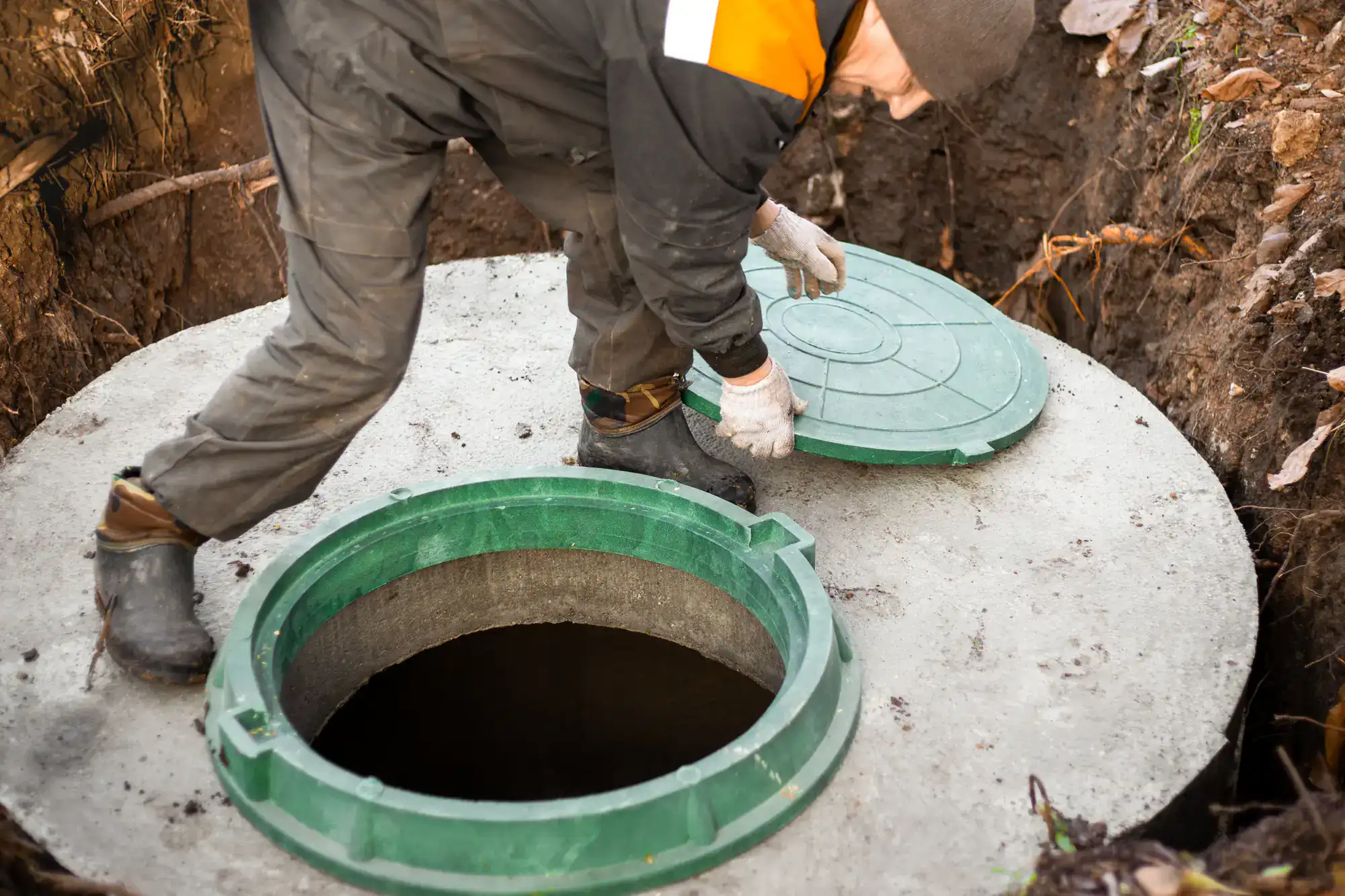
It starts with a phone call — and a real person picks up. You describe what you’re seeing or what you need, and from there, we’ll give you a free estimate and schedule a time that works. No vague windows, no answering service telling you someone will call back eventually.
When our crew arrives, the first step is assessment. For many Patchogue homes — especially the pre-war properties where the original cesspool may have no visible access point — that means locating the system first. We specialize in finding cesspools that have no obvious cover, whether they’ve been buried under decades of landscaping, a paved driveway, or a later addition to the house. Once the system is located and accessed, a waterproof video camera goes underground before any digging happens. That inspection tells our crew exactly what they’re dealing with — whether it’s a routine pump-out, a leaching pool that needs attention, a cracked line, or something more serious. You get a clear picture of what’s there and what it needs, not a guess.
If you’re in an area where the Village of Patchogue’s sewer expansion has reached your street, there’s an additional step: proper cesspool abandonment. Under the village code, once you’re connected to public sewer, your cesspool must be professionally decommissioned — pumped out, filled with clean gravel and sand — within 90 days. That’s a licensed job, and it’s one we handle routinely.

Ready to get started?
We cover the full range of cesspool and drainage services — routine pumping and cleaning, leaching pool service, video pipe inspection, cesspool location, drywell cleaning, house trap replacements, main sewage line cleaning and replacement, storm drain cleaning, and 24-hour emergency response. If your system needs it, this is one call, not three.
For Patchogue homeowners selling a home, we handle real estate certifications in-house. Suffolk County property transfers require detailed inspection documentation, and a missed or incomplete certification can hold up a closing. We provide the thorough, licensed inspection and paperwork that buyers’ attorneys and title companies expect — not a cursory check.
For homeowners whose cesspools are approaching the end of their functional life — and in Patchogue, where nearly a third of homes predate World War II, that’s a real and common situation — replacement now means an Innovative/Alternative (IA) advanced treatment system under Suffolk County’s 2019 cesspool ban. That’s a more involved project, but it’s also one that may qualify for significant county reimbursement under the 2024 Suffolk Water Quality Restoration Act, which expanded eligibility to cover up to 75% of project cost or $25,000. Our licensing and county registration make us a qualified partner for homeowners navigating that process.
Commercial properties along Patchogue’s Main Street corridor are also served — restaurants, bars, and hospitality businesses that face peak load every summer weekend need a cesspool company that understands commercial systems and can respond around the clock.