By submitting you consent to receive service-related texts from Drastic Drainage. Reply STOP to opt out. Msg & data rates may apply. Consent not required to book service.
Useful Links
Most cesspool problems don’t announce themselves until they’re already serious. A slow drain, a smell you can’t place, a soft patch in the yard — by the time those show up, the system has usually been struggling for a while. Getting ahead of it means you’re dealing with a pump-out and a maintenance visit, not a sewage backup and a remediation bill that can run anywhere from $3,000 to $7,000 before you even talk about repairs.
For Terryville homeowners specifically, the stakes are higher than average. The sandy glacial soil underneath this part of Suffolk County drains fast under normal conditions, but when heavy rain saturates it, that same soil loses its ability to absorb — and a cesspool that was working fine last week can back up overnight. Many homes here are sitting on systems that are 50 years old or older, and the argument for regular maintenance isn’t abstract. It’s arithmetic.
Getting your system inspected and serviced on a regular schedule — typically every one to three years depending on household size — keeps you in control of the situation. You know what you have, you know what it needs, and you’re not making decisions under pressure at 10 PM when you have no other options.
The honest answer is that you often don’t — not without an inspection. Cesspools can be 80 or 90 percent full with no obvious symptoms at all. By the time you’re seeing slow drains, gurgling pipes, or a wet patch in the yard, the system is already in distress. For a Terryville home built in the early 1970s or earlier, that risk is compounded by age. The typical cesspool lifespan is 20 to 40 years. A system installed when the house was built in 1972 is now over 50 years old — it has already outlived its expected service life, which doesn’t mean it’s failed, but it does mean it deserves a closer look than it’s probably been getting.
A professional inspection with video camera equipment will tell you exactly what’s going on underground. You’ll know the condition of the system, how full it is, whether the leaching field is still absorbing properly, and whether there are any structural concerns. That information lets you make a real decision — not one based on hoping nothing goes wrong.
These terms get used interchangeably on Long Island, but they describe different systems. A cesspool receives all household waste directly into a single underground chamber, where solids settle and liquids seep out through the walls into the surrounding soil. A septic tank separates solids from liquids first — solids stay in the tank, and the liquid effluent flows to a separate leaching field or draining area. Most older homes in Terryville and the broader Comsewogue area have cesspools, not septic tanks, because that was the standard construction method for Suffolk County homes built before the 1980s.
If you’re not sure which system you have, that’s actually one of the first things a professional assessment will clarify. The distinction matters because the two systems have different maintenance schedules, different failure patterns, and different replacement requirements under current Suffolk County law. Knowing what’s underground is the starting point for everything else.
For most households in Terryville, every one to three years is the right range for routine pumping — but the actual frequency depends on how many people are in the home and the capacity of your system. Most Long Island cesspools hold between 500 and 1,500 gallons. A family of four using a 1,000-gallon system will fill it faster than a couple in the same house.
The sandy soil common to Terryville and this part of Suffolk County does allow for relatively good drainage under normal conditions, but during extended wet periods — which Long Island sees regularly in late summer and fall — absorption slows down significantly. A system that’s already close to full can back up quickly when the water table rises. A good rule of thumb: if you’ve owned your home for more than three years and haven’t had the cesspool pumped, it’s time. If the home was built before 1990 and you have no record of recent service, schedule an inspection before the next heavy rain season, not after.
Free, no-obligation estimates on cesspool, sewer, and drain work.
We get there quickly. No waiting days for a callback.
Backups don’t wait for business hours. Neither do we.
Fully licensed and insured across Long Island.
Up-to-date trucks and tools for cleaner, faster jobs.
Straight quotes, no surprises on the bill.
Hear from Our Customers
Most cesspool problems don’t announce themselves until they’re already serious. A slow drain, a smell you can’t place, a soft patch in the yard — by the time those show up, the system has usually been struggling for a while. Getting ahead of it means you’re dealing with a pump-out and a maintenance visit, not a sewage backup and a remediation bill that can run anywhere from $3,000 to $7,000 before you even talk about repairs.
For Terryville homeowners specifically, the stakes are higher than average. The sandy glacial soil underneath this part of Suffolk County drains fast under normal conditions, but when heavy rain saturates it, that same soil loses its ability to absorb — and a cesspool that was working fine last week can back up overnight. Many homes here are sitting on systems that are 50 years old or older, and the argument for regular maintenance isn’t abstract. It’s arithmetic.
Getting your system inspected and serviced on a regular schedule — typically every one to three years depending on household size — keeps you in control of the situation. You know what you have, you know what it needs, and you’re not making decisions under pressure at 10 PM when you have no other options.
We’ve been working on cesspools and drainage systems across Nassau and Suffolk Counties for over 30 years. That’s not a number to fill a headline — it’s the difference between a technician who knows what a 1972 cesspool in Terryville looks like and one who’s reading from a general checklist.
We’re licensed (License #LW-63684), insured, and bonded. Suffolk County’s Article VII licensing requirements for cesspool service businesses are specific — they require demonstrated training, proper equipment, and authorization to operate. That license number is verifiable and on record. When you call, a real person answers. When a technician shows up, we explain what we found and what it means before any work begins.
Terryville and the broader Comsewogue area have a community that takes its environment seriously — the Civic Association has hosted public conversations about groundwater, aging infrastructure, and the county’s grant programs. We understand that context. This isn’t a company that showed up on a Google ad last year.

It starts with a phone call — and an actual person on the other end. That sounds like a low bar, but in this industry it matters. You describe what you’re seeing, and we give you a real timeframe, not a six-hour window and a callback promise. For emergencies, that response is available around the clock.
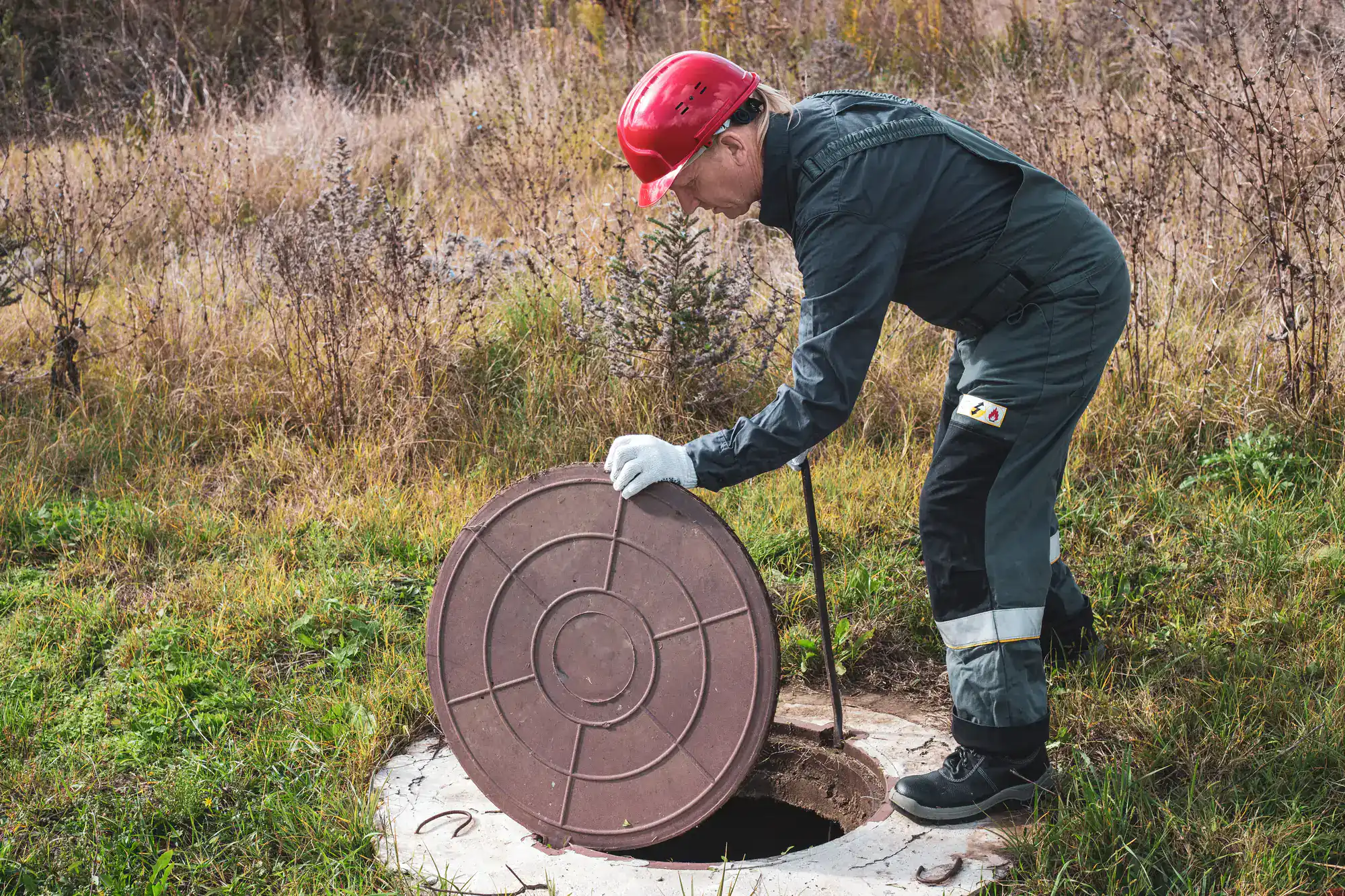
When our technician arrives, the first step is assessment. If the issue isn’t immediately visible — and with older Terryville homes, it often isn’t, because many cesspools from the 1960s and early 1970s have no accessible cover at grade — we use electronic location technology and waterproof camera equipment to find the system and see what’s happening inside it. That camera inspection is what separates an accurate diagnosis from a guess. You’re not paying for exploratory digging across your yard; you’re getting a clear picture of the actual problem before anyone picks up a shovel.
From there, the scope is determined and explained to you before work begins. Whether it’s a routine pump-out, a main sewage line cleaning, a drywell service, or something more involved like a house trap replacement, the process is the same: you know what’s being done and why. Suffolk County requires permits and DHS registration for new installations and major replacements, and we handle that side of the process — you don’t need to navigate the regulatory paperwork on your own.
Ready to get started?
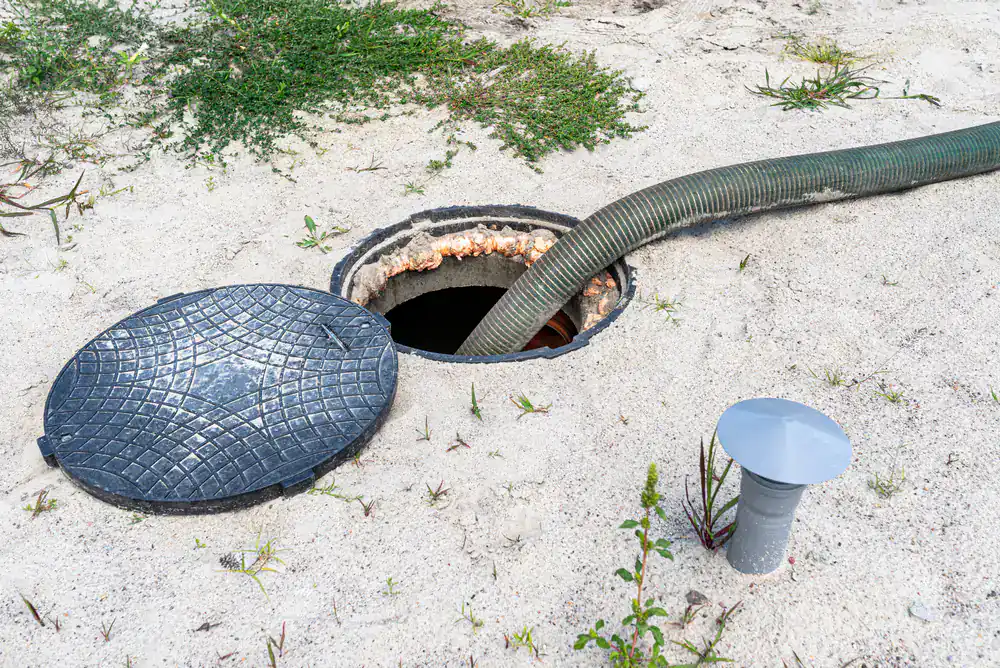
We handle the full range of cesspool and drainage work — not just pump-outs. Routine cesspool cleaning and pumping is the foundation, but our service list goes well beyond that. Video pipe inspections, cesspool location, drywell cleaning, house trap replacements, storm drain cleaning, main sewage line cleaning and replacement, and full cesspool installation are all part of what we do. For Terryville homeowners dealing with older leaching pool configurations — common in homes built before 1980 — we have direct experience with how those systems age and what they typically need at the 40-, 50-, and 60-year mark.
One service worth knowing about if you’re selling a home: we provide real estate certifications. With Terryville home values sitting around $482,000, a cesspool inspection that’s done right — with proper documentation — protects the transaction. A failed or missing certification can delay or kill a closing, and this is one of those deadline-driven situations where experience with Suffolk County’s specific requirements is not optional.
If your system has failed and replacement is required, Suffolk County law — in effect since July 2019 — mandates that failed cesspools be replaced with an Innovative/Alternative (IA) advanced treatment system, not another conventional cesspool. The 2024 Suffolk Water Quality Restoration Act expanded the county’s reimbursement program to cover up to 75% of project cost, with a maximum of $25,000. The Port Jefferson Station/Terryville Civic Association has already hosted public discussions on this program. We can walk you through what the process looks like and what you may qualify for.