Useful Links
Other Services we provide in Nesconset
For most Nesconset households, a septic tank needs to be pumped every three to five years, but that range shifts based on a few factors specific to your home. Household size matters a lot Nesconset skews family-oriented, and larger households generate more wastewater, which means tanks fill faster. A family of four with a 1,000-gallon tank is typically looking at pumping every three to four years. If your household is larger, or if you have guests frequently, that interval gets shorter.
There’s also the age of the system to consider. Many Nesconset homes were built in the 1950s and 1960s, and older systems especially cesspools, which don’t separate solids from liquids the way a modern septic tank does typically need pumping more often, closer to every one to two years. If you moved into your home recently and don’t have records of the last service, the safest move is to schedule a pump-out now and establish a baseline from there.
Standard residential septic tank pumping in Suffolk County generally runs between $225 and $600, depending primarily on the size of your tank. A 1,000-gallon tank typically falls in the $225 to $400 range; a 2,000-gallon system runs closer to $400 to $600. Those figures reflect a straightforward pump-out where the lid is accessible.
Where costs can increase is lid excavation. In Nesconset, where a lot of the housing stock dates to the 1950s and 1960s, lids are frequently buried under a foot or more of soil and landscaping that’s accumulated over decades. Excavating a buried lid can add anywhere from $300 to $1,200 to the job depending on how deep it is and how accessible the area is. We disclose this upfront not as a surprise at the end of the visit. We provide a free estimate before any work begins, so you know what you’re looking at before the truck pulls in.
This is one of the most common questions from Nesconset homeowners, and it makes sense the two systems look similar from the outside, and a lot of older homes have been through multiple owners without clear records being passed along. You may not be able to tell without having the system located and inspected.
A cesspool is a simpler, older design essentially a buried chamber that collects all household waste together and allows liquid to seep into the surrounding soil. A septic tank is a two-compartment system that separates solids from liquids before the liquid flows out to a drainfield. Most homes built in Nesconset during the 1950s and 1960s were originally installed with cesspools. Some have since been upgraded; many haven’t. The pumping frequency, service needs, and regulatory requirements differ between the two, so knowing which one you have is genuinely useful. When we come out, identifying what you’re working with is part of the process you’ll know before we leave.
The most immediate risk is a backup sewage pushing back into the lowest drains in your home, or surfacing in the yard as a soggy, foul-smelling wet spot. Both are unpleasant, both are health hazards, and neither one resolves itself. But the more expensive consequence is what happens to the drainfield or the surrounding soil when a tank overflows for an extended period. Solid waste that should have been pumped out starts making its way into areas it was never designed to reach, and once a drainfield is compromised, you’re no longer talking about a pump-out you’re talking about a system replacement that can run $10,000 to $15,000 or more.
For Nesconset homeowners with homes in the 50-to-70-year age range, this isn’t hypothetical. Systems that have been deferred for years are operating with no margin for error. Routine pumping on a reasonable schedule is the only thing that keeps a manageable maintenance cost from becoming a major repair. A pump-out costs a few hundred dollars; a failed system does not.
Schedule a pump-out and inspection as soon as you can, even if nothing seems wrong. This is one of the most common situations we encounter with new homeowners across Nesconset and the surrounding Smithtown area someone buys a home, inherits a system with no service records, and has no idea whether it was pumped two years ago or twelve years ago.
The only way to establish a baseline is to have the system located, accessed, pumped, and assessed by someone who knows what they’re looking at. That visit tells you what type of system you have, what condition it’s in, whether anything needs attention now or in the near future, and when you should plan to come back. In Nesconset, where a large share of homes were built in the 1950s and 1960s and may have original or partially updated systems, that information is genuinely valuable especially if you’re planning renovations, thinking about selling in a few years, or just want to know what you’re working with under the lawn.
Yes, and it’s worth looking into if your system is aging or has been flagged as needing replacement. The Town of Smithtown participates in a Residential Septic Improvement Program that offers grants toward the installation of Innovative/Alternative Onsite Wastewater Treatment Systems commonly called I/A OWTS. These are nitrogen-reducing systems that the county now requires when an old cesspool fails and needs to be replaced, rather than allowing a straight in-kind swap.
The Town of Smithtown’s program offers grants of up to $10,000, with an additional $1,000 available for pressurized shallow drainfield installations. On top of that, New York State reimburses up to 75% of eligible costs, up to $25,000, through its own Septic Improvement Program. As of mid-2025, combined state and town funding for qualifying Nesconset homeowners can reach up to $45,000 depending on the system and eligibility. These programs exist specifically because Nesconset’s wastewater flows toward the Nissequogue River watershed and Smithtown Bay a designated nitrogen-priority water body and reducing nitrogen from aging residential systems is a stated public health priority for this area. If you’re facing a system replacement and want to understand how this applies to your property, that’s a conversation worth having before any work begins.
Hear from Our Customers

When NY-347 the road literally named Nesconset Highway opened in the 1950s, it triggered one of the fastest residential buildouts in Smithtown’s history. Storybook Homes and other builders put up thousands of houses in a tight 20-year window, and every one of them went in with a septic system. Those systems are now between 50 and 70 years old. Some have been serviced regularly. Many haven’t been touched in years, with lids buried under decades of landscaping and soil that’s shifted and settled around them.
This is the reality of owning a home in Nesconset. The good news is that a properly maintained system, pumped on schedule, rarely becomes an emergency. Routine septic tank pumping removes the built-up sludge and waste before it has nowhere left to go the only thing standing between a functional system and a drainfield failure that can cost $10,000 to $15,000 or more to fix.
For Nesconset homeowners, there’s also the real estate angle. With homes in this area regularly selling at or above asking price in around 30 days, a clean pump-out and a documented service record removes one of the most common deal-killing contingencies before it ever becomes a conversation. Whether you’re maintaining, preparing to sell, or just bought a home and have no idea when it was last serviced this is the right place to start.
We’ve been working on Long Island septic and cesspool systems for over 30 years. That’s not a number pulled from a marketing sheet it reflects decades of hands-on experience with exactly the kind of aging, buried, and sometimes hard-to-find systems that are common throughout Nesconset and the broader Smithtown area.
We’re locally owned and operated, based right here in Suffolk County, and we run 24 hours a day, seven days a week including weekends and holidays. When you call, you’re reaching a real operation with real technicians, not a national dispatch center. Customers consistently mention our crew by name in reviews, which tells you something about how we work.
We also don’t recommend unnecessary work or charge high prices for simple jobs. In an industry where that’s not always the case, it matters. You’ll get a free estimate before anyone shows up, and the number you’re given is the number you pay.
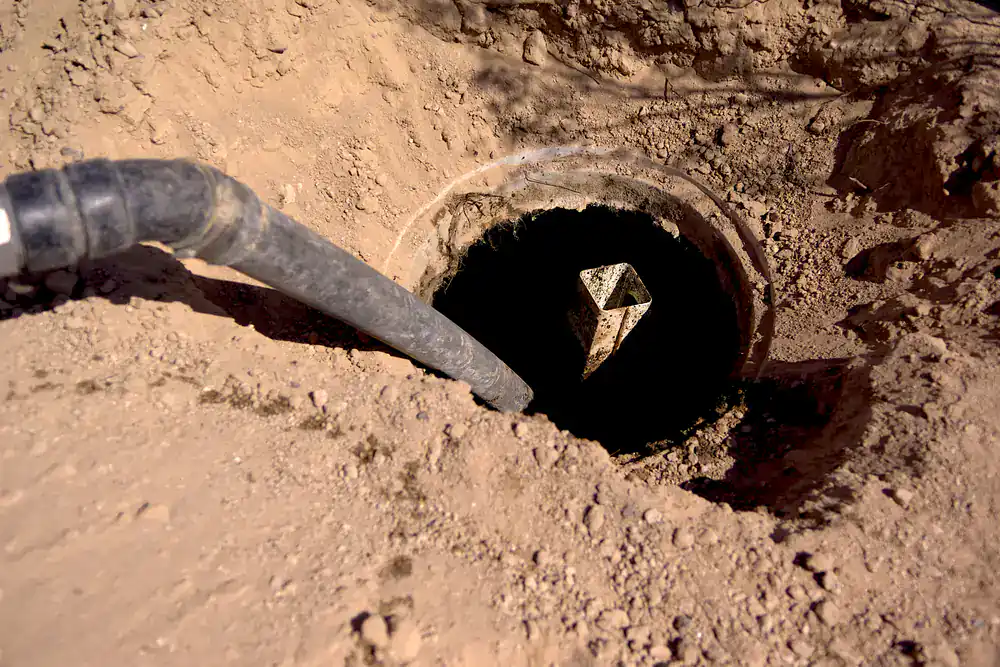
The first step is finding the system. In Nesconset, where a significant portion of homes were built in the 1950s and 1960s, lids are often buried well below the surface sometimes more than three feet down, under years of added soil and landscaping. We specialize in locating hard-to-find cesspools and septic tanks, so if you don’t know where yours is, that’s not a problem. It’s something we handle regularly in this area.
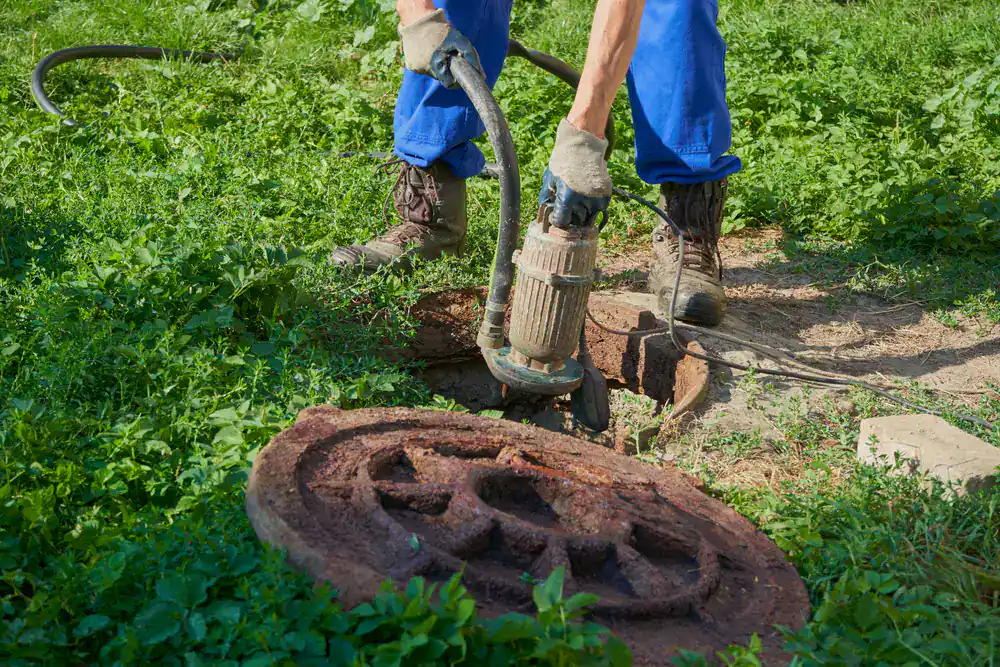
Once the system is located and accessed, we perform a full pump-out not a partial one. That means removing all the accumulated sludge and waste from the tank, not just what’s sitting near the surface. After pumping, we assess the condition of the system: checking baffles, looking for signs of infiltration or structural issues, and giving you an honest read on what we found. If something needs attention, you’ll hear about it clearly. If it doesn’t, you’ll hear that too.
All septage is transported and disposed of legally at a licensed treatment facility, in full compliance with Suffolk County regulations and the NYS DEC waste transporter requirements that govern this work. For Nesconset homeowners who are mindful of the sole-source aquifer that supplies Long Island’s drinking water, that’s not a small thing it’s the standard every job is held to.
Ready to get started?
Septic tank pumping is the core of what brings most Nesconset homeowners to call, but it’s rarely the only thing a system needs over time. We handle the full picture: septic pumping, cesspool pumping, drain cleaning, drywell cleaning, main sewage line cleaning and replacement, house trap replacements, and full septic and cesspool installation. If your home in Nesconset has a holding tank rather than a conventional septic or cesspool setup, that’s covered too.
For homes along the older residential streets off Gibbs Pond Road or in the neighborhoods developed during Nesconset’s original buildout, systems vary. Some properties have conventional cesspools; others have been upgraded to modern septic tanks; some have a combination of components that were added or modified over the decades. We’ve seen all of it. You don’t need to know exactly what you have before you call figuring that out is part of the job.
It’s also worth knowing that Suffolk County no longer allows in-kind cesspool replacement. If a failed system needs to be replaced, it must be upgraded to a more advanced setup under current county regulations. The Town of Smithtown also participates in a Residential Septic Improvement Program that offers grants toward qualifying system upgrades for Nesconset homeowners. We can walk you through what that means for your specific situation.