Useful Links
Other Services we provide in Mount Sinai
No not since July 1, 2019. Suffolk County banned new cesspool-only installations, which means any replacement has to meet modern septic standards at minimum. Depending on your property’s location, size, and design flow, you may be required to install an I/A OWTS nitrogen-reducing system rather than a conventional septic tank and leach field setup.
For Mount Sinai specifically, properties near the harbor or in areas with a high water table are more likely to require an advanced system. The proximity to Mount Sinai Harbor and the Long Island Sound puts these properties in a zone where nitrogen discharge from wastewater is a documented environmental concern and Suffolk County’s regulations reflect that. Whatever went in 40 years ago cannot simply go back in the same hole. We assess your site and tell you exactly what’s required before any work begins.
The honest answer is that it depends on your property and in Mount Sinai, that variability is real. Soil conditions, water table depth, lot terrain, and the type of system required all affect the final number. A complete septic system replacement in Suffolk County typically ranges from $20,000 to $40,000 for most residential installations, with I/A OWTS nitrogen-reducing systems generally at the higher end of that range.
The Suffolk County Septic Improvement Program can offset a significant portion of that cost. As of July 2025, eligible homeowners may qualify for combined state and county grants of up to $45,000 for I/A OWTS installation. That grant is assigned directly to your approved installer it’s not a reimbursement you collect after the fact. The critical detail is that you must apply and receive your grant certificate before installation begins. If you’re a Mount Sinai homeowner considering an upgrade, understanding your grant eligibility is one of the first conversations worth having.
The absence of obvious symptoms doesn’t mean the system is fine. Many failing cesspools in Mount Sinai show no above-ground signs no sewage smell in the yard, no backed-up drains, no wet patches until the system collapses or a home inspection flags it. The age of your home is the most reliable early indicator. If your house was built between the 1960s and 1990s, which covers a large portion of Mount Sinai’s residential stock, your original system is likely 30 to 60 years old. That’s well past the 20-to-30-year expected service life of a conventional cesspool.
A professional site evaluation is the only reliable way to know where your system actually stands. This is especially true in Mount Sinai, where wooded lots and mature root systems can damage drain lines and cesspool walls years before any visible failure occurs. Root intrusion is one of the leading causes of premature system failure in heavily wooded areas and a lot of Mount Sinai’s residential neighborhoods qualify. Getting an assessment before the system forces your hand gives you time to plan, apply for grant funding if eligible, and choose your installation timeline rather than react to an emergency.
The Suffolk County Septic Improvement Program commonly called the SIP is a grant program that helps homeowners cover the cost of replacing outdated cesspools and conventional septic systems with I/A OWTS nitrogen-reducing systems. As of July 2025, eligible homeowners can receive combined state and county grants of up to $45,000. The grant is paid directly to your approved installer, not to you as a reimbursement after the fact.
To be eligible, your property generally needs to have a valid certificate of occupancy, no outstanding tax liens, and an existing system that qualifies for replacement under the program’s guidelines. Your contractor must be on the County’s SIP Approved Installer list not every licensed contractor qualifies, so confirming this before you hire anyone matters. The application also has to be submitted and approved before installation begins. For Mount Sinai homeowners, the harbor proximity and the hamlet’s position within Suffolk County’s nitrogen-reduction priority areas make SIP eligibility worth investigating early in the process. If you wait until after the system fails and the work is done, the grant window is closed.
There are two timelines to understand here: the permit process and the actual installation work. The active installation excavation, system installation, abandonment of the old system typically takes one day for most residential properties once permits are in hand. Our reviews consistently mention same-day completion, which matters when you’re looking at a yard full of equipment and disruption to your daily routine.
The permit process adds time before that work can begin. A soil percolation test is required, permits must be filed with the Suffolk County Department of Health Services, and if you’re pursuing SIP grant funding, the application and approval have to come through before installation starts. Realistically, the full process from initial site evaluation to completed installation including permitting can take several weeks depending on SCDHS processing times. If your system is failing and you’re under time pressure, the most important thing you can do is start the process immediately rather than wait. Every week of delay is a week the system is working against you, and in some cases, against the water quality in Mount Sinai Harbor downstream.
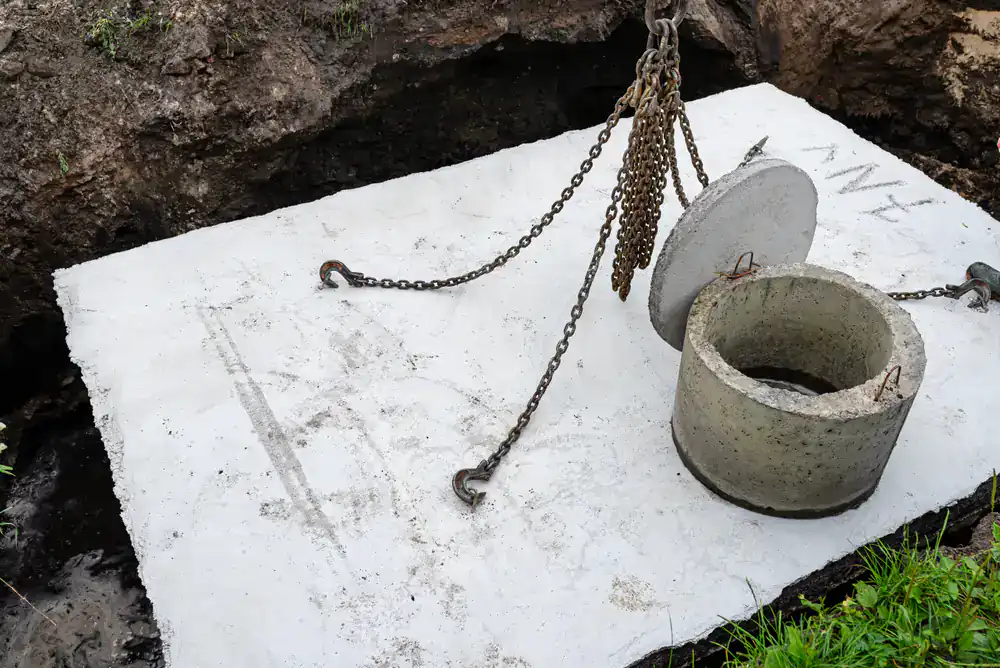
The old system has to be properly abandoned it can’t simply be left in the ground and ignored. Proper abandonment means the existing cesspool is pumped out completely, then filled or crushed to prevent it from becoming a void that could collapse under the yard or driveway. The abandonment process is documented and typically inspected as part of the SCDHS permit process, so there’s a record that it was handled correctly.
This step matters more than some homeowners expect. An improperly abandoned cesspool creates a long-term liability structurally, because the ground above it can settle or collapse, and legally, because an undocumented cesspool can complicate future property transactions. In Mount Sinai, where home values are in the $650,000 to $785,000 range and real estate transactions involve thorough due diligence, having clean documentation of both the old system’s abandonment and the new system’s installation protects you at closing. We provide installation records for every new system installed, so you have the paperwork if and when you need it.
Hear from Our Customers
Most of Mount Sinai’s residential neighborhoods were built between the 1960s and 1990s which means a large share of the hamlet’s cesspools are now 30 to 60 years old. These systems were designed to last 20 to 30 years. Many are failing quietly, with no obvious signs above ground. When they do go, they can’t be replaced like-for-like. Suffolk County banned new cesspool-only installations in 2019, so whatever goes in next has to meet current standards and in many cases, that means an I/A OWTS nitrogen-reducing system.
That matters locally in a way it doesn’t for inland communities. Mount Sinai Harbor is a 455-acre embayment sitting between Cedar Beach and the Long Island Sound. A conventional cesspool leaches roughly 40 pounds of nitrogen per year into the soil beneath your property. That nitrogen moves through the groundwater and eventually reaches the harbor the same water you drive past on your way to the beach. An upgraded system reduces that discharge by up to 70%.
Beyond the environmental piece, there’s the practical reality of what happens when a system fails during a home sale. At median listing prices around $834,000 in Mount Sinai, a flagged septic system can stall or kill a transaction. A properly installed, permitted, and documented system protects your home’s value and keeps the sale moving.
We’re a family-owned company based in West Babylon, serving all of Suffolk County including Mount Sinai and the surrounding Town of Brookhaven communities. Our team has over 30 years of hands-on experience with Long Island’s specific soil conditions, the SCDHS permit process, and the regulatory changes that have reshaped this industry since 2019.
Mount Sinai’s terrain isn’t uniform. The rolling topography, mature wooded lots, and proximity to the harbor create soil and drainage conditions that vary significantly from one property to the next. Sandy patches, clay-rich pockets near the water, high water table in lower areas, and root systems from decades-old trees all affect what kind of system will actually work on your land. We evaluate your specific site before recommending anything not after.
Named technicians, a named owner, and a track record of one-day completions on most installations. That’s what you’re hiring when you call.

The first step is a site evaluation. Before any recommendation is made, the existing system needs to be located and assessed. This matters more than it sounds in Mount Sinai older homes along the Pipe Stave Hollow Road corridor and in the hamlet’s early development pockets often have cesspools that were never mapped or documented. Finding what’s underground before excavation begins saves time, protects your landscaping, and prevents unexpected costs.
Once the site is assessed, a soil percolation test is required as part of the SCDHS permit process. This determines how your soil handles drainage critical in an area where conditions shift between sandy and clay-heavy depending on your exact location and proximity to the harbor. The permit is filed with the Suffolk County Department of Health Services before any work begins. If you’re eligible for the Suffolk County Septic Improvement Program grant which can offset a significant portion of the installation cost the application has to be submitted and approved before installation starts, not after.
Once permits are in hand, most residential installations are completed in a single day of active work. The old system is properly abandoned, the new system is installed, and post-installation documentation is provided. A final SCDHS inspection closes out the job. You’ll know exactly what was installed, how it was permitted, and what maintenance the system requires going forward.

Ready to get started?
Septic system installation in Mount Sinai isn’t a single task it’s a sequence of steps that have to happen in the right order, with the right permits, by a contractor who holds a Suffolk County Liquid Waste License. We cover the full sequence: site evaluation, cesspool location, soil assessment, permit filing with SCDHS, excavation, installation, proper abandonment of the old system, and post-installation documentation.
For properties near Mount Sinai Harbor or in areas with a high water table which applies to a meaningful portion of the hamlet a pressurized shallow drainfield or a full I/A OWTS nitrogen-reducing system may be required or strongly recommended. These advanced systems are what the Suffolk County Septic Improvement Program grant is designed to fund. The grant is assigned directly to your installer, not reimbursed to you after the fact, and it requires pre-approval before installation begins. If you’re eligible, navigating that process correctly is the difference between capturing the grant and losing it.
Every installation includes a written estimate before work begins. No verbal quotes, no figures that change when the truck arrives. The system design is matched to your property’s actual conditions your soil, your terrain, your tree situation, your proximity to the water. And because I/A OWTS systems require annual maintenance under Suffolk County’s regulations, we walk you through what ongoing servicing looks like before the job is done.