
By submitting you consent to receive service-related texts from Drastic Drainage. Reply STOP to opt out. Msg & data rates may apply. Consent not required to book service.
Useful Links
When your septic system is properly installed and functioning, the most immediate change is peace of mind. No more wondering whether that slow drain or faint odor means something serious. No more crossing your fingers every time you have guests over or run the laundry and the dishwasher at the same time. You just live in your house without that low-level anxiety running in the background.
For Stony Brook homeowners specifically, there’s a lot riding on what’s underground. The median home value here sits between $766,000 and $849,000. A failing or non-compliant wastewater system doesn’t just cause inconvenience it becomes a material liability the moment you list your home or a buyer’s lender starts asking questions. A properly permitted, SCDHS-registered septic system protects that investment. It’s documentation you can hand over at closing without hesitation.
There’s also the harbor to consider. Stony Brook Harbor right at the edge of this community on Long Island Sound has been directly tied to nitrogen pollution from residential cesspools and septic systems. Scientists and local advocates held a public forum at the Stony Brook Yacht Club in early 2025 specifically about this. An advanced I/A OWTS system removes up to 70–90% of the nitrogen a conventional cesspool releases into the ground. That’s not an abstract environmental stat here. That’s your street, your harbor, your community.
Eligibility for the Suffolk County Septic Improvement Program comes down to a few key factors. Your property needs to be in Suffolk County, have a valid Certificate of Occupancy, have no outstanding tax liens, and the work must involve replacing an existing cesspool or septic system not new construction. The system being replaced also needs to discharge to groundwater rather than a municipal sewer.
The part most homeowners miss is the timing requirement. You have to apply for and receive your grant certificate before the installation begins. If a contractor starts work before that certificate is issued, you lose the grant eligibility entirely. Given that combined state and county funding can reach up to $45,000 as of July 2025, and the average I/A OWTS installation runs around $25,000, getting the sequencing right can mean the difference between paying out of pocket and paying very little. We can walk you through where you stand before any commitments are made.
I/A OWTS stands for Innovative/Alternative Onsite Wastewater Treatment System. It’s the category of advanced septic systems that remove nitrogen from wastewater before it reaches the ground the technology that Suffolk County has been pushing hard since the 2019 cesspool ban. A conventional cesspool releases roughly 40 pounds of nitrogen per household per year into the soil. An I/A OWTS system cuts that by 70–90%.
Whether you’re required to install one depends on your specific situation. If you’re replacing a failed system on an existing residential property, a conventional septic system upgrade may meet the county’s minimum standard. But if your project triggers certain thresholds major renovation costs, bedroom count, or proximity to sensitive water bodies an I/A OWTS may be required. Stony Brook’s location near the harbor and Long Island Sound puts it in a zone where county regulators pay close attention to nitrogen loading. The site assessment will tell you exactly what applies to your property.
The active installation work excavation, system placement, old system abandonment, and site restoration typically takes one to three days once permits are secured. That’s the part most homeowners picture when they think about the timeline, and it’s genuinely not as disruptive as many people expect.
The longer part of the timeline is the permit process. In Suffolk County, the SCDHS registration and permit filing has to happen before any work begins. Depending on the complexity of the application and the current processing volume, this can add several weeks to the overall schedule. If you’re also applying for the SIP grant, that application needs to be approved before installation starts, which adds another step. The practical takeaway: don’t wait until your system is actively failing to start the process. The sooner the assessment and paperwork begin, the sooner the installation can happen. For Stony Brook homeowners on a real estate timeline, this lead time matters even more.
The old system doesn’t just get left in the ground and forgotten. Proper abandonment is a required part of the process under Suffolk County regulations. The cesspool gets pumped out completely, then it’s either crushed or filled with an approved material, and the abandonment is documented as part of the installation record.
This matters for a few reasons. First, an improperly abandoned cesspool can collapse over time, creating a sinkhole-type hazard in your yard something no Stony Brook homeowner with a landscaped property wants to deal with years down the road. Second, Suffolk County requires documentation of the abandonment, and that paperwork becomes part of the property record. When you sell the home, a buyer’s attorney or lender may ask for it. Having a clean, documented abandonment on file is one less thing to scramble for at closing on an $800,000 property.
Yes, and this is one of the more underappreciated parts of the process. Stony Brook sits on Long Island’s North Shore, which has glacial moraine terrain hillier, with more varied soil composition than the flat sandy outwash you find on the South Shore. Some North Shore properties have heavier clay-bearing soils in certain areas, which can affect how quickly water percolates through the ground and where a drain field can be placed.
The perc test a required soil percolation test that has to be completed before system design begins measures exactly this. The results determine what size system your lot needs and whether a standard drain field layout will work or whether an alternative design is required. Contractors unfamiliar with North Shore soil conditions sometimes underestimate how much variation there can be across a single property. This is why local experience in this specific area matters. A system designed for the wrong soil type won’t pass inspection and may not function correctly even if it does.
The honest answer is that many failing cesspools show no obvious above-ground signs until they’re already in serious trouble. Slow drains and gurgling sounds are common early indicators, but they can also have other causes. Wet or unusually green patches in the yard above the system, sewage odors near the ground surface, or backed-up toilets that don’t resolve with normal clearing are more reliable warning signs that something is wrong with the system itself.
What makes Stony Brook’s situation worth paying attention to is the age of the housing stock. The majority of homes here were built in the 1950s through 1970s, which means the cesspools installed at the same time are now 50 to 70 years old well past the 15 to 20 year deterioration window that industry professionals typically cite. A system that old doesn’t need to be showing dramatic symptoms to be at or near end of life. If your home is in that age range and you’ve never had a proper inspection or don’t know the last time the system was pumped, that’s the starting point. An assessment from us will tell you exactly what you’re working with before it becomes an emergency call.
Free, no-obligation estimates on cesspool, sewer, and drain work.
We get there quickly. No waiting days for a callback.
Backups don’t wait for business hours. Neither do we.
Fully licensed and insured across Long Island.
Up-to-date trucks and tools for cleaner, faster jobs.
Straight quotes, no surprises on the bill.
Hear from Our Customers

When your septic system is properly installed and functioning, the most immediate change is peace of mind. No more wondering whether that slow drain or faint odor means something serious. No more crossing your fingers every time you have guests over or run the laundry and the dishwasher at the same time. You just live in your house without that low-level anxiety running in the background.
For Stony Brook homeowners specifically, there’s a lot riding on what’s underground. The median home value here sits between $766,000 and $849,000. A failing or non-compliant wastewater system doesn’t just cause inconvenience it becomes a material liability the moment you list your home or a buyer’s lender starts asking questions. A properly permitted, SCDHS-registered septic system protects that investment. It’s documentation you can hand over at closing without hesitation.
There’s also the harbor to consider. Stony Brook Harbor right at the edge of this community on Long Island Sound has been directly tied to nitrogen pollution from residential cesspools and septic systems. Scientists and local advocates held a public forum at the Stony Brook Yacht Club in early 2025 specifically about this. An advanced I/A OWTS system removes up to 70–90% of the nitrogen a conventional cesspool releases into the ground. That’s not an abstract environmental stat here. That’s your street, your harbor, your community.
We’re a family-owned and operated company based in West Babylon, Suffolk County. We’ve been installing septic systems on Long Island for over 30 years which means we’ve been navigating SCDHS permit requirements, Brookhaven Town processes, and the specific soil conditions of the North Shore long before it became a trending topic.
The North Shore’s glacial moraine terrain isn’t the same as the flat sandy ground you find further south on the island. Soil conditions in and around Stony Brook can vary significantly across a single lot, which affects system design, drain field placement, and how perc tests come back. That’s the kind of local knowledge that only comes from doing this work here, repeatedly, over decades not from a national training manual.
When you call us, a real person picks up. That’s not a small thing in this industry. Our reviews consistently point to it as the detail that stood out most someone answered, gave a real arrival window, and showed up. In a trade where that’s genuinely rare, it matters.
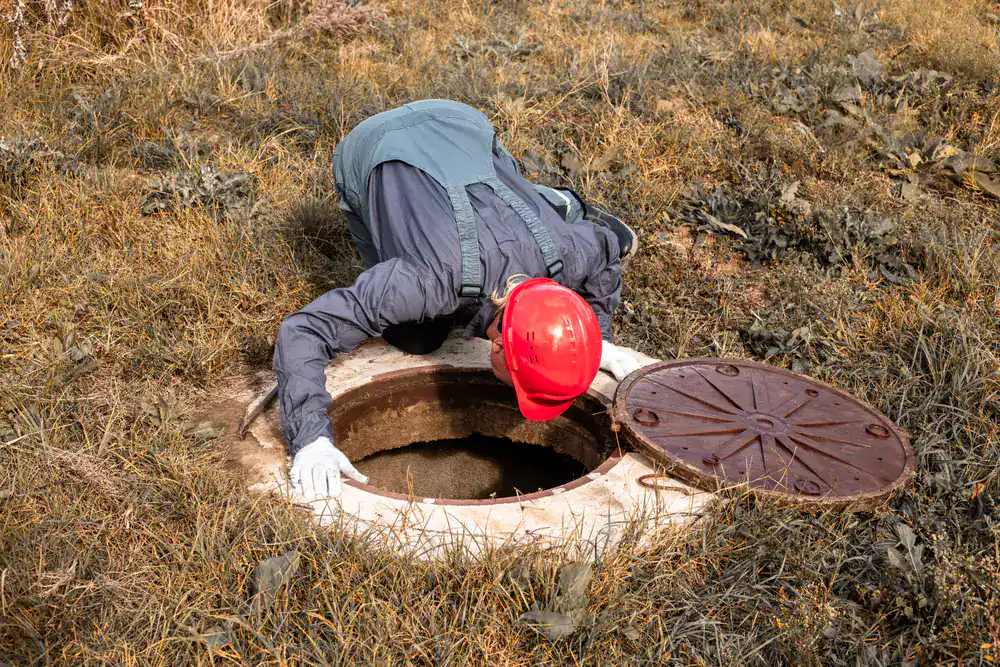
It starts with a site assessment. Before any equipment shows up, we evaluate the property soil conditions, existing system location, lot size, and what the SCDHS is going to require for your specific situation in Brookhaven Town. If your system is old enough that nobody’s sure exactly where it is, we figure that out before anything else. We have cesspool location experience that makes this step a lot less stressful than it sounds.
From there, the permit process begins. In Suffolk County, no installation or replacement can start without the proper registration filed with the SCDHS and if you’re pursuing an I/A OWTS system and want to access the SIP grant program, the grant certificate needs to be issued before the work begins. This is a step a lot of homeowners don’t know about until it’s too late to qualify. Getting the paperwork sequenced correctly is part of our job, not an afterthought.
Once permits are in hand, the active installation typically takes one to three days. The old system gets properly abandoned pumped, documented, and filled and the new system goes in. Post-installation, the work gets inspected by SCDHS and you receive full documentation of the completed installation. For Stony Brook homeowners thinking about a future sale, that paper trail is worth keeping.
Ready to get started?
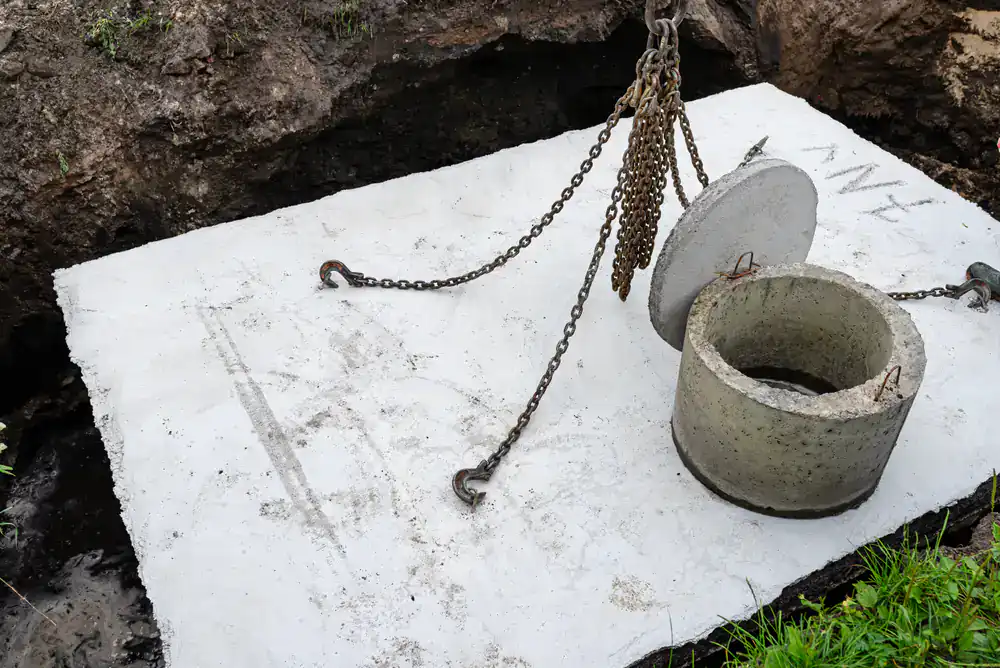
Septic system installation in Stony Brook covers more than just putting something new in the ground. It starts with a proper soil evaluation and perc test, which is required by Suffolk County before any system can be designed or permitted. The results of that test determine what type of system your lot can support and where the drain field needs to go and on North Shore properties with varied glacial soil, this step genuinely matters.
Suffolk County banned in-kind cesspool replacements as of July 1, 2019. That means if your old cesspool needs to go, it has to be replaced with a system that meets modern standards at minimum and in many cases, particularly for new construction or major renovations, an I/A OWTS nitrogen-reducing system is required. We install systems of different designs, styles, and sizes depending on what your property and the county’s requirements call for.
For Stony Brook homeowners who qualify, the Suffolk County Septic Improvement Program can cover a significant portion of the cost. As of July 2025, combined state and county grants can reach up to $45,000 for eligible I/A OWTS installations and the average installation runs approximately $25,000. The grant funds go directly to the approved installer, not to you as a reimbursement after the fact. That distinction matters. You’re not fronting a large sum and waiting for a government check. The process is handled at the contractor level, which is exactly how it’s supposed to work.
