
Useful Links
Other Services we provide in Port Jefferson Station
Not exactly and this catches a lot of Port Jefferson Station homeowners off guard. As of July 1, 2019, Suffolk County banned the installation of cesspool-only replacement systems. If your existing cesspool fails and needs to be replaced, the new system must include at minimum a septic tank preceding the leaching structure. A like-for-like cesspool swap is no longer permitted under Suffolk County law.
What this means practically is that your Port Jefferson Station replacement will involve more components and more coordination with the SCDHS than a simple swap would have required before 2019. It also means the permit process is mandatory there’s no legal path to a compliant replacement without it. The upside is that a properly permitted and installed system built to current standards will last significantly longer and carry no legal liability for your property. We handle the permit application and SCDHS coordination as part of the job, so you’re not navigating that process on your own.
The honest answer is that cost varies based on several factors system type, lot conditions, soil evaluation results, whether the old system needs to be decommissioned, and the complexity of the connection to your home’s plumbing. We don’t publish a flat rate because a number without a site assessment behind it isn’t meaningful, and giving you a number that changes when the crew arrives is exactly the kind of thing that erodes trust in this industry.
What we do offer is a free, written, itemized estimate before any work begins. You’ll know the full scope and the full cost before anything is agreed to. For Port Jefferson Station homeowners who are looking at a nitrogen-reducing I/A OWTS system which is required for new construction in Suffolk County since July 2021 and increasingly common for replacements it’s also worth knowing that eligible homeowners may qualify for up to $45,000 in combined State and County grant funding through the Suffolk County Septic Improvement Program. That grant goes directly to the installer after final inspection, so your out-of-pocket cost could be significantly lower than the sticker price suggests.
Most residential installations take one to five days once the permit is approved and the crew is on-site. Simpler jobs a straightforward tank and leaching pool installation on a standard Port Jefferson Station lot often wrap up in one to two days. More complex systems, tight access points, or situations where the old system needs more involved decommissioning can push that toward the higher end of the range.
The longer part of the timeline is actually the permit process, not the installation itself. SCDHS permit applications require engineered plans, soil testing results, and documentation of setback distances. That review and approval process typically takes two to four weeks. The practical takeaway for Port Jefferson Station homeowners is that if your system is showing signs of trouble slow drains, wet spots in the yard, gurgling fixtures it’s worth getting the estimate and starting the permit process before you’re in a full emergency situation. Waiting until the system fails completely means emergency pricing and no ability to plan around the permit timeline.
This is more common than most people realize, especially in Port Jefferson Station’s older housing stock. Homes built in the 1950s and 1960s often have no surviving records of where the cesspool was installed. Original blueprints may be long gone, previous owners may not have known, and there’s no centralized database that maps every system’s location for older properties.
We specialize in locating hard-to-find cesspools this is explicitly part of what we do, and it matters because the alternative is unnecessary excavation based on guesswork. Before any installation work begins, the existing system needs to be located and assessed. Coming in without a clear picture of what’s already in the ground wastes time, drives up cost, and risks damaging other underground utilities or landscaping. If you don’t know where your cesspool is, that’s not a problem that stops the process it’s just the first step in it.
Yes, a permit is required for all cesspool installations and replacements in Suffolk County no exceptions. The application goes through the Suffolk County Department of Health Services and requires engineered plans, soil evaluation results, and documentation confirming that the proposed system meets setback requirements from wells, property lines, and any nearby water features. Skipping the permit process isn’t just a regulatory risk it can void your certificate of occupancy and create significant liability if you ever sell the property or file an insurance claim related to the system.
We handle the permit application as part of the installation job. You don’t need to figure out the SCDHS process, chase down engineers, or manage the paperwork yourself. The permit cost itself typically runs $200 to $500 depending on system size and scope, and the review process takes approximately two to four weeks. That timeline is worth factoring in if your system is showing signs of stress getting the permit process started early gives you options. Waiting until failure puts you in emergency mode with no lead time.
The national recommendation is every four to five years, but that guideline doesn’t apply cleanly to Long Island. Port Jefferson Station sits in Suffolk County, where the water table is closer to the surface than in many other parts of the country. That higher water table means systems here work harder and fill faster. The practical recommendation for most Port Jefferson Station cesspools is pumping every two to three years and for households with heavier usage, every two years is a reasonable target.
This is especially relevant if your home is one of the postwar ranches or colonials that make up the majority of Port Jefferson Station’s residential neighborhoods. Systems that have been in the ground for 40, 50, or 60 years even well-maintained ones are operating at or past their design life. Regular pumping extends the functional life of an aging system and gives you early warning when something is starting to fail, rather than discovering it through a backup or a wet yard. A new installation resets that clock, but the pumping schedule still applies from day one.
Hear from Our Customers

When a cesspool fails in Port Jefferson Station, it rarely just inconveniences you it disrupts the whole household. Slow drains, wet patches in the yard, and that unmistakable smell don’t wait for a convenient time to show up. Getting the right system installed means those problems are gone, and they stay gone.
Port Jefferson Station’s housing stock tells the story clearly. The Nesconset Highway opened in the 1950s and the neighborhood filled in fast ranches, colonials, capes on wide lots with long driveways and mature oaks. The cesspools that went in during that build-out were designed for the household demands of that era. Many of them have been running well past their intended lifespan. A properly installed replacement, sized correctly for today’s household and today’s Suffolk County requirements, gives you a system built to last another 30 to 40 years.
The other thing that changes is the legal standing of your property. Suffolk County banned cesspool-only replacements in 2019. If your Port Jefferson Station system fails and needs replacement, it has to meet current SCDHS standards no exceptions. Getting that done right, with permits pulled and inspections completed, means your home’s certificate of occupancy is protected and there are no surprises if you ever sell.
We are a family-owned, fully licensed, insured, and bonded cesspool and drainage company serving Nassau and Suffolk Counties. License number LW-63684 is on every page of our website not buried in fine print because it matters and you should be able to verify it.
We’ve been doing this work on Long Island for over 30 years. That’s not a generic number. It means decades of working with Suffolk County’s sandy soil, navigating the SCDHS permit process, and replacing aging systems in exactly the kind of postwar neighborhoods that make up Port Jefferson Station. From the residential streets near the Comsewogue school district to the homes along the Route 112 corridor, this is familiar territory.
Every installation is handled from start to finish by one crew excavation, tank installation, leaching pool setup, connection to your home’s sewer line, backfill, and site restoration. No subcontractors, no handoffs, no gaps in accountability.
It starts with a free estimate. Before anything else happens, someone comes out to your Port Jefferson Station property, assesses the existing system, and gives you a written, itemized number. No quote over the phone followed by a different number when the truck shows up. You know what you’re paying before a shovel touches the ground.
From there, the permit process begins. In Suffolk County, all cesspool installations and replacements require SCDHS approval engineered plans, soil evaluation, and documentation of setback distances from wells, property lines, and water features. We handle that paperwork. Permit processing typically takes two to four weeks, and skipping it isn’t an option if you want the work to hold up legally. For Port Jefferson Station homeowners, this step is especially important given that the 2019 Suffolk County regulation change means your replacement system has to meet current standards, not the standards from when your original cesspool was installed.
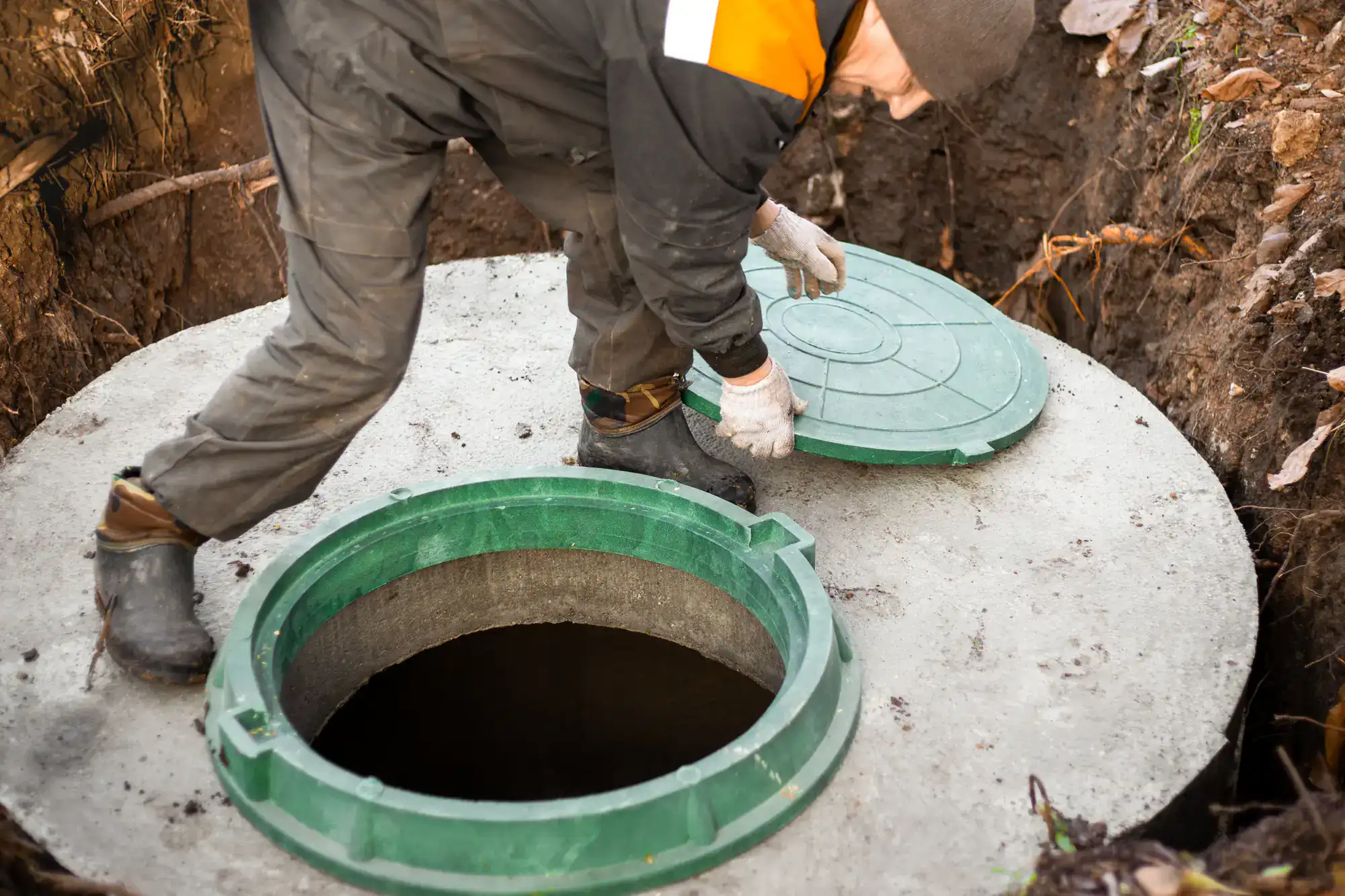
Once permits are in hand, excavation begins. Most residential jobs in this area take one to five days depending on system complexity and site conditions. The old system gets properly decommissioned, the new tank and leaching pools go in, the connection to your home’s plumbing is made, and the site gets backfilled and graded. Final inspection by the SCDHS closes it out. When it’s done, it’s done right and documented.
Ready to get started?
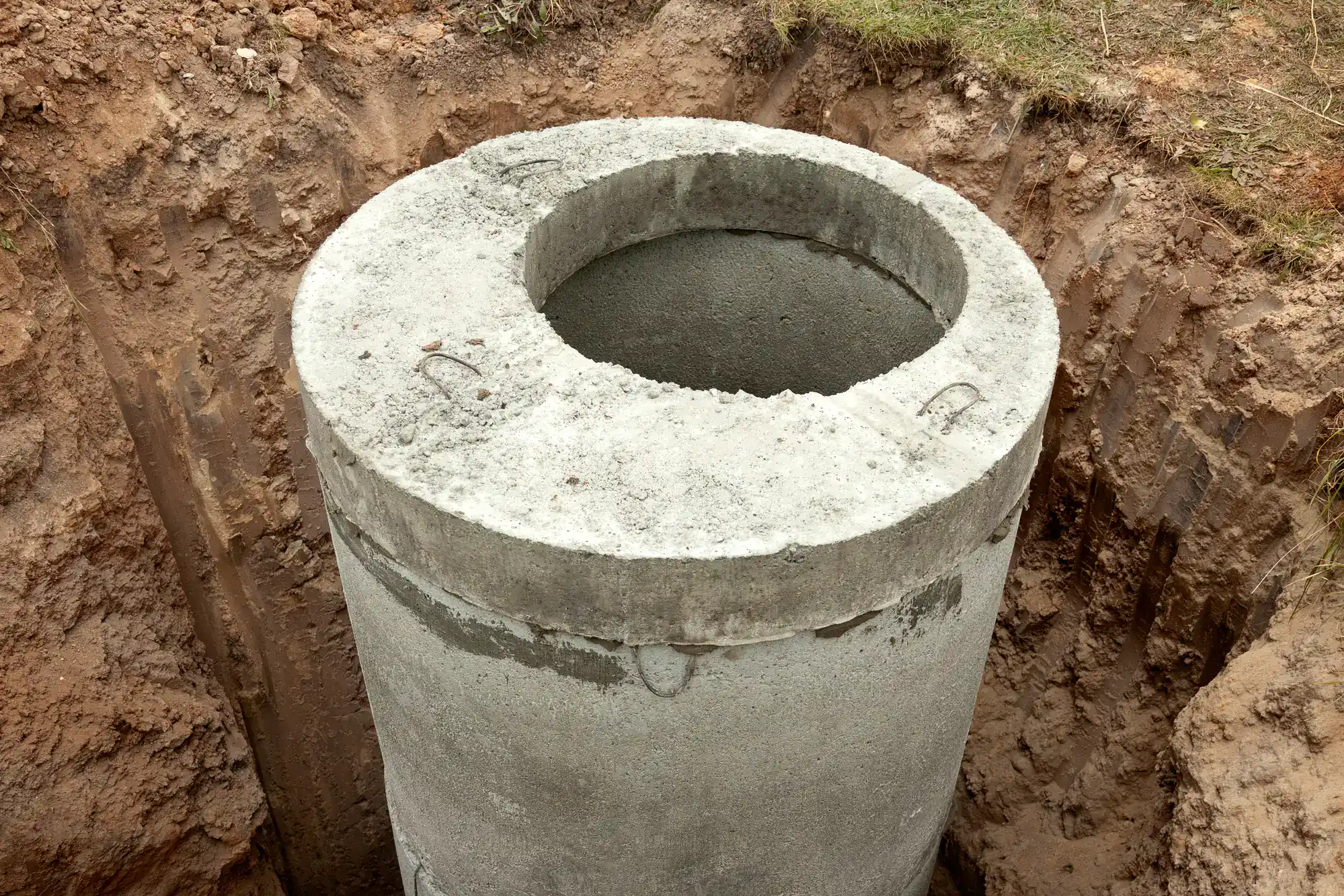
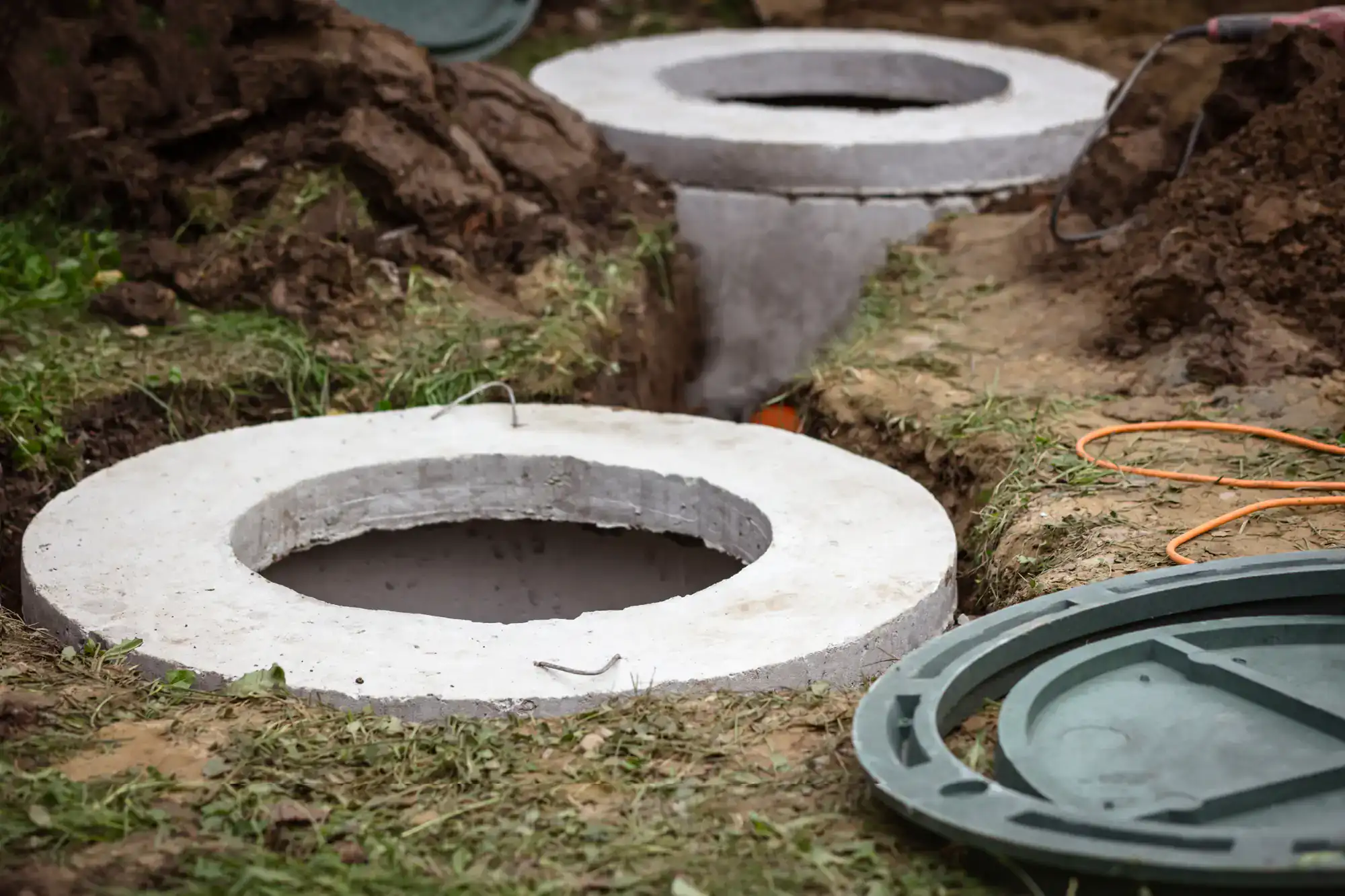
A cesspool installation isn’t just dropping a precast concrete tank into a hole. The full system includes the tank, the leaching pools or drywells that allow treated water to disperse into the soil, the connection to your home’s existing sewer line, and in many cases the decommissioning and removal of the old system. We handle every component of that residential and commercial.
For Port Jefferson Station specifically, the area’s sandy Suffolk County soil is actually favorable for drainage, but it also means a failing system can leach contaminants into the groundwater faster than in clay-heavy areas. That makes proper sizing and installation of the leaching pool critical, not just a formality. The system has to be designed for your lot, your household load, and the specific soil conditions on your property.
If your home requires a cesspool ring replacement rather than a full system swap, that’s also within scope. And if you’re looking at a new construction project the Jefferson Cove development on Terryville Road is an example of active building in Port Jefferson Station new single-family homes in Suffolk County built after July 2021 are required to install an Innovative and Alternative Onsite Wastewater Treatment System, which reduces nitrogen discharge by 70 to 90 percent compared to a conventional cesspool. Eligible homeowners may qualify for up to $45,000 in combined State and County grant funding to offset that cost. That’s worth asking about during your free estimate.
