Useful Links
Other Services we provide in Port Jefferson Station
For most Port Jefferson Station households, every two years is the right target for a cesspool system, and every three to five years for a conventional septic tank though the actual interval depends on household size, tank capacity, and how the system is performing. The clay-heavy soil conditions common in Port Jefferson Station can cause leaching fields to saturate more quickly than in sandier areas of Long Island, which puts more stress on the tank itself and makes staying on schedule more important than it might be elsewhere.
If you’ve just bought a home in Port Jefferson Station and have no pumping history to go on, treat it as overdue and schedule a service call. We can pump the tank, assess its current condition, and give you a realistic recommendation for how often to come back based on what we actually see not a generic number pulled from a chart. That one visit gives you a baseline you can actually use.
A cesspool is a single underground chamber that collects all household waste together solids, liquids, everything and slowly leaches the liquid into the surrounding soil. A septic tank, by contrast, separates solids from liquids before any leaching happens, which makes it more efficient and less prone to overloading. Because cesspools don’t separate waste, they fill up faster and need more frequent pumping typically every one to two years rather than every three to five.
In Port Jefferson Station, the majority of homes were built in the 1950s and 1960s, when cesspools were the standard installation. If you’ve never had the system inspected or don’t have records from the previous owners, there’s a reasonable chance you’re on a cesspool rather than a septic tank. A service call from us will tell you definitively which system you have, what condition it’s in, and what that means for your pumping schedule going forward. It’s the kind of basic information every homeowner in Port Jefferson Station should have.
The most obvious signs are slow drains throughout the house, gurgling sounds from toilets or sinks, sewage odors inside or outside, and soggy or unusually green patches in the yard above where the tank is buried. If you’re seeing any of these, the system is already under stress and the right move is to call immediately not to wait and see if it resolves on its own, because it won’t.
What’s more common, though, is no visible sign at all. Septic systems can be quietly failing for months or years before anything surfaces. In Port Jefferson Station’s older housing stock, systems that were marginal when installed have been absorbing decades of household use. By the time a backup makes it into your basement or sewage appears in the yard, the damage to the leaching field may already be done and repairs at that stage are significantly more expensive than routine pumping would have been. Don’t wait for a symptom. If you don’t know when it was last pumped, that’s reason enough to schedule a visit.
Standard residential septic tank pumping in Suffolk County generally runs between $225 and $600, depending on the size of the tank. A 1,000-gallon tank typically falls in the $225 to $400 range; larger systems run higher. If your lid is buried which is common on older Port Jefferson Station properties excavation to access it can add to the total cost, so it’s worth asking about that when you call for an estimate.
What matters as much as the base price is what’s actually included. Some lower-priced operators perform partial pump-outs, skip the post-pump inspection, or charge separately for disposal fees that should be built into the quote. We offer free estimates and are upfront about what the job involves before anyone shows up. The goal is that the number you hear on the phone is the number you pay no additions discovered on arrival.
Routine pumping and maintenance don’t require a homeowner permit but the contractor performing the work does need to hold a Suffolk County Liquid Waste License under Chapter 563, Article VII of the county code. This license requires the contractor to have at least five years of verified trade experience and to own a dedicated pump and vacuum truck. It’s not a formality it’s the credential that ensures the work is being done by someone qualified and that the waste is being transported and disposed of legally at a licensed facility.
Where permits do come into play is with installation or replacement work. If your system fails and requires full replacement, Suffolk County now requires an upgrade to a more advanced system rather than a direct in-kind cesspool swap a rule that has been in effect since 2019. Port Jefferson Station falls under both Suffolk County and Town of Brookhaven jurisdiction, so any replacement or new installation also needs to comply with Brookhaven’s nitrogen protection requirements under Chapter 78A. We handle the full scope of this pumping, maintenance, and installation and can walk you through what’s required if replacement becomes necessary.
Schedule a pumping and inspection as soon as you can. Port Jefferson Station’s housing stock is primarily from the 1950s and 1960s, which means the system under your newly purchased home is likely decades old and may have no documented service history. Previous owners don’t always keep records, and sellers aren’t always forthcoming about the last time the tank was pumped or whether any repairs were made. Going in blind is a real risk when you’re talking about a system that could cost $10,000 to $15,000 or more to repair if it fails.
A pump-out at the start gives you a clean baseline. We remove everything that’s accumulated, inspect the tank while it’s empty, and tell you what we actually see the condition of the baffles, whether there’s any infiltration, how the system is holding up overall. From there you get a realistic pumping schedule based on your specific household and tank size, not a generic recommendation. If the system turns out to have issues, you find out now, when you have options, rather than when a backup forces the issue. It’s the first smart move any new Port Jefferson Station homeowner can make.
Hear from Our Customers

There’s a particular kind of anxiety that comes with owning a home in Port Jefferson Station and not knowing the history of your septic system. You didn’t install it. The previous owners may not have kept records. And the system itself isn’t going to send you a warning before it fails it’s just going to fail.
Getting it pumped on a regular schedule is the one move that keeps you ahead of that. For homes built in the 1950s and 1960s which describes the majority of Port Jefferson Station’s housing stock the systems underneath were installed under standards that no longer exist. Smaller tanks, shallower leaching fields, and no separation of solids from liquids. These systems were marginal when they were new, and they’ve been in the ground for sixty years since.
Regular pumping doesn’t just prevent backups; it gives a technician the chance to actually look at what’s there and tell you the truth about its condition. Port Jefferson Station’s soil also plays a role here. The clay-heavy ground that runs through much of this area drains more slowly than sandy soil, which means leaching fields can become saturated faster than in other parts of Long Island. On a modest residential lot the kind that makes up most of the hamlet there’s limited room for a system to absorb that load. Staying on top of pumping is the most direct way to protect both your property and the neighbors around you.
We’ve been working on Long Island’s cesspool and septic systems for over 30 years. That’s three decades of older homes, buried lids, modified tanks, and the specific soil and regulatory conditions that come with doing this work in Suffolk County. Port Jefferson Station is exactly the kind of community where that experience matters because the systems here aren’t new, and the problems they develop aren’t always obvious to someone who hasn’t seen a few thousand of them.
We’re locally owned and operated, based right here on Long Island. When you call, you’re not reaching a national call center routing a crew from somewhere else. You’re reaching a real Long Island operation that has been servicing homes in Brookhaven and across Suffolk County for years. The crew that shows up knows the area, knows the housing stock, and isn’t going to recommend work your system doesn’t need.
That last part matters more than most companies will admit. Our stated approach is straightforward: no unnecessary techniques, no inflated charges for simple jobs. You get an honest assessment and a clear picture of what your system actually needs.
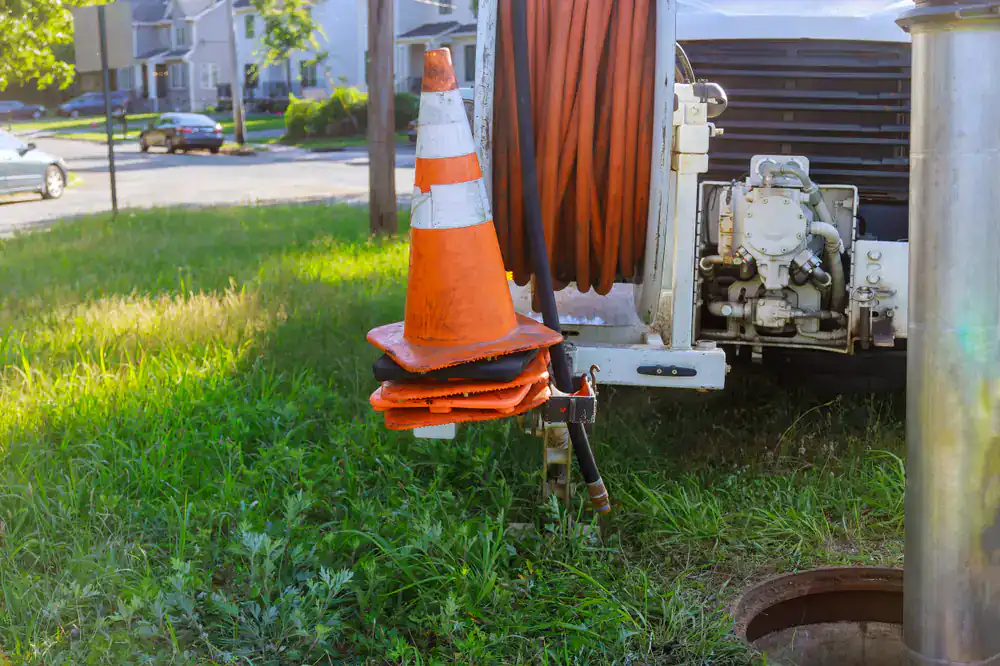
The first thing that happens is locating your tank and in Port Jefferson Station, that step alone can take some work. On properties with homes built in the 1950s and 1960s, lids are frequently buried under years of soil and landscaping. Previous owners sometimes marked them, sometimes didn’t. We specialize in finding hard-to-locate cesspools and septic tanks, so you won’t be standing in your yard with a shovel trying to figure it out yourself.
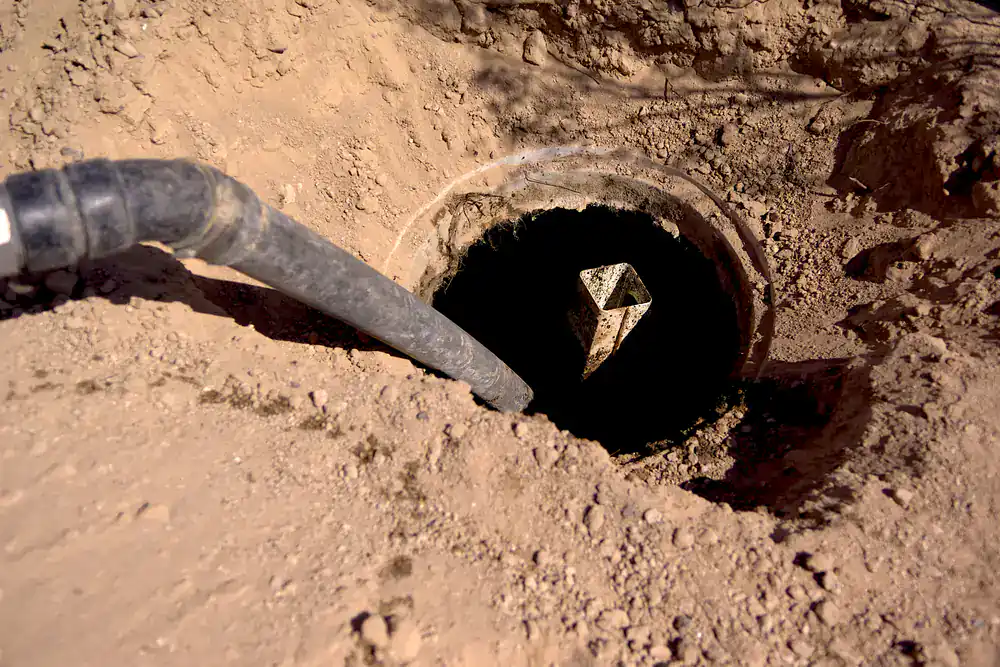
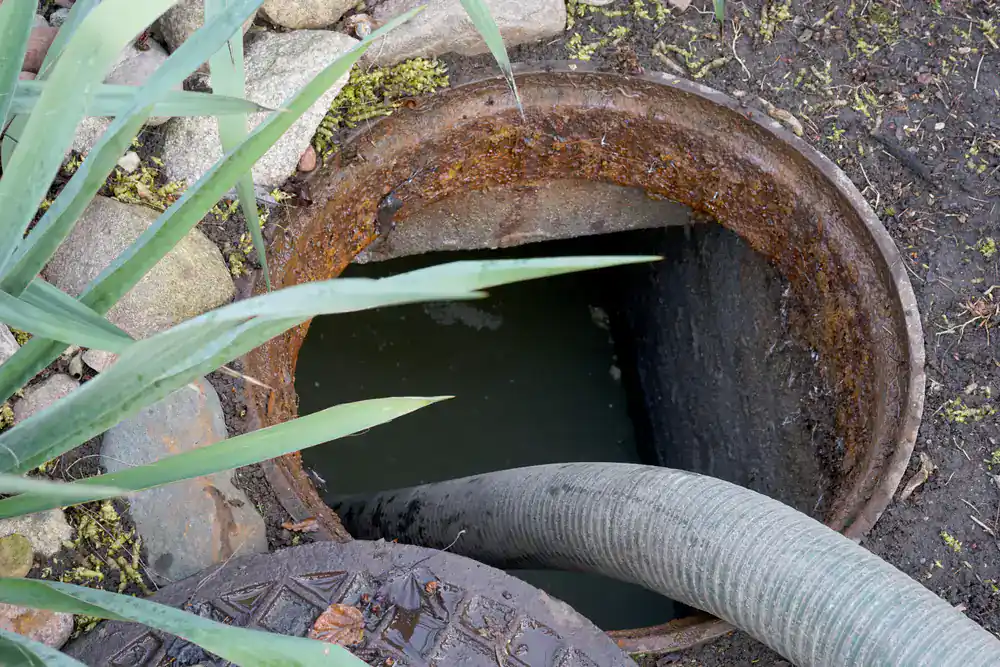
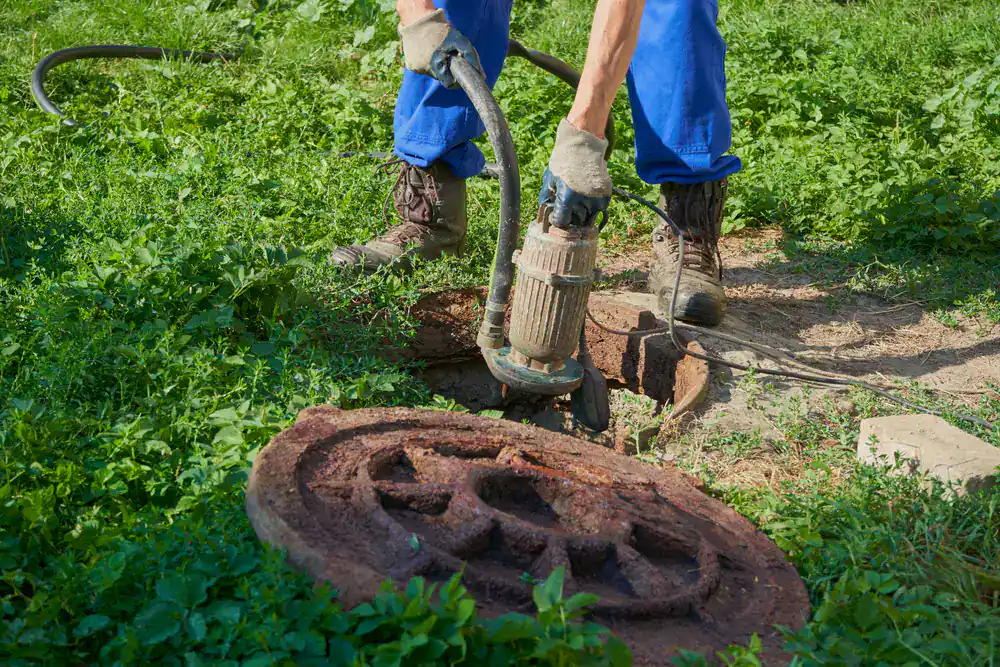
Once the tank is located and accessed, we perform a full pump-out not a partial one. All of the accumulated sludge and waste is removed using a vacuum truck, and the tank is inspected while it’s empty. That inspection is where real information comes from: the condition of the baffles, signs of infiltration, whether the tank itself is structurally sound. You’ll hear what was found and what, if anything, it means for the system going forward.
Suffolk County requires a Liquid Waste License for any contractor performing this work, and we hold that credential. All waste is transported and disposed of legally at a licensed treatment facility not a shortcut that some lower-priced operators take. After the job is done, the site is left clean. The process is meant to be straightforward, and the conversation at the end of it should leave you with a clear picture of where your system stands.
Ready to get started?
Septic tank pumping is the core of what brings most Port Jefferson Station homeowners to us, but it’s rarely the only thing a 60-year-old system needs attention on. Slow drains, aging main lines, deteriorating drywells, and house trap issues are all common in homes of this era and we handle all of them directly. You don’t have to coordinate three different companies when multiple things need work.
For homeowners in Port Jefferson Station who are preparing to sell or who just bought and want to understand what they’re working with the inspection and pumping process also supports real estate closings. Lenders and buyers routinely require cesspool certification before a transaction can close, and in some cases a video camera inspection as well. Getting that handled early removes one of the more stressful unknowns from the sale process.
Suffolk County’s 2019 regulatory change is also worth knowing about: if your system fails and requires full replacement, a direct in-kind cesspool swap is no longer permitted. Any replacement must now meet current standards, which typically means upgrading to a more advanced system. A system that’s pumped on schedule and assessed regularly is far less likely to reach the point of failure than one that’s been ignored. We cover pumping, drain cleaning, drywell service, main line cleaning and replacement, and full installation when that’s what’s needed.