Useful Links
Other Services we provide in Quogue
Yes, and Quogue’s requirements are stricter than the Suffolk County baseline. The Village of Quogue enacted its own local law in 2018 requiring nitrogen-reducing Innovative and Alternative Onsite Wastewater Treatment Systems what the county calls I/A OWTS for new construction and significant renovations. This happened a full year before Suffolk County’s 2019 mandate that banned cesspool-only replacements countywide.
What that means practically is that if you’re building new or undertaking a major renovation in Quogue, the system going in must meet a specific nitrogen output threshold, not just pass a standard inspection. The Village references a Water Quality Improvement Priority Program map that designates certain areas within Quogue as heightened priority zones. Given that the village is surrounded by Shinnecock Bay, Quantuck Bay, and the Quogue Canal, a significant portion of properties fall within or adjacent to those mapped areas.
Any contractor working in Quogue needs to understand both the SCDHS permit requirements and the Village’s own local law they’re not the same document. We navigate both for every project.
Not exactly, and this is one of the most common misconceptions homeowners run into. Since July 1, 2019, Suffolk County banned cesspool-only replacements. If you’re replacing a failed or failing system, the new installation must include at minimum a septic tank preceding the leaching structure you can no longer swap a cesspool for another cesspool the way you could before that date.
For Quogue specifically, the Village’s own 2018 local law adds another layer on top of that. New construction and significant renovations require a nitrogen-reducing I/A OWTS system, which goes beyond the county’s baseline replacement requirement. The practical upshot is that what you can install depends on the nature of your project routine replacement versus new construction versus major renovation each triggers different requirements. That’s something we sort out during the permitting and site evaluation process, not something to guess at.
The installation work itself once permits are in hand typically takes one to five days for a residential property, depending on the system type and site conditions. A straightforward replacement on a property with good soil access and a clear system location tends to come in at the lower end of that range. More complex projects, like properties near the Quogue Canal or Quantuck Bay where setback calculations are more involved, or older homes where the existing cesspool needs to be located before work can begin, can take longer to plan and execute even if the physical installation moves quickly.
The part of the timeline that surprises most homeowners is the permit process, not the installation itself. SCDHS permit applications require engineered plans, soil evaluation results, and setback documentation. Processing typically takes two to four weeks from submission. For Quogue homeowners who want the system operational before the summer season, that timeline matters starting the process in March or April gives you a realistic path to completion before Memorial Day.
This comes up more often in Quogue than in most Long Island communities, and it’s not a reason to panic. Many of the village’s homes along Quogue Street and throughout the Historic District were built in the 19th century, and the cesspools beneath them were installed long before anyone was keeping detailed documentation. No map, no records, and no idea where to dig is a genuinely common starting point for older Quogue properties.
We specialize in locating hard-to-find cesspools. Locating the system is the first step before any assessment, permitting, or installation work can begin. Once the existing system is found and its condition evaluated, you have a clear picture of what you’re dealing with whether that’s a full replacement, a structural repair, or ring replacement on a system that’s compromised but not yet at end of life. The free estimate process starts there, not with assumptions about what’s underground.
Yes. Suffolk County’s Septic Improvement Program offers combined State and County grants of up to $45,000 for eligible I/A OWTS installations as of July 2025. Quogue homeowners whose projects require a nitrogen-reducing system which covers new construction and significant renovations under the Village’s 2018 local law are the most likely candidates for this funding. The grant is paid directly to the licensed installer after final inspection, so you pay only the balance remaining after the grant is applied.
A few things worth knowing about the program: funding is first-come, first-served, and grant availability does get depleted over time. The IRS has confirmed that these grant payments are not counted as taxable income, which matters for higher-income households. The application process has its own timeline separate from the permit process, so the earlier you start, the better your position. We can walk you through what the installation process involves from start to finish and what documentation the grant application requires.
It affects several things. The most immediate is the water table. Quogue’s low-lying coastal geography means the water table can be quite shallow in parts of the village, particularly near the Canal, the bays, and Dune Road. A high water table changes the engineering requirements for the leaching pool the system needs to be designed with enough separation between the bottom of the leaching structure and the seasonal high groundwater level to function correctly.
The second factor is setback requirements. SCDHS requires minimum distances between cesspool components and water wells, property lines, and water bodies. In a village surrounded by Shinnecock Bay, Quantuck Bay, and the Quogue Canal, those setback calculations are more complex than they would be on an inland property. Properties near the Wildlife Refuge boundary or along the Canal may also fall within environmentally sensitive mapped areas that trigger additional review. Getting those calculations right during the permit application is what protects the installation from failing inspection and protects you from having to redo work that wasn’t properly engineered for the site.
Hear from Our Customers

The Village of Quogue has stated plainly: cesspools built before 1970 from concrete blocks have exceeded their structural lifespan. Many homes along Quogue Street and throughout the Historic District sit on exactly that aging underground infrastructure never designed for modern household water usage and never expected to last this long.
When we install a properly engineered system to replace one of those old concrete-block cesspools, the immediate difference is functional. Drains move the way they should. There’s no wet patch forming in the yard after a full house. No odor creeping up on a warm afternoon. The system handles the load without you thinking about it.
But the longer-term outcome matters just as much in Quogue. The village is surrounded by water on three sides Shinnecock Bay, Quantuck Bay, and the Quogue Canal all sit within close range of residential properties. A failing cesspool in this environment isn’t just a household problem. It’s leaching into the same groundwater that feeds those bays.
A correctly installed, properly permitted system sized for your property and compliant with both Suffolk County and Quogue’s own local requirements stops that from happening. That’s a real outcome, not a talking point.
For seasonal homeowners, a functioning system also means you’re not walking into a problem every June. The village’s population goes from roughly 1,000 year-round residents to around 5,000 during summer. A system that barely handles winter occupancy won’t survive that surge. Getting the installation done right and done before the season means your summer isn’t derailed before it starts.
Drastic Drainage Long Island is a family-owned, fully licensed, insured, and bonded cesspool and drainage company that has been working across Nassau and Suffolk Counties for over 30 years. Our license number LW-63684 is issued by Suffolk County and covers the full scope of cesspool work installation, replacement, pumping, and drainage. Every job we do is permitted, inspected, and done to code.
Quogue sits in a part of Suffolk County where the regulatory picture is more layered than most. The Village enacted its own local law in 2018 requiring nitrogen-reducing systems before Suffolk County’s 2019 mandate even took effect. Working in Quogue means understanding both sets of requirements the SCDHS permit process and the Village’s own I/A OWTS standards and navigating them without putting the burden on you. That’s part of what 30 years on Long Island actually looks like in practice.
One thing worth noting: many of Quogue’s older homes have cesspools with no location records no map, no documentation, nothing. We specialize in locating hard-to-find cesspools, which matters more in a village with 19th-century housing stock than it does almost anywhere else on the Island.
It starts with a free estimate. Before anything is quoted, scheduled, or dug, you get a clear picture of what the job involves and what it will cost. No one shows up with a truck and then hands you a number you weren’t expecting.
From there, we handle permits through the Suffolk County Department of Health Services. In Quogue, that process includes engineering plans, soil evaluation, and setback documentation particularly important given how close many properties sit to the Canal, the bays, or the Wildlife Refuge boundary. Permit processing typically takes two to four weeks, and we manage that process so you’re not chasing paperwork on your own.
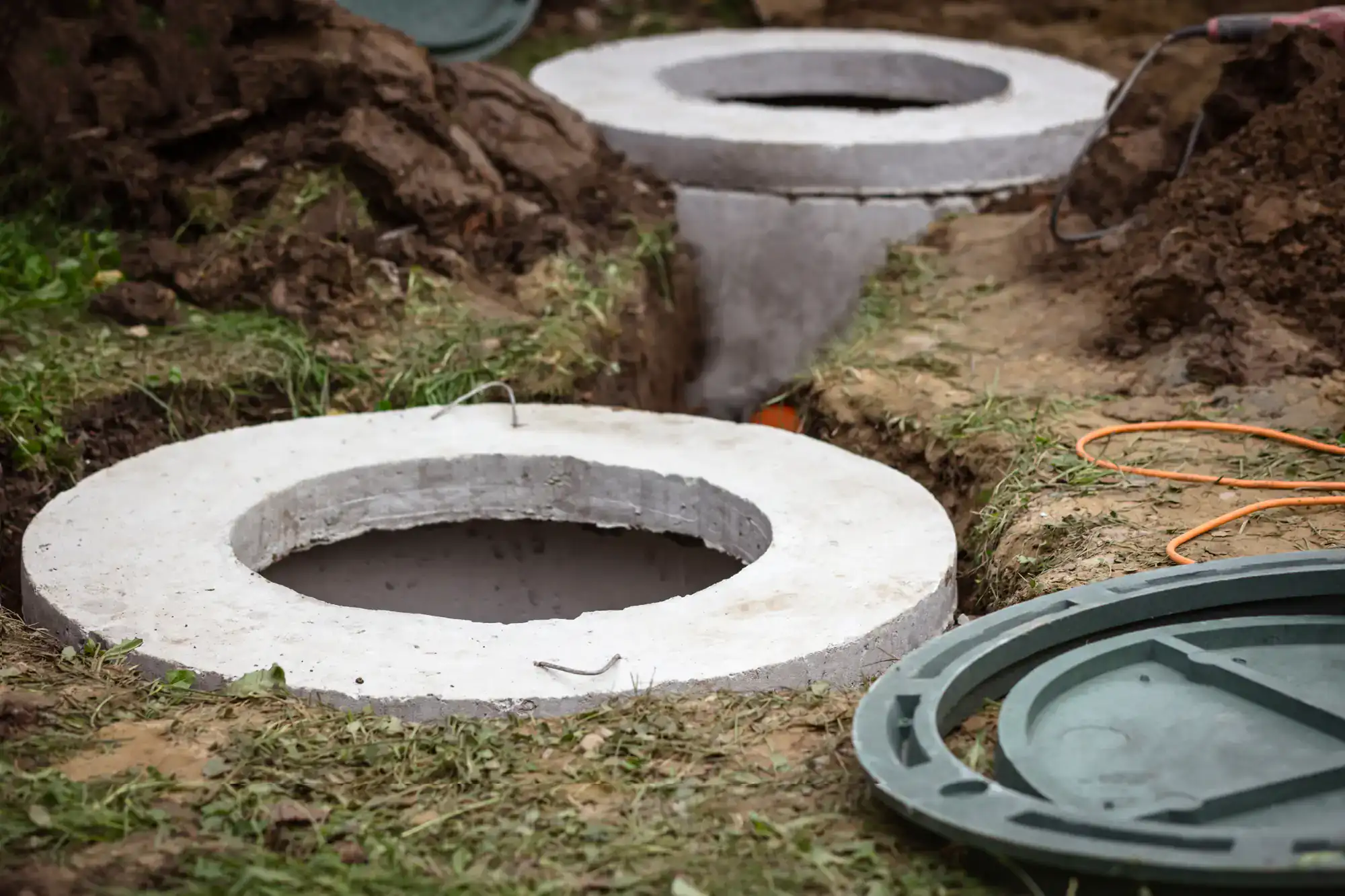
Once permits are approved, the installation moves through a clear sequence: site preparation, excavation, tank and leaching pool installation, connection to your home’s existing sewer line, backfill, and site restoration. We handle the full scope there are no subcontractors handed part of the job. For Quogue properties with mature landscaping or formal grounds, site restoration after excavation is treated as part of the job, not an afterthought.
Most residential installations are completed within one to five days depending on the system type and site conditions. When the work is done, SCDHS conducts a final inspection before the system goes live. That sign-off is the last step and it’s the one that protects you if you ever sell the property.
Ready to get started?
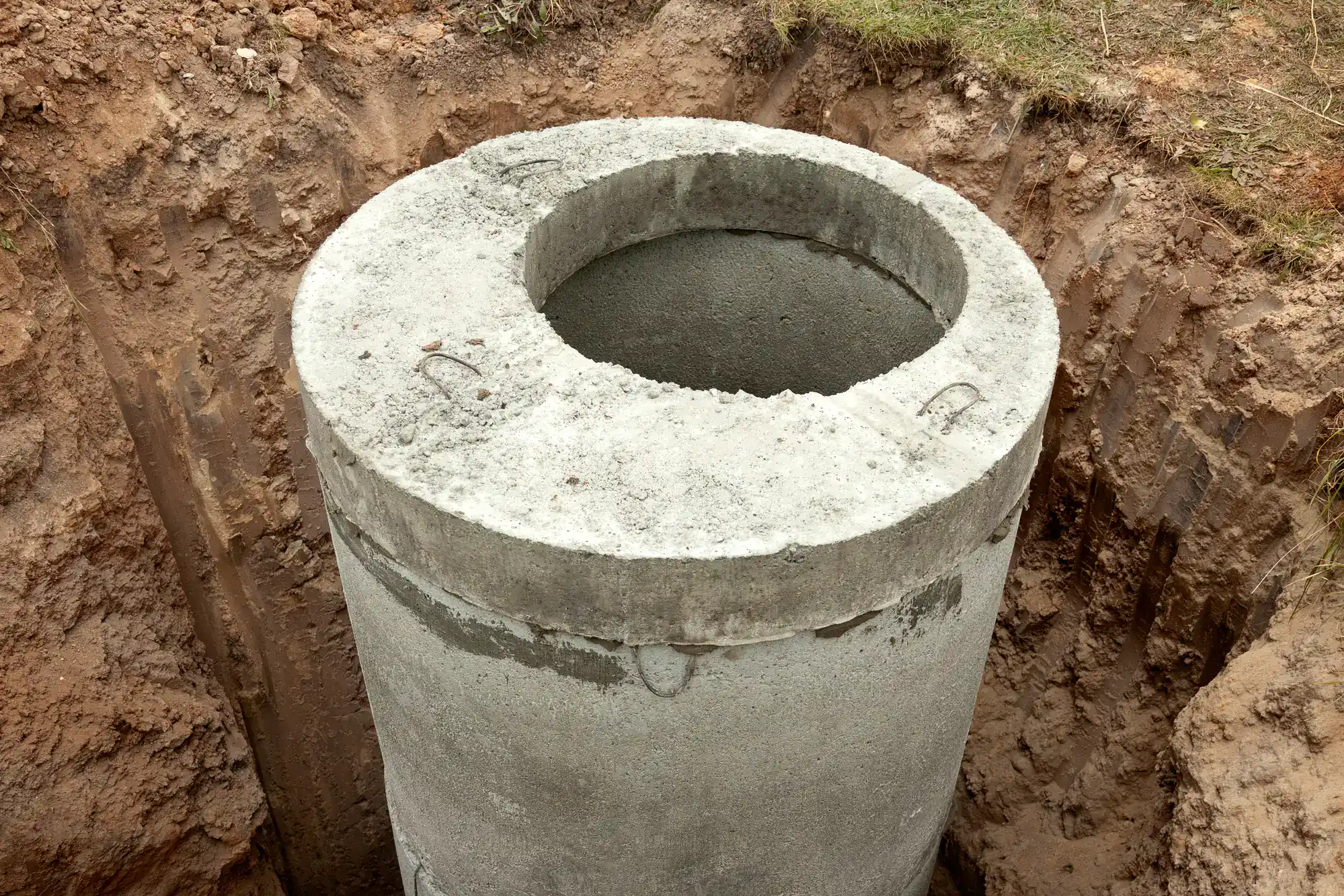
Cesspool installation in Quogue isn’t a one-size situation. The Village’s 2018 local law requires nitrogen-reducing I/A OWTS systems for new construction and significant renovations a standard that predates Suffolk County’s own 2019 mandate. If your project triggers that requirement, the system going in needs to meet a total nitrogen output threshold, not just pass a basic inspection. We install complete systems from excavation through final setup, including conventional cesspool and leaching pool configurations where still permitted, as well as the components required for more complex replacement projects.
For older Quogue properties particularly those in or near the Historic District with pre-1970 concrete-block cesspools the scope of work often includes locating the existing system before anything else can happen. That’s not always straightforward in a village where records are sparse and the housing stock predates modern documentation. Once the existing system is located and assessed, the replacement is planned around your property’s specific setback requirements from wells, property lines, and the water bodies that border the village on multiple sides.
We also handle cesspool ring replacement for systems where the structure is compromised but a full replacement isn’t yet warranted, as well as drywell installation for drainage management on residential and commercial properties throughout the Southampton Town area. Every job regardless of scope is permitted, inspected, and backed by a crew that has been doing this work on Long Island for over 30 years. Free estimates are available with no obligation.