Useful Links
Other Services we provide in Quogue
The honest answer depends on what type of system you have and how intensively the property is used during the season. Cesspools which are common throughout Quogue’s older housing stock typically need pumping every one to two years because they don’t separate solids from liquids the way a conventional septic tank does. Septic tanks generally go three to five years between pump-outs under normal use.
The complicating factor in Quogue is the seasonal occupancy pattern. A property that sits empty from October through May and then hosts a full house for eight to ten weeks of summer is putting concentrated, high-volume use on the system in a short window. That kind of load can fill a tank faster than the calendar would suggest. If you don’t have records showing when the system was last serviced which is common on properties that have changed hands or been in a family for decades starting with an inspection and pump-out gives you a clean baseline to work from going forward.
This is one of the most common questions on Long Island, and the confusion is understandable. A cesspool is a single underground chamber that receives all household waste solids and liquids together and relies on the surrounding soil to absorb the liquid over time. A conventional septic tank separates solids from liquids: solids settle at the bottom and are held in the tank, while liquid flows out to a drain field or leaching field.
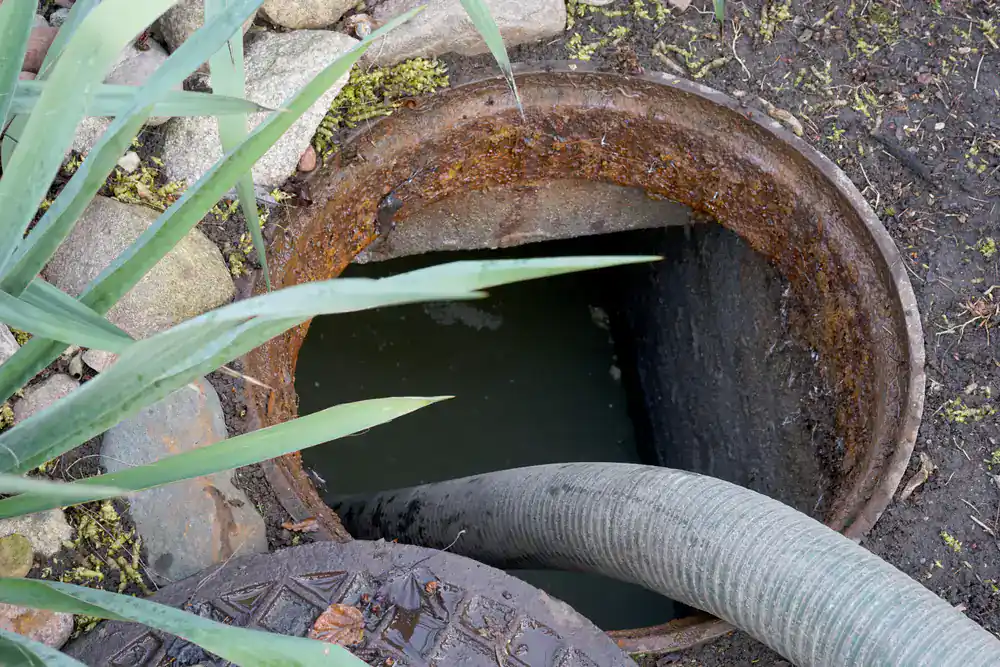
Quogue has a significant amount of older housing stock, particularly in and around the Historic District, where cesspools installed decades ago are still in use. Many homeowners aren’t sure which system they have, especially if they purchased the property from an estate or don’t have documentation from prior owners. The simplest way to find out is to have a technician locate and inspect the system the design is visible once the lid is accessed, and from there you’ll know exactly what you’re working with, what the pumping schedule should look like, and whether any upgrades are on the horizon.
Not automatically, but it’s worth knowing where things stand before the season starts rather than finding out the hard way in July. If the system was pumped before you closed up last fall, and the property sat unoccupied through winter, you may be in good shape. But if you’re not sure when it was last serviced, or if the house had a busy August and September before closing, the tank could be at or near capacity before a single summer guest arrives.
The practical issue is timing. Pre-season calls in Quogue tend to cluster in late April and May as owners prepare to open. Scheduling a pump-out and system check before Memorial Day weekend rather than after a problem surfaces keeps you ahead of the rush and gives you the whole summer without wondering. If we find something worth addressing, you have time to deal with it before the season is in full swing.
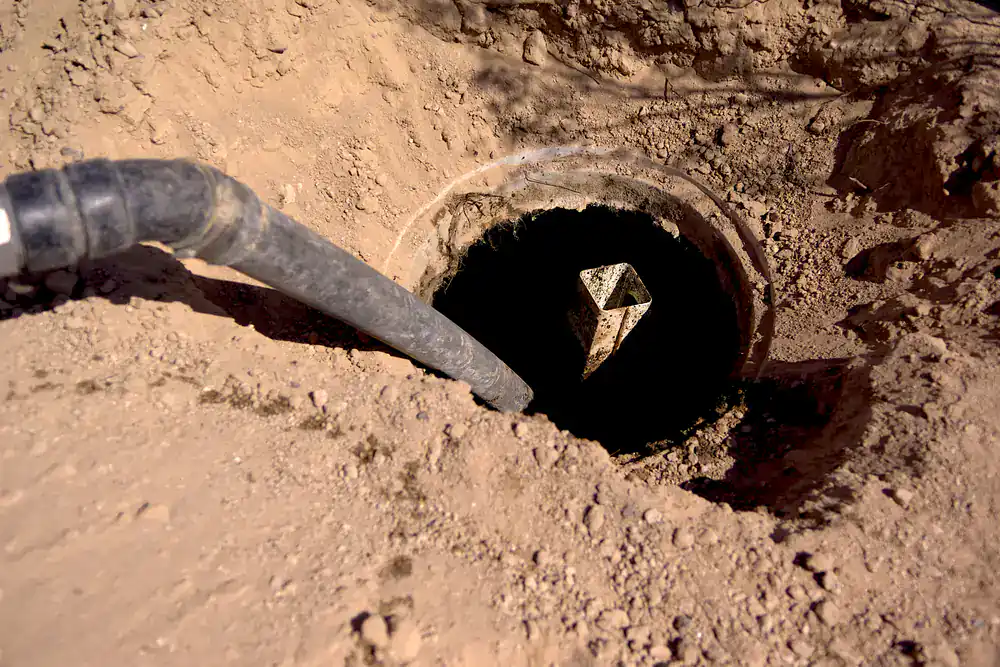
Yes, and this is more common than most people realize, especially on older Quogue properties. Homes in the Historic District and throughout the village’s older neighborhoods were built long before modern system documentation requirements existed. Over decades of landscaping, additions, and ownership changes, cesspool lids get buried under gardens, patios, and accumulated soil. Some homeowners have genuinely no idea where their tank is located.
We specifically market the ability to locate hard-to-find cesspools it’s a documented specialty, not something we handle reluctantly. Our technician uses the available information about the property and system type to locate the tank, and once it’s found, the lid is accessed and the job proceeds from there. If excavation is needed to reach a buried lid, that’s part of the process not a reason to turn the job away. For a property you’ve just purchased or inherited without records, this is often the starting point for getting the system properly documented going forward.
Standard residential septic tank pumping in Suffolk County runs between $225 and $600 depending on tank size. A 1,000-gallon tank typically falls in the $225 to $400 range; a 2,000-gallon system generally runs $400 to $600. Those are the real numbers based on current market rates in this area.
Where costs can increase is when additional work is involved lid excavation if the tank is buried, for example, can add to the base price depending on depth and access. The thing to watch for with any provider is the gap between what’s quoted over the phone and what appears on the invoice. We operate on an upfront pricing model: the estimate you get before the truck rolls reflects what you’ll actually pay. If something unexpected comes up during the job, you’ll hear about it before any additional work proceeds not after.
Quite possibly, and the available funding in Quogue is more substantial than most homeowners realize. Southampton Town offers up to $20,000 in rebate funds for homeowners who replace an outdated cesspool or septic system with a nitrogen-reducing Innovative/Alternative Onsite Wastewater Treatment system. On top of that, the Suffolk County Septic Improvement Program provides an additional $25,000 a combination of $15,000 from the county and $10,000 in state matching funds. In total, qualifying properties can access $45,000 or more in grant and rebate money toward an upgrade.
The Village of Quogue has also waived its local permit fees for homeowners who make this upgrade voluntarily a direct acknowledgment by the village government that getting outdated systems replaced is a community priority, given the documented nitrogen impact on Shinnecock Bay and Quantuck Bay. The permit process involves both a Southampton Town permit and a separate Village of Quogue permit, so it helps to understand the sequence before starting. If you’re weighing whether a repair or a full upgrade makes more sense for your property, knowing what financial programs are available is a reasonable first step before making any decisions.
Hear from Our Customers
Most septic problems in Quogue don’t announce themselves in January. They show up in July when the house is full, the rental period has started, and the last thing you need is a backup. That’s the reality of owning a seasonal property here: the system sits quiet for months, then takes on a full summer’s worth of load in a matter of weeks. Getting ahead of that is the whole point of routine pumping.
When you know the system was properly pumped and inspected before the season started, you stop thinking about it. That’s the outcome not just an empty tank, but the confidence to focus on the summer instead of watching the drains.
There’s also something specific to Quogue worth understanding. The village sits near the midpoint between Shinnecock and Moriches inlets, which means the bays on either side Shinnecock Bay and Quantuck Bay don’t flush the way open-water bodies do. Nitrogen from aging or overloaded septic systems doesn’t move out; it accumulates. The Village of Quogue’s own Board of Trustees has made this a public priority, and for good reason. A well-maintained, regularly pumped system is one of the most direct things a property owner can do to protect the water quality that makes this village worth being in.
We’ve been handling cesspool and septic work across Long Island since 2002, and our team’s hands-on experience goes back over 30 years. That span covers a lot of ground including the older, more complex systems you find on East End properties like those in Quogue’s Historic District, where homes built from the mid-1700s through the 1930s can have cesspools that have been buried, forgotten, and landscaped over multiple times.
What we’re clear about: we don’t recommend work you don’t need. If a pump-out is what the system requires, that’s what you get not a pitch for a full replacement. We provide free estimates, upfront pricing, and a stated commitment to not inflating simple jobs. That’s not a tagline; it’s the thing that keeps customers calling back.
We’re locally owned and operated, based in West Babylon, and service all of Suffolk County including Quogue and the broader Southampton Town area. We’re available 24 hours a day, seven days a week, including weekends and holidays.
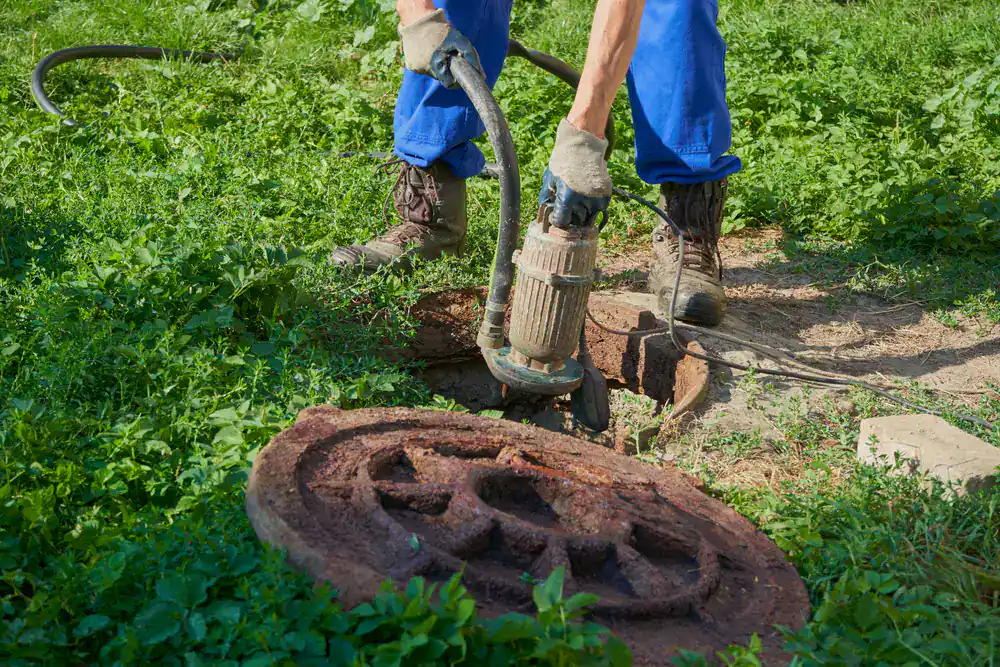
The first step before anything else is locating the system. On newer properties this is straightforward, but on older Quogue homes especially those in and around the Historic District lids can be buried under years of soil, plantings, or hardscaping. We specialize in locating hard-to-find cesspools, so if you don’t know exactly where your tank is, that’s not a problem that stops the job.
Once the system is located and the lid is accessed, our technician removes all accumulated sludge and waste from the tank. This matters more than it sounds a partial pump-out leaves behind material that continues breaking down and filling the tank faster. A complete pump-out gives you the full service interval before you need to call again.
After pumping, we inspect the baffles, check the tank condition, and let you know what we found. If there’s something that needs attention a cracked baffle, signs of infiltration, a lid that’s shifted you’ll hear about it clearly, with an honest explanation of what’s needed versus what can wait. Because many Quogue homeowners coordinate service through a caretaker or property manager, our crew is used to working with a third party on-site and communicating findings clearly so you’re informed regardless of whether you’re there in person.
Quogue falls under Suffolk County Department of Health Services regulations and Southampton Town permit requirements. For any system replacement or upgrade, the Village of Quogue also requires its own permit something worth knowing before any larger work begins.
Ready to get started?
Septic tank pumping is the core of what brings most Quogue homeowners to call, but it’s rarely the only thing a property needs over time. We handle the full range: cesspool pumping, drywell cleaning, drain cleaning, house trap replacements, main sewer line cleaning and replacement, and full cesspool and septic installation when a system reaches the end of its life.
For Quogue properties specifically, this matters because the regulatory landscape has shifted significantly. Since 2019, Suffolk County no longer allows in-kind cesspool replacement if a system fails and needs to be replaced, it has to be upgraded. For properties near Shinnecock Bay, Quantuck Bay, or other sensitive water bodies, that typically means moving to a nitrogen-reducing Innovative/Alternative Onsite Wastewater Treatment System. The Village of Quogue has actually waived its local permit fees for homeowners who make this upgrade voluntarily, and Southampton Town offers up to $20,000 in rebate funds on top of what’s available through county and state programs. If you’re weighing whether to repair or replace, understanding what’s available financially is worth the conversation before any decision is made.
Whether it’s a routine pre-season pump-out before Memorial Day, an emergency call mid-summer, or a full assessment on a property you’ve just purchased and don’t have records for we complete the work thoroughly, and you’ll know exactly what was found.