By submitting you consent to receive service-related texts from Drastic Drainage. Reply STOP to opt out. Msg & data rates may apply. Consent not required to book service.
Useful Links
Other Services we provide in Quogue
The right septic installation in Quogue doesn’t just fix a problem. It removes one from your life entirely. No more guessing whether the system under your estate is quietly failing. No more anxiety every time you open the property for summer. You get a properly engineered system, documented permits, and the peace of mind that comes from knowing the work was done right the first time.
Quogue’s housing stock is unlike most of Suffolk County. Many homes along Quogue Street and through the village’s estate zone were built in the late 1800s and early 1900s beautiful properties with original or mid-century cesspools that have long outlived their design life. The Village of Quogue has stated plainly in its own official communications that pre-1970 concrete block cesspools in the area have exceeded their structural lifespan and risk catastrophic failure. Getting ahead of that isn’t optional anymore; it’s just smart.
For properties on or near Dune Road, the stakes are even more specific. You’re on a barrier beach between the Atlantic and Quantuck Bay, in a FEMA flood zone, with a water table that doesn’t forgive a poorly sited system. A properly installed nitrogen-reducing septic system here protects your property value, keeps you compliant with the village’s 2018 local law, and if you’re eligible can be largely offset by combined state and county grants of up to $45,000 as of July 2025.
Yes and Quogue acted ahead of most of Suffolk County on this. The Village of Quogue passed a local law in 2018 requiring nitrogen-reducing I/A OWTS systems for any newly built home or any home undergoing a significant renovation. This is a village-level requirement that sits on top of the broader Suffolk County Article 6 framework. If you’re planning a substantial renovation adding square footage, doing a major gut renovation, or any project that triggers a new building permit a septic upgrade is part of that process, not optional.
The practical implication is that the septic component needs to be planned in parallel with your renovation, not discovered at the end. If you’re working with an architect or general contractor, the septic permitting timeline needs to run alongside the rest of the project. We coordinate the SCDHS permit and the village building permit correctly upfront so your renovation stays on schedule and your certificate of occupancy doesn’t get delayed.
Quogue homeowners are eligible for the Suffolk County Septic Improvement Program, and the Village of Quogue has been actively directing residents toward it. The village even retained an outside advisor to help residents navigate the process. As of July 2025, combined state and county grants of up to $45,000 are available for qualifying I/A OWTS installations.
The most important thing to understand: the application has to be approved before installation begins. The funds are assigned directly to the approved installer, not reimbursed to you after the fact. If you hire a contractor and start work before the grant is issued, you lose eligibility. That’s a mistake that’s hard to undo. The process involves submitting an application, receiving a grant certificate, selecting an SIP-approved installer, and then scheduling the installation. It adds some lead time, but for a grant that can cover a significant portion of a $25,000 or more installation, it’s worth building into your timeline from the start.
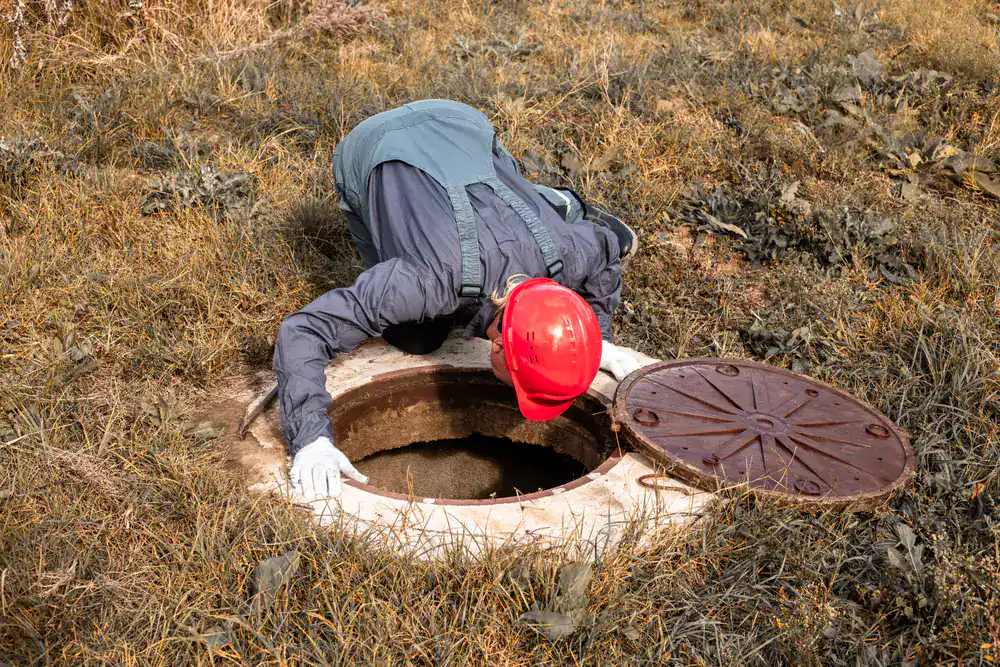
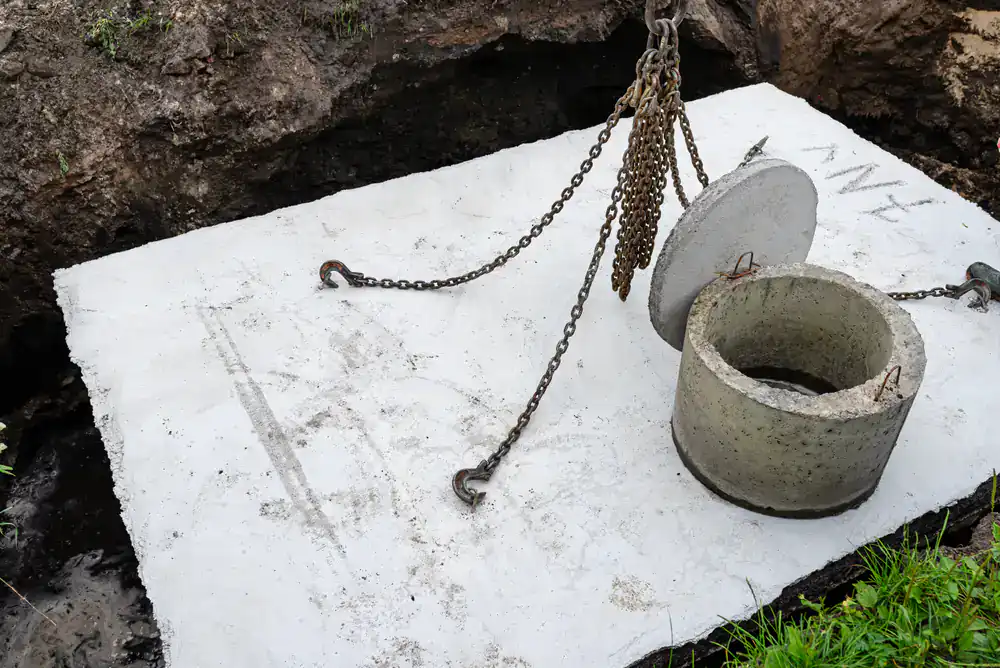
The existing system has to be properly abandoned it can’t just be left in the ground and ignored. Proper abandonment means the old cesspool or septic tank is pumped out completely, then either crushed or filled with an approved material, and the work is documented with SCDHS. This is a required part of the installation process, not an optional add-on.
In Quogue, where many homes have original or mid-century cesspools some dating back to when the estates were first built the abandonment process sometimes involves locating a system that wasn’t mapped or was forgotten entirely. Older concrete block cesspools, which the village itself has flagged as being past their structural lifespan, can present surprises during excavation. That’s why the site assessment phase matters. Knowing what’s underground before the excavation crew arrives keeps the job on schedule and avoids mid-project discoveries that change the scope and cost.
The active installation work on most residential properties takes one to three days once permits are in hand. The bigger variable is the time before that the permit process. In Quogue, you’re dealing with two permitting layers: the Village of Quogue Building Department and the Suffolk County Department of Health Services under Article 6. If you’re also applying for a SIP grant, that application has to be approved before any work begins, which adds additional lead time.
For seasonal property owners, timing is everything. If you’re trying to have a system replaced before Memorial Day, you need to be starting the process in late winter or early spring not in April. The permit windows, the grant application review period, and the scheduling demand that ramps up as summer approaches all compress the available timeline. Homeowners who call in February are the ones who have a working system by June. Those who wait until May are often looking at a summer disruption.
A cesspool is essentially a pit. Raw wastewater goes in, liquid seeps out into the surrounding soil, and solids accumulate at the bottom. There’s no treatment happening the effluent goes directly into the ground with everything in it, including nitrogen. A septic system is different: it has a tank that separates solids from liquids, and the liquid effluent moves to a leaching field where it’s dispersed and partially treated before reaching groundwater.
In Quogue, this distinction matters more than almost anywhere else on Long Island. The village sits between Quantuck Bay and Shinnecock Bay, in an area where tidal exchange is minimal and nitrogen accumulates rather than flushes out. Conventional cesspools release roughly 40 pounds of nitrogen per household per year directly into the soil and groundwater. With the Quogue Wildlife Refuge bordering the village to the north and the bays to the south, that nitrogen has a very short path to ecologically sensitive water. An I/A OWTS nitrogen-reducing system cuts that output by up to 70%. That’s the practical reason the village mandated the upgrade and it’s why the state and county are funding it with grants.
Yes. Any contractor doing cesspool or septic work in Suffolk County which includes Quogue is required to hold a Liquid Waste License issued by the Suffolk County Department of Labor, Licensing and Consumer Affairs under Chapter 563, Article VII of the Suffolk County Code. This is a separate credential from a general plumbing license. A licensed plumber is not automatically authorized to install a septic system in Suffolk County, and a contractor without this specific license cannot legally do the work.
For I/A OWTS installations specifically, the contractor also needs to have completed the I/A OWTS installer certification through the SCDHS and University of Rhode Island training program. If you’re using SIP grant funding, your contractor must be on the Suffolk County Septic Improvement Program’s approved installer list only contractors on that list can accept grant funds on your behalf. Before you commit to any contractor, ask to see their Suffolk County Liquid Waste License number and confirm their SIP approved installer status. Licensed contractors are also required to carry $1,000,000 in liability insurance and a $10,000 bond. These aren’t formalities they’re the baseline protections that keep you covered if something goes wrong on your property.
Free, no-obligation estimates on cesspool, sewer, and drain work.
We get there quickly. No waiting days for a callback.
Backups don’t wait for business hours. Neither do we.
Fully licensed and insured across Long Island.
Up-to-date trucks and tools for cleaner, faster jobs.
Straight quotes, no surprises on the bill.
Hear from Our Customers
The right septic installation in Quogue doesn’t just fix a problem. It removes one from your life entirely. No more guessing whether the system under your estate is quietly failing. No more anxiety every time you open the property for summer. You get a properly engineered system, documented permits, and the peace of mind that comes from knowing the work was done right the first time.
Quogue’s housing stock is unlike most of Suffolk County. Many homes along Quogue Street and through the village’s estate zone were built in the late 1800s and early 1900s beautiful properties with original or mid-century cesspools that have long outlived their design life. The Village of Quogue has stated plainly in its own official communications that pre-1970 concrete block cesspools in the area have exceeded their structural lifespan and risk catastrophic failure. Getting ahead of that isn’t optional anymore; it’s just smart.
For properties on or near Dune Road, the stakes are even more specific. You’re on a barrier beach between the Atlantic and Quantuck Bay, in a FEMA flood zone, with a water table that doesn’t forgive a poorly sited system. A properly installed nitrogen-reducing septic system here protects your property value, keeps you compliant with the village’s 2018 local law, and if you’re eligible can be largely offset by combined state and county grants of up to $45,000 as of July 2025.
Drastic Drainage Long Island is a family-owned company based in West Babylon, Suffolk County. Our owner’s name is on every job Michael Chiofalo runs this operation, and our team has been navigating Long Island’s specific drainage and septic environment for over 30 years.
That experience matters in Quogue specifically. We’ve worked in the coastal conditions that define this part of Suffolk County, filed with the Department of Health Services countless times, and dealt with the particular soil and groundwater characteristics of the area surrounding Quantuck Bay many times over. We understand what it means for system selection, placement, and long-term performance and we can walk you through every decision without the runaround.
Quogue sits near the midpoint between Shinnecock and Moriches inlets, where tidal exchange is minimal and nitrogen from failing systems accumulates directly in the bays that surround the village. We know how to design and install systems that account for that reality.

It starts with a site assessment. Before anything is quoted or scheduled, we evaluate the property soil conditions, existing system location, lot size, proximity to water, and any site-specific constraints. In Quogue, that last part matters more than in most places. Properties near Quantuck Bay, in the coastal erosion zone, or on Dune Road may have additional engineering considerations that need to be identified upfront, not discovered mid-excavation.
Once the assessment is complete, we submit the design for permitting. In Quogue, that means both the Village of Quogue Building Department and the Suffolk County Department of Health Services under Article 6 of the Suffolk County Sanitary Code. If you’re pursuing an I/A OWTS installation which the village has required for new construction and significant renovations since 2018 the Suffolk County Septic Improvement Program grant application also needs to be submitted and approved before any installation work begins. This sequencing matters, and getting it wrong costs you grant eligibility.
Once permits are in hand, most residential installations are completed in one to three days of active work. We pump and properly abandon the old system documented and filled and install the new system with full records provided at completion. Those records matter for your files and at the closing table if you ever sell.

Ready to get started?
We handle septic installation as a complete process, not a series of hand-offs. That means the site evaluation, the permit coordination with both the Village of Quogue Building Department and SCDHS, the excavation, the system installation, the abandonment of the existing cesspool or septic system, and the post-installation documentation all through one company, one point of contact.
For Quogue homeowners pursuing an I/A OWTS upgrade, we can walk you through the Suffolk County Septic Improvement Program process, including the timing requirements that trip up a lot of homeowners. The grant application has to be approved before installation begins not after. If you’re planning a significant renovation that triggers Quogue’s local nitrogen-reducing system requirement, that sequencing needs to be built into your project timeline from the start, not treated as an afterthought.
For properties in the village’s coastal areas particularly along Dune Road or anywhere near Quantuck Bay we design systems that account for flood zone requirements and the high water table conditions common on the barrier beach. Every installation comes with complete documentation: permits, inspection records, system specifications, and installation records. Whether you’re protecting a multigenerational family estate on Quogue Street or managing a high-value rental property, you’ll have a clear paper trail when you need it.