Useful Links
Other Services we provide in Amityville
The general Long Island guideline is every two to three years for a residential cesspool, but that number assumes average conditions and Amityville’s conditions aren’t average. For properties near the Great South Bay, the canals in South Amityville, or low-lying areas near Amityville Creek, the water table sits close enough to the surface that it directly affects how your cesspool performs.
A high water table reduces the system’s ability to leach liquid into the surrounding soil, which means solids accumulate faster than they would on an inland lot. For waterfront and bay-adjacent properties on the South Shore, a 12-to-18-month service interval is a more realistic target.
If your home was built before 1965 and you don’t have clear records of the last pump-out, the safest approach is to schedule a service now and use that as your baseline. From there, you and the technician can assess the right interval based on what the system looks like and how your household uses it.
Pumping removes the liquid waste and floating solids sitting in the tank at the time of service. It’s the most common type of cesspool service and what most homeowners mean when they say they need their cesspool “done.” Cleaning is a more thorough process it targets the hardened sludge that accumulates on the walls and floor of the tank over time, material that a standard pump-out doesn’t fully address.
For a newer system on a consistent service schedule, pumping is usually sufficient. For an older system and in Amityville, where the median home was built in 1959, older systems are the rule rather than the exception cleaning may be the more appropriate starting point, especially if the service history is unclear.
If you’re not sure which one your system needs, a technician can assess the condition of the tank during the visit and give you a straight answer based on what they actually find, not a default recommendation.
The most obvious signs are slow drains throughout the house not just one fixture, but multiple gurgling sounds from your toilets, sewage odors coming from drains or from the yard, and wet or unusually green patches of grass over the area where the system is buried. Any one of these is worth taking seriously. More than one at the same time means the system is already under stress and needs attention quickly.
For Amityville homeowners near the bay or the canals, there’s an additional trigger to watch for: yard saturation after heavy rain. When Amityville Creek floods or a major storm pushes the water table up, a cesspool that’s already close to capacity can back up faster than you’d expect. If you notice drainage problems in your yard following a significant rain event, it’s worth having the system checked rather than waiting to see if it clears on its own.
Suffolk County doesn’t mandate a specific pumping schedule for residential homeowners the way it does for commercial properties, but maintenance records matter more than most people realize. When you sell your home, the buyer’s attorney will typically request cesspool service history as part of due diligence. A gap in records or no records at all can complicate a closing or give the buyer leverage to negotiate the price down.
In Amityville, where median home values are in the $600,000 to $685,000 range, that’s not a small consideration. Beyond the sale scenario, Suffolk County health department inspectors can request service documentation if a complaint is filed or if a system is suspected of failing. Having a paper trail from a licensed contractor protects you. We provide written service documentation after every job as a standard part of the service not something you need to request separately.
The most immediate consequence is an emergency pump-out, which costs significantly more than a scheduled one and usually happens at the worst possible time a weekend, a holiday, or right before guests arrive. Beyond the cost premium for emergency service, a system that’s been pushed to failure can cause sewage to back up into the home, which creates a health hazard and potential property damage that goes well beyond the cost of the pump-out itself.
The longer-term risk is system failure that requires full replacement. In Suffolk County, that means installing an Innovative/Alternative Onsite Wastewater Treatment system the only type of replacement permitted since the county’s 2019 ban on new conventional cesspools. Full system replacement runs significantly higher than routine maintenance. A pump-out in the $200 to $500 range, done on schedule, is the straightforward way to avoid a repair or replacement conversation you don’t want to have.
This is one of the most common situations for new homeowners in Amityville. The neighborhood was built out rapidly in the 1950s and 1960s, homes have changed hands multiple times since then, and cesspool service records rarely transfer between owners. If you closed on a home without documentation of recent cesspool service, the right move is to schedule a pump-out and inspection as soon as reasonably possible not because something is necessarily wrong, but because you need a baseline.
A technician can assess the current condition of the system, tell you approximately how full it was at the time of service, and flag anything that warrants a closer look. If the system location isn’t documented which is common in older Amityville homes we have specific experience locating hard-to-find cesspools, so that’s not a barrier to getting the job done. From that first service visit, you’ll have your own record on file and a clear starting point for scheduling future maintenance.
Hear from Our Customers
When your cesspool is functioning the way it should, you don’t think about it. No smell, no slow drains, no soggy patches in the yard. That’s exactly where you want to be and staying there takes less than you’d expect.
For Amityville homeowners, the stakes are a little more specific than they are inland. The South Shore water table sits close to the surface, especially near the canals and the Great South Bay. That means your system fills faster and leaches more slowly than the general Long Island guideline assumes. What works on a two-to-three-year schedule in Commack may not hold up the same way in South Amityville or Amity Harbor.
Knowing that going in is the difference between a routine pump-out and an emergency call. There’s also what happens to the bay. Cesspools and septic systems account for roughly 70% of the nitrogen entering the Great South Bay and Amityville sits right on it. A properly maintained system that gets pumped on schedule isn’t just good for your property. It’s one of the most direct things you can do for the water your neighborhood is built around.
We’re based in West Babylon about three to four miles from Amityville village, in the same Town of Babylon, on the same stretch of the South Shore. That proximity isn’t just a logistics advantage. It means we already know what conditions look like here: the high water table near the bay, the postwar housing stock that defines the 11701 zip code, and the older systems that have been running since Amityville was first built out in the 1950s and 1960s.
This is a family-owned operation with over 30 years of experience working specifically with Long Island cesspools. Not a national chain dispatching from somewhere else on the island. The technicians who show up are the same people customers mention by name in their reviews because when you call, a real person answers, and when the truck arrives, it arrives when it’s supposed to.
For Amityville homeowners who don’t have clear records of their system’s service history which is common in a community where homes have changed hands multiple times since the postwar era that kind of local, consistent expertise matters.
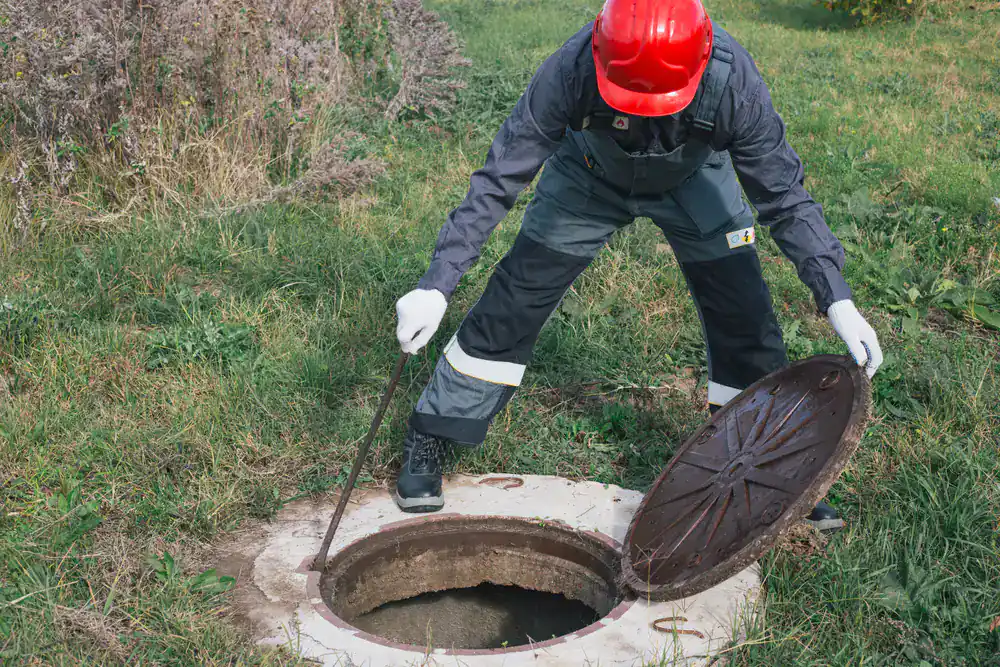
The first thing we do is locate the system. In a lot of Amityville homes particularly those built before 1965 there are no records of where the cesspool is buried. Previous owners didn’t leave a map, and the cover may be a foot or two underground. We specifically handle hard-to-find cesspools, so if you don’t know exactly where yours is, that’s not a problem that stops the job before it starts.
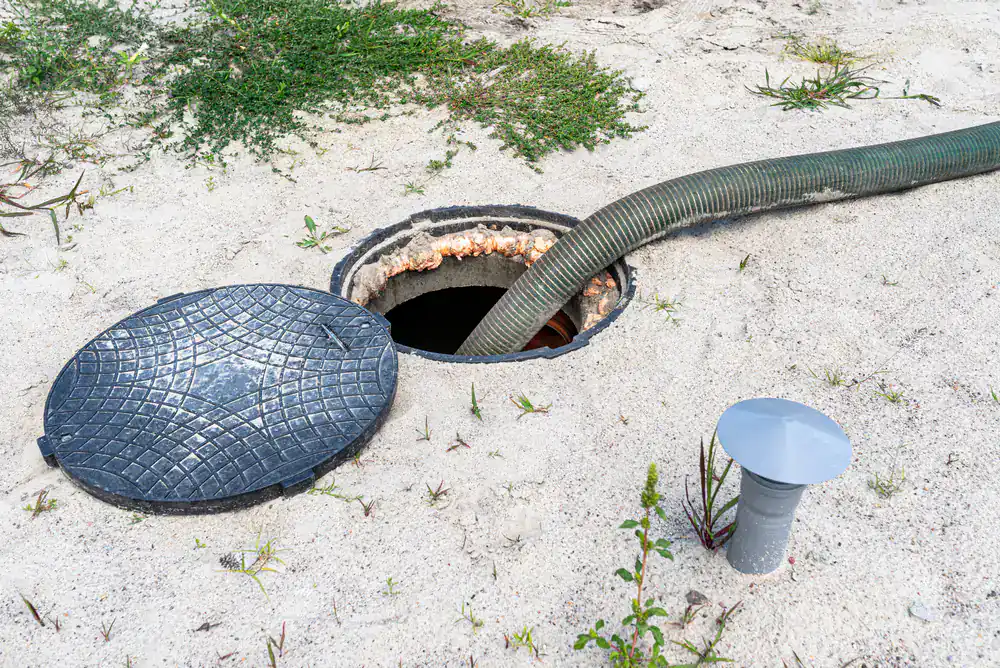
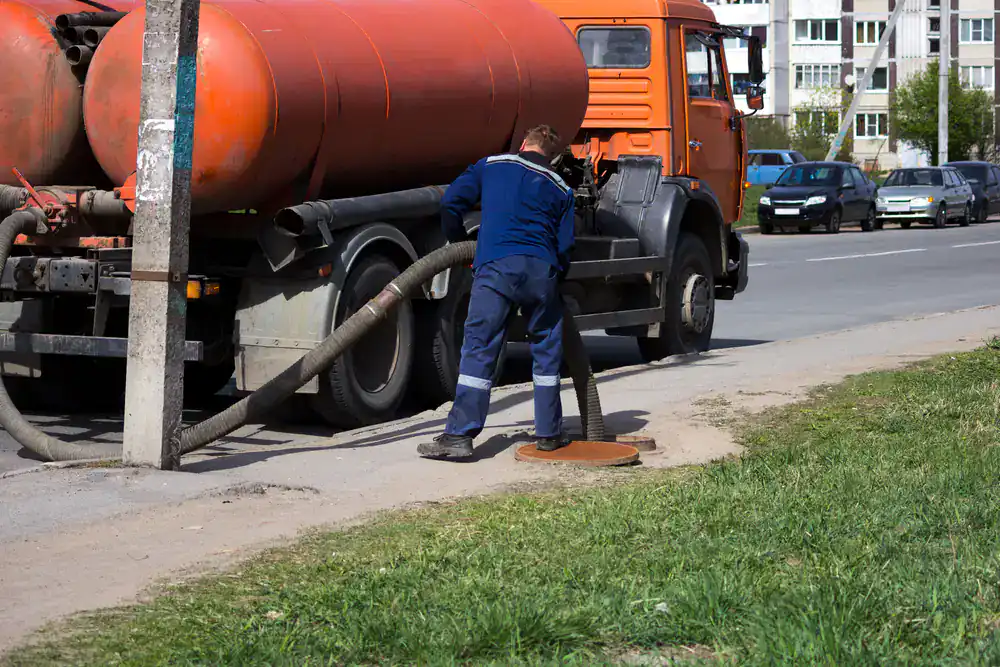
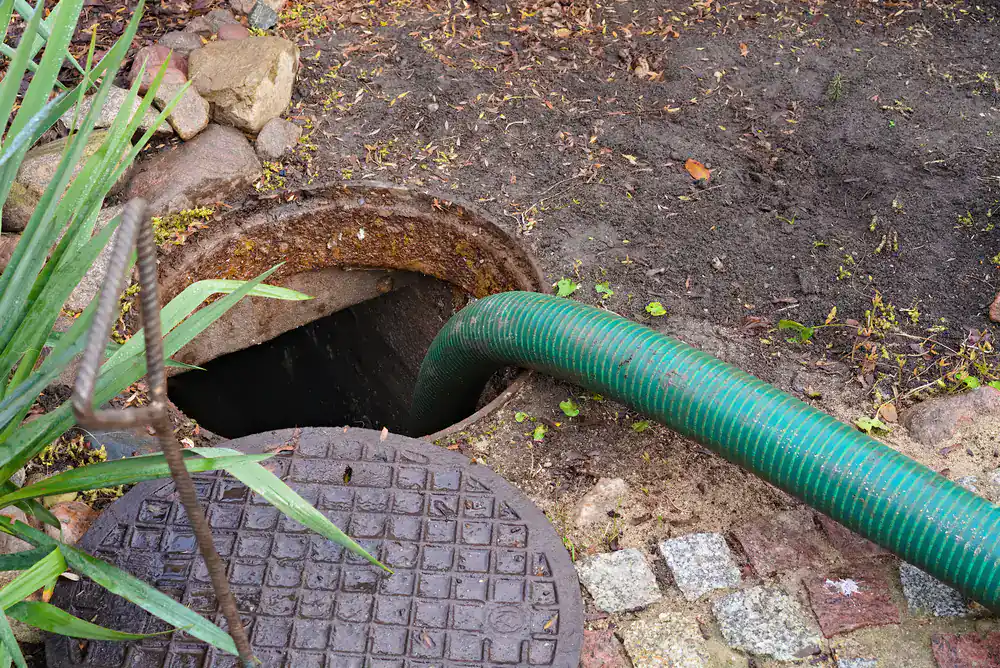
Once the system is located and accessed, we pump out the tank completely liquid waste, floating solids, and accumulated sludge. This isn’t a partial drain. The point is to remove everything so the system has full capacity again and can leach properly. For properties near the canals or the bay, where the water table reduces leaching efficiency year-round, that full capacity matters more than it does on an inland lot.
After the pump-out, you get documentation of the service. That’s not an afterthought it’s a practical necessity in Suffolk County, where cesspool maintenance records are requested during home sales and can be reviewed by the county health department. We provide written service records as a standard part of every job, not something you have to ask for separately.

Ready to get started?
Cesspool pumping and cesspool cleaning are not the same thing, and most homeowners don’t know the difference until someone explains it. Pumping removes the liquid and floating waste from the tank. Cleaning goes further it addresses the hardened sludge that builds up on the walls and floor of the system over time, the kind that a standard pump-out doesn’t fully reach. For a 65-year-old cesspool that may have had inconsistent service across multiple ownership changes, cleaning can be the more appropriate starting point.
Beyond pumping and cleaning, we handle drain cleaning, septic pumping, and full installation services both residential and commercial. If a pump-out reveals that the system needs repair or that it’s reached the end of its serviceable life, you’re not starting over with a new contractor. We can assess what comes next.
For Amityville homeowners, Suffolk County’s regulations are the governing framework. New conventional cesspool installation has been banned in Suffolk County since July 1, 2019 any replacement system must meet Innovative/Alternative Onsite Wastewater Treatment (I/A OWTS) standards. If your system is aging and showing signs of failure, understanding that regulatory context before a crisis hits is a lot better than learning about it during one. We can walk you through what your options look like under current Suffolk County rules.