Useful Links
Other Services we provide in Amityville
The standard recommendation for septic tanks is every three to five years, but that range doesn’t fully account for where you live. Amityville sits on the South Shore, close to the Great South Bay, which means the water table in much of the village particularly south of Sunrise Highway and in the canal district is closer to the surface than in inland Suffolk County towns. When the water table is elevated, soil absorption slows down, liquid can’t leach out of the tank at its normal rate, and sludge builds up faster. Systems in these conditions often need attention every one to two years rather than every three to five.
The age of your home matters too. If your house was built in the 1950s or 1960s which describes a large portion of Amityville’s housing stock your system was sized and designed for a smaller household with much lower daily water use than a modern family produces. That gap between what the system was built for and what it’s handling today accelerates the fill rate. The honest answer is that the right interval depends on your specific tank size, household size, and system condition. A technician who actually looks at your system can give you a real number, not a generic one.
This is one of the most common questions from Amityville homeowners, and the confusion is completely understandable. A cesspool is a single-chamber concrete structure that collects all household waste solids and liquids together and relies entirely on the surrounding soil to absorb the liquid over time. A septic tank is a two-chamber system that separates solids from liquids before the liquid moves into a drainfield for absorption. Septic tanks are more efficient and are the standard for newer installations, but cesspools are still common throughout Amityville and North Amityville, particularly in homes built before the 1970s.
If your home was built in the 1950s or 1960s, there’s a strong chance you’re on a cesspool rather than a true septic system. The practical difference matters for maintenance: cesspools typically need pumping every one to two years because they don’t separate waste, while septic tanks can often go three to five years between pump-outs. If you’re not sure which system you have, a technician can tell you during a service visit. It’s worth knowing, because the pumping frequency and what you’d pay for a replacement are very different between the two.
The short version: the longer you wait, the more expensive the outcome gets. When a septic tank or cesspool goes too long without pumping, the solid waste layer builds up past the point where the system can function. Liquid that should be moving into the drainfield or absorption area starts carrying solids with it instead. Those solids clog the drainfield, and once that happens, the drainfield doesn’t recover on its own. Replacing a failed drainfield can cost $10,000 to $15,000 or more sometimes significantly more depending on the scope of the damage and what Suffolk County’s current regulations require for the replacement.
For Amityville homeowners, the risk is compounded by the water table. Systems near the Great South Bay already operate under more stress than inland systems. A cesspool that’s overdue for pumping in a high-water-table area isn’t just inconvenient it’s a system that’s already working harder than it should be, with less margin for error. The other thing that happens when you wait too long is that the first sign of a problem is often a backup into the house. That’s not a situation anyone wants to manage, and it’s entirely avoidable with routine maintenance.
Amityville’s real estate market moves quickly homes here have been selling in around 30 days, and the median sale price for detached homes has been running in the $645,000 to $703,000 range. In a market moving that fast, a septic or cesspool issue that surfaces during the transaction can stall or kill a deal at the worst possible moment. Many buyers’ lenders require cesspool inspection and certification before approving financing on South Shore properties, and some buyers’ agents make it a condition of the offer regardless.
Getting a pump-out and certification done before you list rather than scrambling to schedule it after a buyer’s inspection flags an issue puts you in control of the timeline. It also means you know the condition of the system before a buyer’s inspector does, which eliminates surprises. If the system needs anything, you can address it on your schedule rather than under closing-deadline pressure. We handle pump-outs and the documentation that buyers, sellers, and lenders need to move forward. Getting it right the first time protects the closing date.
Yes, and this is something South Shore homeowners understand better than most. Amityville sits in FEMA Zone AE flood territory, and the Great South Bay storm surge events that affect this area like what happened during Superstorm Sandy in 2012 are classified as Category 3 sewage contamination events. When bay water pushes inland and reaches a cesspool or septic system, it can introduce contaminants, overwhelm the tank’s capacity, and accelerate sludge buildup significantly. Even a heavy rain event that raises the water table can temporarily compromise a system’s ability to absorb and process waste.
After a significant storm, it’s worth having your system inspected even if you’re not seeing obvious symptoms. Damage from water infiltration doesn’t always announce itself immediately. A tank that absorbed storm surge may appear to be functioning normally for weeks before the effects show up as slow drains, odors, or a backup. If you noticed any signs of flooding around your tank area, soft or soggy ground near the system, or unusual drain behavior in the days following a storm, that’s a reasonable trigger to call for an inspection. We’re available 24 hours a day, seven days a week, including weekends and holidays, specifically for situations like this.
This comes up constantly with older Amityville properties, especially homes that have changed hands several times since the original installation in the 1950s or 1960s. Over the decades, lids get buried under added soil, landscaping, patios, and general yard work and the records from the original installation often don’t exist anymore or weren’t passed along during the sale. It’s not unusual for a homeowner to have lived in a house for years without knowing exactly where the tank is.
We specifically market our ability to locate hard-to-find cesspools and tanks, which is a genuine technical capability that not every company offers at the same level. The process typically involves a combination of probing and, in some cases, tracing the main line from the house to the tank. Once the lid is located, the technician can note its position for your records so future service calls don’t require the same search. If the lid is buried deep enough to require excavation, that’s something that gets discussed and agreed on before work begins not added to the bill after the fact. Knowing where your system is, and having that documented, is one of those things that makes every future service call simpler and faster.
Hear from Our Customers
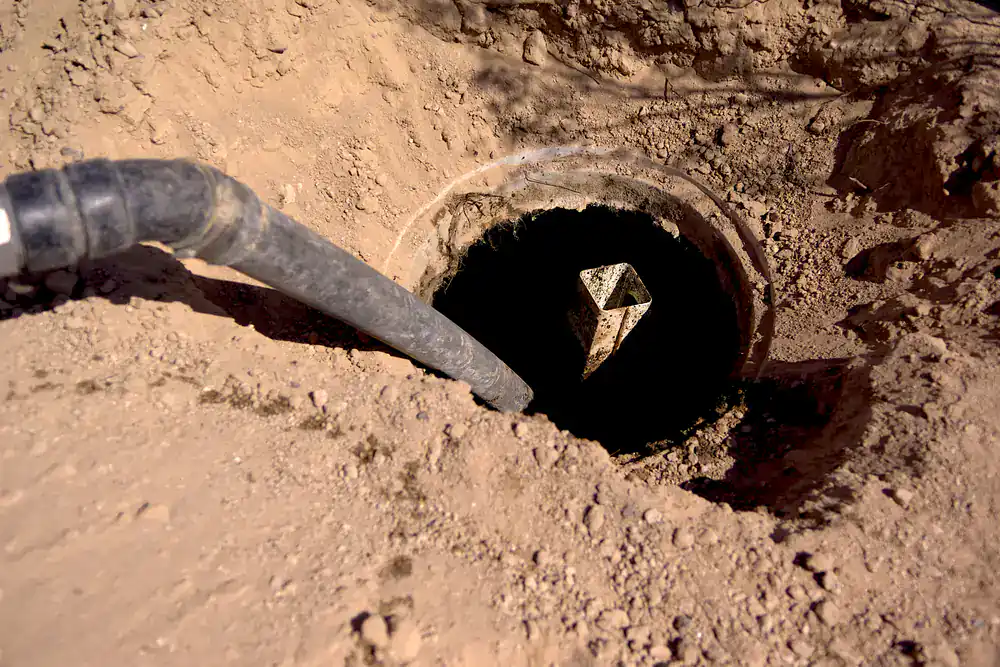
When your septic tank is properly pumped and cleared out, you stop guessing. No more wondering if that slow drain is a warning sign. No more bracing every time you have guests over or run a few loads of laundry back to back. A well-maintained system just works quietly, in the background, the way it’s supposed to.
For Amityville homeowners, that peace of mind carries extra weight. Most homes in this village were built in the 1950s and 1960s, and the cesspools or septic tanks underneath them were designed for a different era of household water use. Add in the elevated water table that comes with living this close to the Great South Bay, and you’ve got a system that fills faster and needs attention more often than what generic service intervals suggest. Getting it pumped on a proper schedule not a guessed one is what keeps a 60-year-old system running instead of failing.
The other thing that changes? Your exposure to a much bigger bill. A routine pump-out is a manageable cost. A failed drainfield or a system that backs up into your basement is a different situation entirely one that can run into five figures before it’s resolved. Staying ahead of it is the smarter move, and it’s a straightforward one.
We’re based out of West Babylon the next community east of Amityville along the South Shore, within the same Town of Babylon. When you call, you’re reaching a team that drives the same roads you do, works in the same neighborhoods, and has been doing this work across this stretch of Suffolk County for over 30 years.
This isn’t a franchise operation routing calls through a regional hub. The technicians who show up at your property are the same ones customers mention by name in their reviews real people, accountable for the work we do. That matters in a service category where the person at the door has access to your property and your wallet.
Amityville’s mix of older waterfront homes, canal-adjacent properties, and postwar neighborhoods in North Amityville represents exactly the kind of work we’ve been handling for decades. Older systems, tighter lots, buried lids, high water tables none of that is new territory for our crew.

It starts with a free estimate. Before anyone shows up at your property, you know what the job is expected to cost. That’s not a teaser it’s the number. The price you’re quoted is the price you pay, and if something changes once the technician is on-site, you’re told before any additional work begins.
When our crew arrives, the first step is locating the tank and accessing the lid. On older Amityville properties especially those that have changed hands a few times since the 1950s the lid is often buried under years of soil and landscaping. We specialize in finding hard-to-locate cesspools and tanks, so that part of the job doesn’t become a separate ordeal. Once the lid is accessed, the tank is fully pumped out not surface-skimmed, but completely cleared of accumulated sludge and scum. The technician then assesses the condition of the system: checking baffles, looking for signs of infiltration or structural wear, and giving you an honest read on what they find.
You’ll leave the conversation knowing the actual condition of your system what’s fine, what to watch, and what, if anything, genuinely needs attention. No manufactured urgency, no upsells on work you don’t need. That’s our approach.
Ready to get started?
Septic tank pumping is the core of what brings most Amityville homeowners to the phone, but it’s rarely the only thing a system needs. We handle the full picture: septic pumping, cesspool pumping, drain cleaning, drywell cleaning, main sewage line cleaning and replacement, house trap replacements, and full system installation when a tank has reached the end of its life. We serve both residential and commercial properties.
This matters in Amityville specifically because older systems and most homes here are sitting on systems that are 60 or more years old don’t fail in isolation. A cesspool that’s overdue for pumping often has a slow drain connected to it, or a baffle that’s degraded, or a main line that’s been partially blocked for longer than anyone realized. Discovering one issue during a pump-out and then having to schedule three separate contractors to handle the rest is a frustrating and avoidable situation.
For homeowners in the canal district south of Sunrise Highway, or in the postwar neighborhoods of North Amityville, the high water table adds another layer of complexity. Systems near the bay can experience groundwater infiltration that accelerates sludge buildup and shortens the time between necessary pump-outs. Our technicians understand how South Shore conditions affect system behavior and we’ll tell you what we actually see, not what generates the biggest invoice.