
By submitting you consent to receive service-related texts from Drastic Drainage. Reply STOP to opt out. Msg & data rates may apply. Consent not required to book service.
Useful Links
If you are considering cesspool services in Amityville, here is what actually changes. Most Amityville homeowners don’t think about their cesspool until something forces them to. A slow drain, a smell you can’t quite place, a wet patch in the yard that shouldn’t be there. By that point, the system has usually been struggling for a while. Getting ahead of it, or at least understanding what you’re dealing with, changes the whole picture.
In North Amityville, the majority of homes were built during the postwar boom of the 1940s through the 1960s. That means the cesspool underneath your house may be 60, 70, even 80 years old. Systems that age weren’t designed for the household demands of today, and many have never been properly serviced or even located. If you don’t have a service record, you’re not alone, but you do need to know what’s down there.
Add in Amityville’s proximity to South Oyster Bay and the Great South Bay, and you’ve got conditions that accelerate cesspool problems faster than inland Suffolk County towns. High groundwater near the shoreline means your system fills faster and recovers slower. Canal-adjacent properties in South Amityville deal with tidal fluctuation that compounds the issue. The standard “pump every few years” rule doesn’t account for any of that, and following it blindly can land you in an expensive emergency situation.
The standard recommendation is every one to three years, but that range was built around inland systems on well-draining soil. In Amityville, especially for properties near the canals in South Amityville or anywhere close to South Oyster Bay, the groundwater table is significantly higher and more variable. Tidal fluctuation, seasonal rainfall, and storm surge all affect how quickly your cesspool fills and how well it absorbs liquid between pump-outs.
For waterfront and canal-adjacent properties in Amityville, waiting three to five years between service calls is often too long. A system that’s absorbing slowly due to high groundwater will accumulate sludge faster, and you may not notice any symptoms until the system is already in distress. A more conservative schedule, combined with a video inspection every few years to check the condition of the rings and baffles, is a smarter approach for this part of the South Shore. The right interval depends on your specific property, your household size, and the condition of your system. A professional assessment gives you a real number, not a guess.
This is one of the most common situations we run into in North Amityville. Homes built during the postwar suburban boom, roughly 1945 through the early 1960s, had cesspools installed with no permanent markers, no standardized access covers, and often no documentation that survived the decades. By now, those systems may be under a driveway, a patio, a garden bed, or just a few feet of accumulated soil with no visible sign they exist.
Cesspool location is a specialized service, and it’s one we’ve been doing in these neighborhoods for over 30 years. The process typically involves probing the ground in areas where the system is likely to be based on the home’s layout and the era it was built, combined with waterproof camera inspection through accessible cleanouts when available. Once the system is located, we establish access so future service calls don’t require the same search process. You shouldn’t have to pay for blind excavation just because the previous owners never left a map.
The most obvious signs are sewage backing up into your drains or toilets, a strong odor near the yard or around drain cleanouts, and wet or unusually green patches of grass over where the system is buried. Any of these means the system is past the point of routine maintenance. It needs to be looked at right away.
What’s less obvious, and more common in older Amityville homes, is a system that’s quietly failing without dramatic symptoms. Slow drains that clear eventually, occasional gurgling from pipes when nothing is running, or a faint odor that comes and goes, these are early warning signs that the system is stressed. In a home with a 60- or 70-year-old cesspool, those signals deserve more attention than they’d get in a newer build. A video inspection can show you whether the rings are cracked, whether the baffle is deteriorating, or whether the leaching pool is losing absorption capacity, all before you’re dealing with a full backup. Catching it at that stage is significantly less expensive than cleaning up after it.
Not anymore. Suffolk County banned the installation of new traditional cesspools effective July 1, 2019. If your system fails and needs to be replaced (not repaired, but replaced) it must be replaced with an Innovative/Alternative onsite wastewater treatment system, commonly called an IA or OWTS system. These systems are designed to reduce nitrogen output by up to 70%, which matters a great deal for South Shore communities like Amityville where nitrogen runoff from cesspools is a documented driver of Great South Bay water quality problems.
The cost of an IA system is higher than a conventional cesspool replacement, but there is meaningful financial help available. Suffolk County’s Septic Improvement Program, expanded under the 2024 Suffolk Water Quality Restoration Act, now offers qualifying homeowners in unsewered areas reimbursement of up to 75% of the project cost, with a maximum of $25,000. North Amityville properties in unsewered areas may qualify. There are eligibility requirements (the property generally needs to be an owner-occupied primary residence, not connected to a sewer district, and without outstanding tax liens) but for homeowners who qualify, this program significantly reduces the financial impact of a mandated replacement.
Yes, and the timing matters more than most sellers realize. Cesspool inspections and certification documentation are part of the property transfer process in Suffolk County, and buyers, and their lenders, will require this documentation before closing. If an inspection reveals a problem, you’re either fixing it before closing, negotiating a price adjustment, or watching the deal fall apart. None of those outcomes are ideal when you’re on a timeline.
In Amityville’s current real estate market, where median home values are in the $570,000 to $630,000 range and North Amityville has seen significant year-over-year appreciation, the stakes are high enough that getting ahead of this is worth it. Ordering a cesspool inspection and real estate certification early (before you list, not after you’re under contract) gives you time to address any issues on your schedule rather than under closing pressure. We provide the full inspection and documentation required for property transfers in Suffolk County, and we can turn it around with the speed that real estate timelines demand.
It depends on your situation, and the answer is more nuanced than most homeowners expect. The incorporated Village of Amityville is served by SCDPW Sewer District 3. If your property is connected to that district, you’re no longer using your cesspool for active waste, but that doesn’t mean the cesspool is gone or taken care of. Village of Amityville code under Chapter 142 requires that when a property connects to the Southwest Sewer District, the existing cesspool must be properly pumped, cleaned, and completely backfilled with granular material. It cannot simply be taken out of service and left in the ground.
Many homeowners who connected to the sewer years ago, or whose previous owners did, never completed this step. An improperly abandoned cesspool is a structural hazard as the walls deteriorate over time, a potential contamination source, and a problem that tends to surface during property sales or when permits are pulled for renovations. If you’re not sure whether your cesspool was properly abandoned when your property connected to the sewer district, it’s worth finding out before it becomes someone else’s leverage in a real estate negotiation. We handle cesspool abandonment correctly and provide the documentation to confirm it was done to code.
Free, no-obligation estimates on cesspool, sewer, and drain work.
We get there quickly. No waiting days for a callback.
Backups don’t wait for business hours. Neither do we.
Fully licensed and insured across Long Island.
Up-to-date trucks and tools for cleaner, faster jobs.
Straight quotes, no surprises on the bill.
Hear from Our Customers
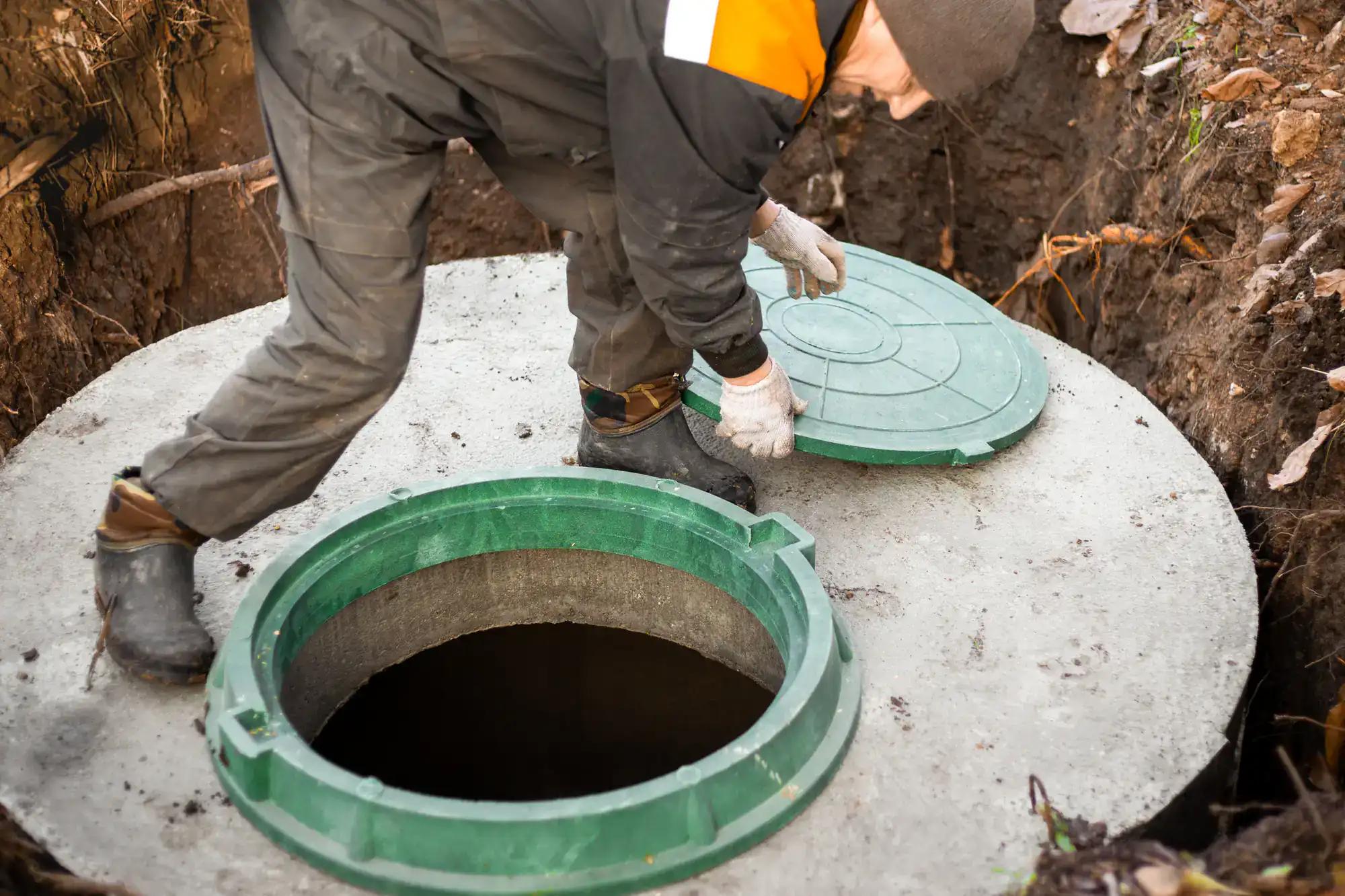
If you are considering cesspool services in Amityville, here is what actually changes. Most Amityville homeowners don’t think about their cesspool until something forces them to. A slow drain, a smell you can’t quite place, a wet patch in the yard that shouldn’t be there. By that point, the system has usually been struggling for a while. Getting ahead of it, or at least understanding what you’re dealing with, changes the whole picture.
In North Amityville, the majority of homes were built during the postwar boom of the 1940s through the 1960s. That means the cesspool underneath your house may be 60, 70, even 80 years old. Systems that age weren’t designed for the household demands of today, and many have never been properly serviced or even located. If you don’t have a service record, you’re not alone, but you do need to know what’s down there.
Add in Amityville’s proximity to South Oyster Bay and the Great South Bay, and you’ve got conditions that accelerate cesspool problems faster than inland Suffolk County towns. High groundwater near the shoreline means your system fills faster and recovers slower. Canal-adjacent properties in South Amityville deal with tidal fluctuation that compounds the issue. The standard “pump every few years” rule doesn’t account for any of that, and following it blindly can land you in an expensive emergency situation.
We’re based in West Babylon, right next door to Amityville, within the same Town of Babylon. That proximity isn’t a coincidence. We’ve been working in these South Shore communities for over 30 years, which means the technicians who show up at your door have seen the same postwar systems, the same coastal groundwater challenges, and the same aging infrastructure that defines Amityville and the neighborhoods around it.
We’re licensed (License #LW-63684), insured, and bonded. That matters in Suffolk County, where Article VII requires specific licensing for cesspool operators and where homeowners can be held liable for permit violations if they use someone who isn’t properly credentialed. You’re not just hiring a truck. You’re hiring accountability.
Customers consistently mention specific names in their reviews: Mike, Lucas, George. People who explain what they’re doing, answer questions honestly, and don’t disappear after the job is done. That’s the kind of service that keeps neighbors referring neighbors in a community like Amityville.

When you call us, a real person picks up, not an answering service, not a callback queue. You describe what’s happening, and we give you a realistic timeframe. For emergencies, that 24-hour availability is genuine. For scheduled service, you get a clear window and someone who shows up when we say we will.
Before any digging happens, we assess the situation. For older homes in North Amityville where there’s no visible access point and no service records on file, that often starts with cesspool location work. Using our knowledge of local construction patterns and waterproof camera technology, we can find systems that have been buried under decades of landscaping or pavement. You shouldn’t be paying for guesswork excavation just because no one knows where to look.
Once the system is located and assessed, you get a clear explanation of what we found and what it means. If it’s a routine pump-out, we handle it. If the camera reveals something more serious (cracked rings, a failing baffle, absorption issues) we tell you what’s there and what your options are before any work begins. For properties in the Village of Amityville that are connected to SCDPW Sewer District 3, that process may also include proper cesspool abandonment, a requirement under Village code that many homeowners don’t realize applies to them. Everything is documented, and we provide free estimates before the work starts.
Ready to get started?
Cesspool pumping and cleaning is the foundation, but the full scope of what we handle goes well beyond that. Routine maintenance, cesspool and leaching pool service, video pipe inspection, cesspool location, drywell cleaning, house trap replacements, main sewage line cleaning and replacement, storm drain cleaning, real estate certifications, and 24-hour emergency response. It’s all handled in-house, by the same licensed crew.
For Amityville homeowners specifically, a few of these services come up more often than they might in other parts of Suffolk County. Real estate certifications are in consistent demand here, with median home values approaching $570,000 to $630,000 and North Amityville showing significant year-over-year price appreciation, there’s real money at stake in every property transfer. Cesspool inspections and certification documentation are required before closing, and a failed inspection can stall or kill a deal. We handle that documentation with the speed and accuracy that closing timelines require.
Cesspool abandonment is another service that comes up frequently in the incorporated village. If your property is connected to SCDPW Sewer District 3 and your old cesspool was never properly pumped, cleaned, and backfilled, that’s a code violation under Village of Amityville Chapter 142, and it’s the kind of issue that surfaces during property sales and permit inspections. For homeowners in North Amityville who are in an unsewered area, Suffolk County’s Septic Improvement Program may also be relevant: qualifying properties can receive up to 75% reimbursement, capped at $25,000, toward the cost of replacing a failed system with an approved alternative under the 2024 Suffolk Water Quality Restoration Act.
