Useful Links
Other Services we provide in Mastic
For most homes in Mastic, the realistic answer is every one to three years and for older systems, closer to the one-to-two-year end of that range. The reason the schedule is tighter here than national averages suggest comes down to the specific conditions in Mastic. The area sits on a high water table, and the community’s proximity to the Forge River means the ground can stay saturated for extended periods after heavy rain or tidal events. When the water table rises, it compresses the space your cesspool has to drain into, which effectively accelerates how quickly the tank reaches capacity.
Add to that the fact that most Mastic homes were built in the 1960s, which means the cesspools are single-chamber, pre-1973 designs the oldest class of onsite wastewater system on Long Island. These systems fill faster than modern septic tanks and don’t give much visible warning before they back up. Household size matters too: a family of four is going to push a system harder than a couple, and water usage habits long showers, daily laundry, running a dishwasher all add up. The EPA’s threshold for pumping is when sludge reaches within 12 inches of the outlet. By the time you can smell a problem, you’ve already crossed that line.
For a standard residential pump-out in Suffolk County, the typical range runs from $200 to $500. Where your job lands within that range depends on a few factors: the size of the tank, how accessible the cover is, how full the system is at the time of service, and whether any additional work like locating a buried cover or inspecting a secondary cesspool is needed on top of the basic pump.
In Mastic specifically, the access issue comes up more often than in newer communities. Homes built in the 1960s frequently have covers that were buried over the decades, and in some cases the homeowner has no idea where the cesspool is at all. Locating and uncovering a system adds time and can affect the final cost. The most important thing is getting a clear, upfront quote before any work starts not a low number over the phone that changes when the truck pulls up. A company that can answer that question plainly is worth more than the cheapest number you can find.
This is one of the most important questions for Mastic homeowners to get right, because the wrong assumption here can lead to a real problem. The Forge River Watershed Sewer District project is a $223.9 million infrastructure project that will eventually connect approximately 1,889 homes and 150 businesses in the Mastic-Shirley area to a new municipal sewer system. For those properties, cesspools will ultimately be decommissioned. But “ultimately” is doing a lot of work in that sentence the project is still progressing, and full connection of all parcels will take years beyond the initial construction phase.
In the meantime, every home inside the project boundary still has an active cesspool that has to function until connection day. A cesspool doesn’t know a sewer project is coming. It fills on the same schedule it always did, and it will back up on the same schedule if it’s not pumped. And for the majority of Mastic homes those outside the project boundary there is no sewer connection coming at all. Their cesspools are a permanent maintenance responsibility. If you’re not sure whether your property falls inside or outside the district boundary, that’s worth finding out, but it doesn’t change the answer on pumping: the system under your yard needs service regardless.
When the ground in Mastic gets saturated after a nor’easter, a heavy rain event, or a period of elevated tidal activity along the Forge River the water table rises. When that happens, the soil around your cesspool’s leaching field loses its ability to absorb the liquid the system is trying to push out. The result is that a cesspool at 60% capacity can behave like it’s completely full, and a system that was fine last week can back up into the house seemingly overnight.
This isn’t theoretical for Mastic. The Forge River Watershed Sewer District’s own documentation specifically identifies the area’s “unusually high water table” as a contributing factor to cesspool failures here, and Superstorm Sandy in 2012 caused documented cesspool failures throughout the Mastic-Shirley area. If your system backs up during a storm, the first call is to a cesspool company that offers genuine emergency response not a voicemail. We’re available 24 hours a day, every day of the week, for exactly this situation. The faster a backed-up system gets pumped down, the less damage you’re dealing with afterward.
If you just bought a home in Mastic and you don’t have documentation showing when the cesspool was last pumped, the answer is almost always yes get it serviced as soon as practical. Here’s why: most homes in Mastic were built in the 1960s, which means the cesspool is likely a pre-1973 single-chamber system that should be pumped every one to three years. Without a service record, you have no way of knowing where in that cycle you are. The previous owner may have been diligent. They may not have touched it in five years. You’re inheriting the system either way.
A first pump-out on a newly purchased Mastic home serves two purposes. It gets the system to a clean baseline so you know exactly what you’re working with going forward. And it gives you a starting point for your own service records which matter in Suffolk County when it comes time to sell. Home sales in Mastic are moving fast right now, and buyers’ attorneys and home inspectors routinely request cesspool documentation. Starting that paper trail the day you take ownership is the kind of thing that pays off years later in a way that’s easy to overlook until you’re the one trying to close a deal.
This comes up constantly in Mastic, and it’s not a sign that something went wrong it’s just the reality of owning a home built in the 1960s. Cesspool location records from that era were often kept informally, passed between owners verbally, or simply lost over the decades. Covers get buried under decades of landscaping, lawn work, and soil settling. By the time a new owner moves in, the system can be genuinely invisible from the surface.
The process for locating a hard-to-find cesspool typically starts with what documentation exists property records, prior inspection reports, or even a neighbor who remembers where the system was serviced. From there, a technician uses probing tools and their knowledge of how these systems were typically installed in the housing stock of this era to narrow down the location. In some cases, a secondary cesspool turns up that the homeowner had no idea existed which is more common in older Mastic homes than most people expect. We specifically call out expertise in locating hard-to-find cesspools as part of what we do. In a community where this is a routine challenge rather than a rare one, that experience matters. The last thing you want is to pay a company to show up and tell you they can’t find it.
Hear from Our Customers

When your cesspool is pumped on a proper schedule, you stop reacting and start staying ahead of the problem. No backup on a random Tuesday morning. No sewage smell creeping through the house. No emergency call at the worst possible time. That’s what consistent maintenance actually buys you not just a clean tank, but peace of mind that the system under your yard is doing its job.
For Mastic homeowners specifically, that peace of mind matters more than most people realize. Mastic sits on a documented high water table, and the Forge River runs right along the community’s eastern edge. When a nor’easter rolls through or the ground gets saturated after heavy rain, a cesspool that’s already running full doesn’t have anywhere to go. The result is a backup that feels sudden but was actually building for months. Staying on schedule keeps you out of that situation entirely.
There’s also the real estate angle. Mastic home prices have climbed sharply median sale prices hit $568,000 as of mid-2025, up 20% in a single year. Whether you’re planning to sell or just protecting what you’ve built, a documented service history and a properly maintained system protect your investment in a way that deferred maintenance simply can’t.
We’re a family-owned cesspool and drainage company based in West Babylon, Suffolk County. Over 30 years, we’ve worked on Long Island systems and that experience isn’t abstract. It’s the specific knowledge of what a pre-1973 single-chamber cesspool looks like after six decades of use, what the soil conditions near the South Shore do to a system’s fill rate, and what it takes to locate a cesspool in an older Mastic home where the records were lost before the current owner ever moved in.
Mastic is a community built primarily in the 1960s, which means most of the cesspools here belong to the oldest class of onsite wastewater systems on Long Island. These aren’t the same as a modern septic tank they fill faster, they’re more sensitive to water table changes, and they don’t give you much warning before things go wrong. We’ve seen hundreds of systems just like the ones under homes off William Floyd Parkway and throughout the tri-hamlet area. That familiarity is the difference between a technician who knows what they’re looking at and one who’s guessing.
When you call us, the first thing that happens is a real person picks up not a voicemail, not a callback queue. You describe what’s going on, we give you a straight answer on timing and what to expect, and we schedule the job. If it’s an emergency, that conversation moves faster.
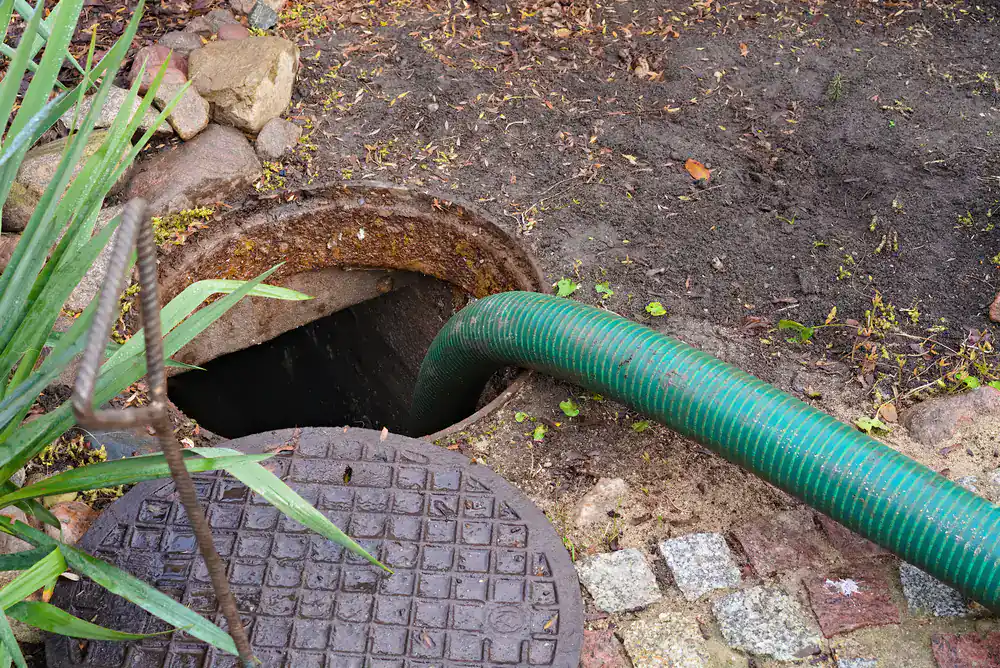
On the day of service, our technician locates your cesspool access point. In Mastic, this step takes longer than people expect. Homes built in the 1960s often have buried covers, no documentation of the system’s location, and in some cases a second cesspool the homeowner didn’t know existed. We specialize in locating hard-to-find cesspools it’s one of the things that sets us apart in a community where this is a genuine and common problem, not an edge case.
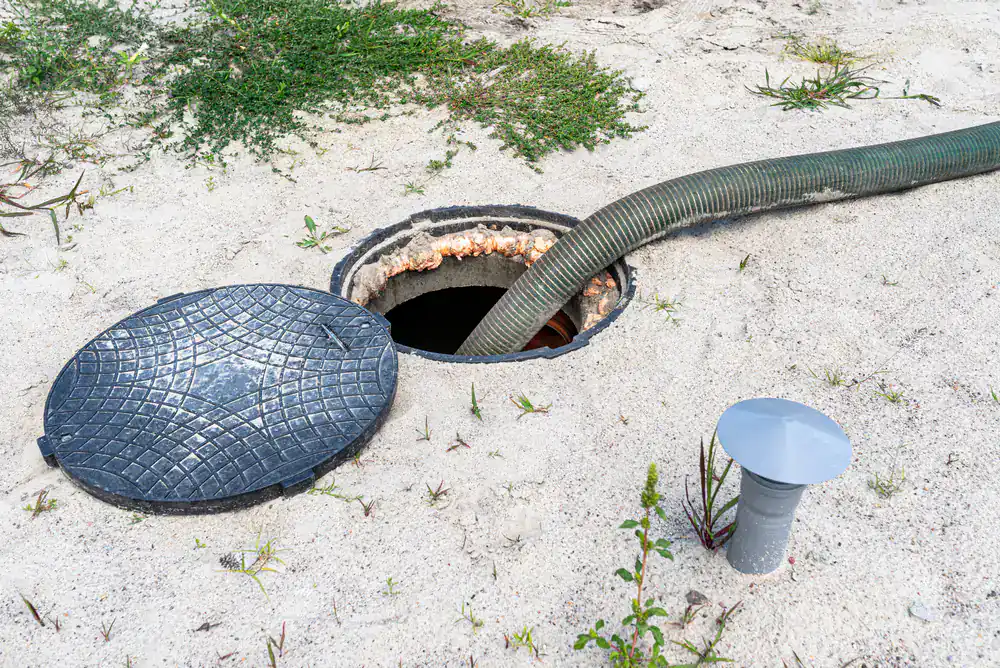
Once access is confirmed, the tank is pumped down fully and inspected. Our technician checks the condition of the system walls, inlet, outlet, any visible signs of structural wear and walks you through what they found. If there’s a problem, you hear about it plainly, not through upsell pressure. After the job, you get documentation of the service. That matters in Suffolk County, where cesspool records are requested during home sales and can be tracked by the county health department. In a market as active as Mastic’s right now, having that paperwork in order is worth more than most homeowners think until the moment they need it.
Ready to get started?
Cesspool pumping and cesspool cleaning aren’t the same thing, and the distinction matters especially for older systems. Pumping removes the liquid and floating solids from the tank. Cleaning goes further, removing the hardened sludge that accumulates at the bottom over time and inspecting the system’s interior walls for cracks, deterioration, or other signs of failure. For a 1960s-era single-chamber cesspool in Mastic, that deeper level of service is often exactly what the system needs, not just a basic pump-out.
We handle the full scope: pumping, cleaning, inspection, and if something more serious turns up, repair and installation as well. You don’t get handed off to a second contractor mid-job. The same company that pumps the tank can tell you whether the leaching field is compromised, whether there’s a secondary cesspool on the property, and what Suffolk County’s current requirements mean for your specific situation including how the Forge River Watershed Sewer District project affects homes inside and outside its boundary.
One thing worth knowing: the sewer district project covers approximately 1,889 homes in the Mastic-Shirley area. If your property is outside that boundary which describes the majority of homes in the community your cesspool is your long-term responsibility and needs to be maintained accordingly. And if you’re inside the boundary, your cesspool still has to function until the connection is made, which is years away. Either way, staying current on service isn’t optional.