By submitting you consent to receive service-related texts from Drastic Drainage. Reply STOP to opt out. Msg & data rates may apply. Consent not required to book service.
Useful Links
When your cesspool is in good shape, you stop thinking about it — and that’s exactly where you want to be. No slow drains, no smell creeping into the yard, no moment of panic when the toilet starts gurgling before a holiday weekend. That’s the practical outcome of staying on top of this, and it’s more straightforward to get there than most people expect.
For Mastic homeowners specifically, the stakes are higher than average. The area sits on sandy coastal soil with a high water table, and that combination is harder on cesspool systems than most places on Long Island. When groundwater rises after a heavy rain or a nor’easter pushes surge up through the Forge River corridor, a system running at 80% capacity can fail fast. Routine maintenance keeps your system operating with enough room to handle those conditions without incident.
There’s also the Sandy factor. If your home was here in 2012, there’s a real chance your cesspool was inundated during that storm. Many systems were pumped out and returned to service without a full structural inspection — which made sense at the time, but that was 13 years ago. The kind of damage a flooded system accumulates doesn’t always show up right away. It shows up later, usually at the worst possible moment. Getting a proper inspection now is just the responsible call.
Yes — and this is one of the most common misunderstandings among Mastic homeowners right now. Receiving an access agreement from Suffolk County means your property is in the sewer district footprint and will eventually be connected, but “eventually” is doing a lot of work in that sentence. Home connections through the Forge River Watershed Sewer District are anticipated to continue through 2026, and until your grinder pump is installed and your system is officially decommissioned, your cesspool remains your active wastewater system.
A cesspool that hasn’t been serviced in three or four years — sitting above Mastic’s high water table, in sandy coastal soil, heading into hurricane and nor’easter season — is a real risk regardless of what’s happening at the county level. If it backs up before your connection is completed, you’re dealing with a sewage emergency, not a sewer district timeline. Staying current on maintenance through the transition period is the straightforward move.
The honest answer is: you probably can’t tell from the surface. A cesspool that was flooded during Sandy, pumped out, and returned to service may have functioned adequately for years afterward — but flooding puts stress on the structural components of a cesspool that a routine pump-out doesn’t address. Baffles can deteriorate. Walls can crack. The surrounding soil can shift and cause separation in older systems, which is a particular concern in Mastic given the sandy coastal composition of the ground here.
The way to find out is a video pipe inspection. A waterproof camera goes into the system and shows the actual condition of the walls, the inlet and outlet baffles, and the surrounding structure. It takes the guesswork out entirely. If you’ve been in your Mastic home since before 2012 and your cesspool has never had a post-Sandy structural inspection, that’s the place to start. It’s a straightforward process, and it either confirms your system is fine or tells you exactly what needs attention — before it becomes an emergency.
The most obvious signs are slow drains throughout the house, gurgling sounds when water goes down, a sewage odor in the yard or near the foundation, and wet or spongy patches of ground above where the system is buried. In Mastic specifically, these symptoms can appear faster than they would in a community with different soil conditions. Sandy coastal soil has limited absorption capacity to begin with, and when the water table rises — after heavy rain, during spring snowmelt, or when storm surge pushes inland from the Forge River corridor — that capacity drops further. A system that seems fine in dry conditions can show signs of stress within hours of a significant rain event.
If you’re seeing any of these signs, the right move is to call before it gets worse. A cesspool that’s surfacing effluent isn’t just a plumbing problem — it’s a health issue and, in Suffolk County, a regulatory one. Getting it assessed quickly is almost always cheaper than dealing with what happens if you wait.
Free, no-obligation estimates on cesspool, sewer, and drain work.
We get there quickly. No waiting days for a callback.
Backups don’t wait for business hours. Neither do we.
Fully licensed and insured across Long Island.
Up-to-date trucks and tools for cleaner, faster jobs.
Straight quotes, no surprises on the bill.
Hear from Our Customers

When your cesspool is in good shape, you stop thinking about it — and that’s exactly where you want to be. No slow drains, no smell creeping into the yard, no moment of panic when the toilet starts gurgling before a holiday weekend. That’s the practical outcome of staying on top of this, and it’s more straightforward to get there than most people expect.
For Mastic homeowners specifically, the stakes are higher than average. The area sits on sandy coastal soil with a high water table, and that combination is harder on cesspool systems than most places on Long Island. When groundwater rises after a heavy rain or a nor’easter pushes surge up through the Forge River corridor, a system running at 80% capacity can fail fast. Routine maintenance keeps your system operating with enough room to handle those conditions without incident.
There’s also the Sandy factor. If your home was here in 2012, there’s a real chance your cesspool was inundated during that storm. Many systems were pumped out and returned to service without a full structural inspection — which made sense at the time, but that was 13 years ago. The kind of damage a flooded system accumulates doesn’t always show up right away. It shows up later, usually at the worst possible moment. Getting a proper inspection now is just the responsible call.
We’ve been doing this work across Nassau and Suffolk County for over 30 years. That’s not a number to fill a headline — it means we’ve worked through every regulatory shift this county has thrown at homeowners, from the 2019 cesspool installation ban to the 2024 Suffolk Water Quality Restoration Act, and we know what those changes actually mean for the people living with them.
In a community like Mastic — where the housing stock is predominantly 1950s and 1960s Cape Cods and ranches, where buried lids are common, and where the Forge River Watershed Sewer District is actively changing what homeowners need to plan for — that kind of local knowledge matters. We hold Suffolk County Article VII License #LW-63684, are fully insured and bonded, and offer free estimates before any work begins. When you call, a real person picks up. That’s not a small thing in this business.

It starts with a real conversation. When you call us, someone picks up — not an answering service, not a voicemail — and we’ll ask you a few straightforward questions about what you’re seeing, when it started, and what kind of system you have. If you don’t know what kind of system you have, that’s fine. A lot of Mastic homes have cesspools that have never been located or properly documented, especially in the older neighborhoods along Montauk Highway and the surrounding residential streets. We handle this regularly.
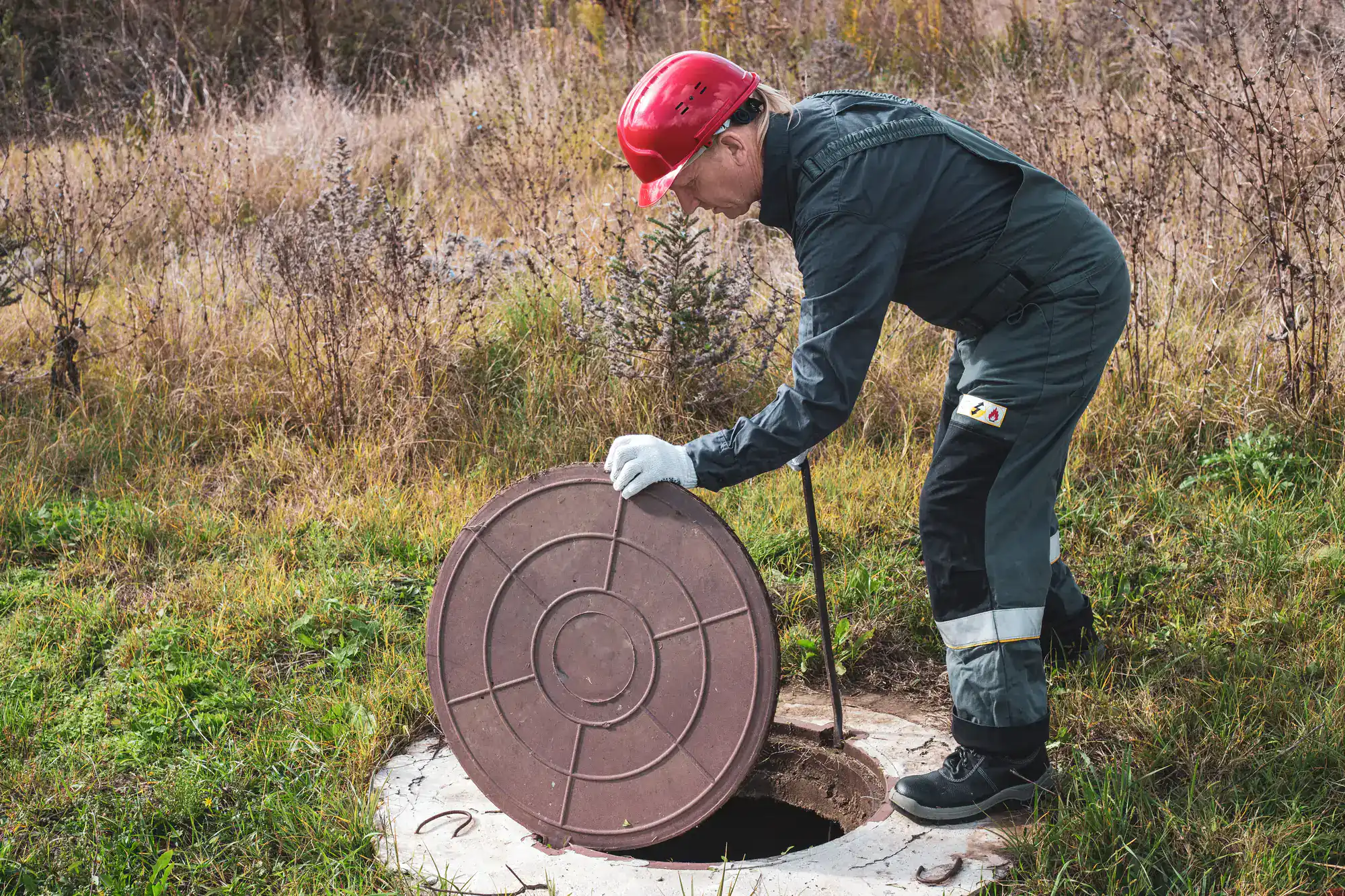
Once on-site, the first step is assessment. If there’s no visible access point — which is common in homes built before the 1970s — we use cesspool location techniques to find the system before anything else happens. From there, a video pipe inspection may be used to get a clear picture of what’s going on underground before any digging takes place. That step matters here because Mastic’s sandy soil shifts over time, and a camera inspection can catch cracked walls, deteriorated baffles, or structural issues that a surface pump-out would never reveal.
After the assessment, you’ll know exactly what the system needs and what it’s going to cost. We get the work done — pumping, cleaning, repair, or whatever the situation calls for — and you get a clear explanation of what was found and what to watch for going forward. If you’re in the Forge River Sewer District and your connection is still pending, we can also walk you through what maintenance makes sense for the interim period, so you’re not caught off guard before the county completes your hookup.

Ready to get started?
We handle the complete range of cesspool and drain services — cesspool pumping and cleaning, cesspool installation, drywell cleaning, house trap replacements, main sewage line cleaning and replacement, storm drain cleaning, video pipe inspection, cesspool location, and real estate certifications. There are no named service packages or tiers — every job is scoped based on what your specific system actually needs, and you get a free estimate before any work begins.
For Mastic residents, a few of these services come up more often than others. Cesspool location is one of them — the area’s older housing stock means a significant number of homes have systems with no visible surface marker. Video pipe inspection is another, particularly for homes that were here during Sandy and have never had a post-flood structural assessment. The camera goes underground and shows exactly what’s there, which means no unnecessary excavation and no guessing.
Real estate certifications are also a regular part of our work in Mastic. With median home values climbing toward $468,000 and an active local sales market, more homeowners are listing — and every sale in Suffolk County requires a cesspool inspection and certification before closing. We provide the detailed documentation required for property transfers in Brookhaven Town, on a timeline that works with your closing date. If you’re selling a home near William Floyd Parkway or anywhere else in the 11950 ZIP code, this is not a step you want to leave to the last minute.