Useful Links
Other Services we provide in Smithtown
Yes, and the grant amounts have actually increased. Through the Suffolk County Septic Improvement Program, combined state and county funding can reach up to $45,000 for an I/A OWTS nitrogen-reducing system installation as of the most current program figures. The Town of Smithtown maintains its own dedicated page on this program at smithtownny.gov, which means your local government is actively directing you toward this funding it’s not buried in county paperwork.
The critical thing most Smithtown homeowners miss is the timing. The grant certificate has to be issued before installation begins. If you hire a contractor and start work first, you lose the grant entirely. You also need to make sure the contractor you hire is on the Suffolk County SIP Approved Installer List not every licensed contractor qualifies. Starting that conversation early, before your system is in crisis mode, gives you the best chance of capturing the full funding available.
A cesspool is essentially a pit in the ground. Waste goes in, liquid seeps out into the surrounding soil, and solids accumulate over time. There’s no treatment happening whatever is in that pit is going directly into the ground beneath your yard. A septic system is different: it includes a tank that separates solids from liquids, and the liquid effluent then flows to a leaching field where it disperses through the soil in a more controlled way.
The distinction matters legally and environmentally. Suffolk County banned new cesspool-only installations in 2019, so if your cesspool fails and needs to be replaced, you cannot install another cesspool in its place. For Smithtown properties near the Nissequogue River corridor or in areas draining toward Smithtown Bay a designated nitrogen priority water the environmental stakes are also real and local, not just abstract. Modern septic systems and I/A OWTS units are designed to address exactly the kind of nitrogen loading that has been documented in the town’s own waterfront planning documents.
There are two timelines to understand here. The permit process through SCDHS typically adds a few weeks before active work can begin this is non-negotiable in Suffolk County, and any contractor who suggests working without permits is exposing you to serious liability including fines, failed inspections, and potential re-excavation costs. That paperwork phase is part of doing the job correctly, and we handle the filing as part of the overall project.
Once permits are in hand, the active installation work for most residential properties in Smithtown takes one to three days. That includes abandoning the old system properly, excavating for the new one, installing the tank and leaching field, backfilling, and restoring the site. For homeowners who commute into the city from the Smithtown, St. James, or Kings Park LIRR stations, the realistic total timeline from first call to completed installation is typically a few weeks most of that is the permit window, not the actual digging.
The honest answer is that you need a proper site assessment to know for certain. Some issues a clogged inlet baffle, a broken distribution box can be repaired without replacing the whole system. Others, like a cesspool that has completely failed or a system that no longer meets current Suffolk County standards, require full replacement. The symptoms that often push people to call slow drains throughout the house, sewage odors in the yard, wet or unusually green patches over the system area can point in either direction, and a visual inspection alone won’t tell you which.
For Smithtown properties with mid-century housing stock, particularly in Nesconset and Kings Park where a lot of the residential construction happened between the 1960s and 1980s, the age of the system alone is worth taking seriously. A cesspool installed in 1972 has been in the ground for over 50 years. Even if it hasn’t failed yet, it may be close and getting ahead of a failure on your schedule is a very different experience from dealing with one on the system’s schedule.
Septic installation costs on Long Island run significantly higher than national averages, and that’s true in Smithtown as well. A full replacement including tank, leaching field, excavation, permit fees, and old system abandonment typically falls in the $20,000 to $40,000 range depending on the system type, lot conditions, and what the soil evaluation reveals. An I/A OWTS nitrogen-reducing system averages around $25,000 before any grant funding is applied.
That grant piece changes the math considerably. If your property qualifies for the Suffolk County Septic Improvement Program and you work with an approved installer, combined state and county grants can offset a substantial portion of that cost. The application has to be in before work starts, so the earlier you begin that process, the better. Perc testing runs $500 to $1,500 and permits typically add $200 to $500 these are part of the overall project cost and should be accounted for in any written estimate you receive.
It can, depending on where your property is located. The multi-phase Route 347 reconstruction project running through the Nesconset and Smithtown areas has created access and staging considerations along that corridor that weren’t factors a few years ago. For properties near the Route 347 corridor particularly in Nesconset it’s worth mentioning to your contractor upfront so they can plan equipment access and material delivery accordingly.
That said, it doesn’t change the fundamentals of the installation process or the permit requirements. SCDHS permitting timelines, soil evaluation requirements, and Article 6 compliance apply the same way regardless of what’s happening on the road outside. The construction context is more of a logistics consideration than a regulatory one, and an experienced contractor who works regularly in western Suffolk County will already be familiar with the current access conditions in the area.
Hear from Our Customers

When a septic system is properly installed designed for your property, permitted through SCDHS, and built to current Suffolk County standards the difference is immediate and lasting. No more slow drains that make you nervous. No more wondering whether that wet patch near the back fence means something serious. You get a system that works quietly in the background, the way it’s supposed to.
For Smithtown homeowners specifically, this matters more than most people realize. The majority of the town’s residential neighborhoods from the mid-century ranches in Nesconset to the older colonials in St. James were built between the 1950s and 1990s. That means a lot of the cesspools underneath those homes are now 35 to 60 years old. They were installed under rules that no longer exist, and when they fail today, Suffolk County law means you can’t just swap in a new cesspool. You need a compliant modern system, and the sooner you address it on your terms, the more control you have over the timeline and the cost.
There’s also the real estate side of this. Smithtown homes are selling well above $750,000 right now. A failing or non-compliant system discovered during a buyer’s inspection can stall a closing or hand negotiating power to the other side. Getting ahead of it means you’re never in that position.
We’re a family-owned and operated company based in Suffolk County, with over 30 years of hands-on experience working across Long Island including the communities that make up the Town of Smithtown. That kind of experience means we already know what SCDHS permit reviewers expect, how Long Island’s sandy glacial soils behave during installation, and what system designs actually perform in the neighborhoods along the Nissequogue River corridor and throughout western Suffolk County.
This isn’t a national franchise operation with a call center and a rotating crew. When you call us, a real person picks up, gives you a real arrival window, and shows up when we said we would. That detail comes up in customer reviews more than almost anything else because in this industry, it’s rarer than it should be.
We handle both residential and commercial installations across Nassau and Suffolk Counties, and our full-service approach means one team manages everything from the initial site assessment through permit filing, installation, and final documentation.
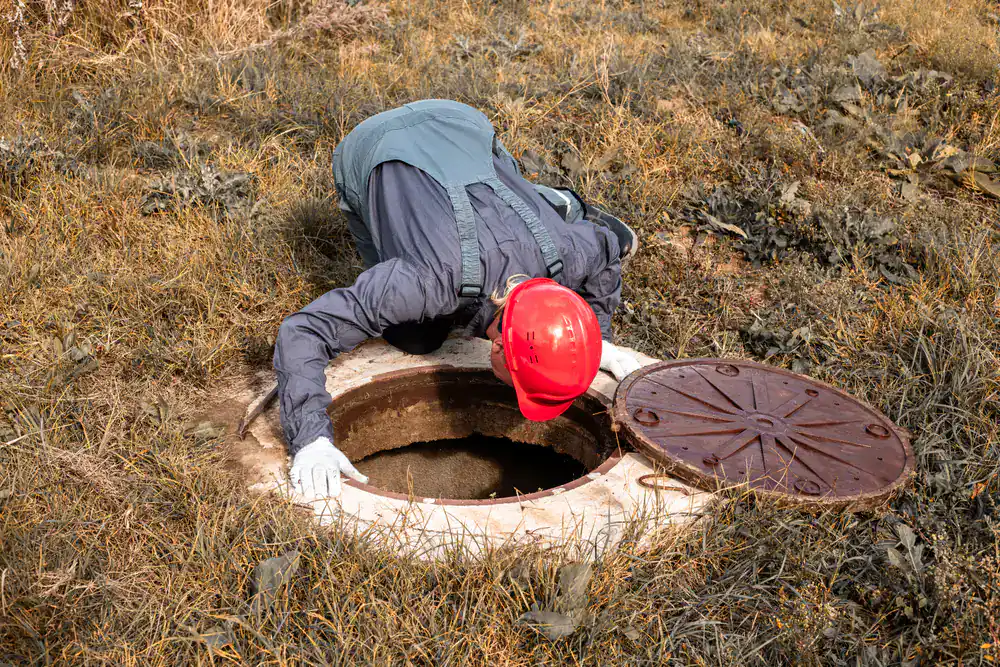
It starts with a site assessment. Before any numbers are discussed, we need to evaluate your property lot size, setbacks, existing system location, and soil conditions all factor into what kind of system can be installed and where. Long Island’s glacially deposited sandy soils are not the same as what you’d find in other parts of New York State, and system sizing and leaching field placement depend on how your specific ground performs on a perc test.
Once the design is confirmed, the permit process begins. In Suffolk County, all septic installations require registration through SCDHS before work can start. This step adds time to the overall timeline typically a few weeks but it’s not optional, and any contractor who suggests skipping it is not someone you want working on your property. We handle this filing as part of the job, so you’re not coordinating between a permit expeditor and an installer on your own.
When permits are in hand, most residential installations in Smithtown are completed in one to three days of active work. We properly abandon the old system pump it, document it, and fill it and the new system goes in. Smithtown homeowners who commute into the city via the LIRR from Smithtown, St. James, or Kings Park stations consistently tell us that single-day completion is one of the things they appreciate most. You shouldn’t have to take a week off work to manage this.

Ready to get started?
Since July 2019, Suffolk County has banned new cesspool-only installations. That means when a cesspool fails on a Smithtown property today, the replacement has to meet modern septic standards at a minimum and in many cases, the right answer is an innovative/alternative (I/A) OWTS nitrogen-reducing system.
Smithtown Bay is designated as a nitrogen priority water by Suffolk County. The Nissequogue River, which runs from Caleb Smith State Park through Kings Park and into Long Island Sound, has been specifically identified in the town’s own waterfront planning documents as a waterway at risk from nitrogen from onsite waste disposal. The I/A OWTS systems we install reduce nitrogen output by up to 70% compared to a conventional cesspool which is exactly what Suffolk County’s current regulatory direction is pushing toward.
The good news is that the financial picture has changed significantly. Through the Suffolk County Septic Improvement Program, Smithtown homeowners may be eligible for combined state and county grant funding to offset the cost of an I/A OWTS installation. The Town of Smithtown actively promotes this program on the official town website at smithtownny.gov, and the grant application has to be submitted and approved before installation begins not after. We can walk you through what that process looks like and what your property would need to qualify. Our full-service scope covers system design, permit filing, excavation, installation, old system abandonment, and post-installation documentation everything under one roof.