Useful Links
Other Services we provide in Lake Ronkonkoma
For most Lake Ronkonkoma households, septic tanks should be pumped every three to five years. A family of four with a standard 1,000-gallon tank typically lands in the three-to-four-year range. If your home has a cesspool rather than a true septic tank which is common in the older housing stock here that frequency increases to every one to two years, since cesspools don’t separate solids from liquids the way a septic tank does.
The right schedule depends on your household size, tank capacity, and how the system has been maintained historically. Many Lake Ronkonkoma homeowners buying older properties have no records at all from previous owners. In that case, starting with a pump-out and assessment gives you a baseline you’ll know what you’re working with and can build a realistic schedule from there rather than guessing.
Standard residential septic tank pumping in Suffolk County runs between $225 and $600, depending on the size of the tank. A 1,000-gallon tank generally falls in the $225 to $400 range; larger systems around 2,000 gallons typically run $400 to $600.
Where costs can climb unexpectedly is lid excavation. If your tank lid is buried which is common in Lake Ronkonkoma’s mid-century homes accessing it can add anywhere from $300 to $1,200 depending on how deep it’s been covered and what’s growing over it. That’s not a made-up fee; it’s real labor. The issue is when companies quote a low base price and don’t mention excavation until they’re standing in your yard. We give you the full picture upfront, so the number you hear on the phone is the number you’re working with.
This is one of the most common questions from Lake Ronkonkoma homeowners, especially those who bought older properties. If your home was built before the mid-1970s, there’s a reasonable chance you have a cesspool. Cesspools are simpler systems essentially a buried pit with perforated walls that allows liquid to leach into the surrounding soil while solids accumulate at the bottom. Septic tanks are more sophisticated, with a two-chamber design that separates solids from liquids before the liquid moves to a leaching field.
The distinction matters because the two systems have different pumping schedules, different failure patterns, and different replacement requirements under Suffolk County’s current regulations. If you don’t have documentation from when the home was built or from a prior inspection, the best way to find out is to have the system located and assessed. Our technicians can identify what you have during a service visit, which gives you accurate information for scheduling and planning going forward.
The system doesn’t fail all at once it degrades gradually, and by the time you notice symptoms, the damage is usually already done. When a tank goes too long without pumping, solids overflow into the leaching field or drainfield and clog it. Once that happens, the fix isn’t another pump-out. You’re looking at drainfield repair or full system replacement, which can run $10,000 to $15,000 or more depending on what’s required.
In Lake Ronkonkoma specifically, there’s an added layer to consider. The sandy glacial soil that makes private septic systems viable here also means wastewater moves quickly toward the groundwater table. Long Island’s drinking water comes entirely from the underground aquifer there’s no municipal water backup. A failing system doesn’t just affect your yard; it contributes to the groundwater contamination and nitrogen loading that’s already degrading Lake Ronkonkoma’s water quality. Routine pumping on schedule is the simplest thing a homeowner can do to keep both their system and the surrounding environment in reasonable shape.
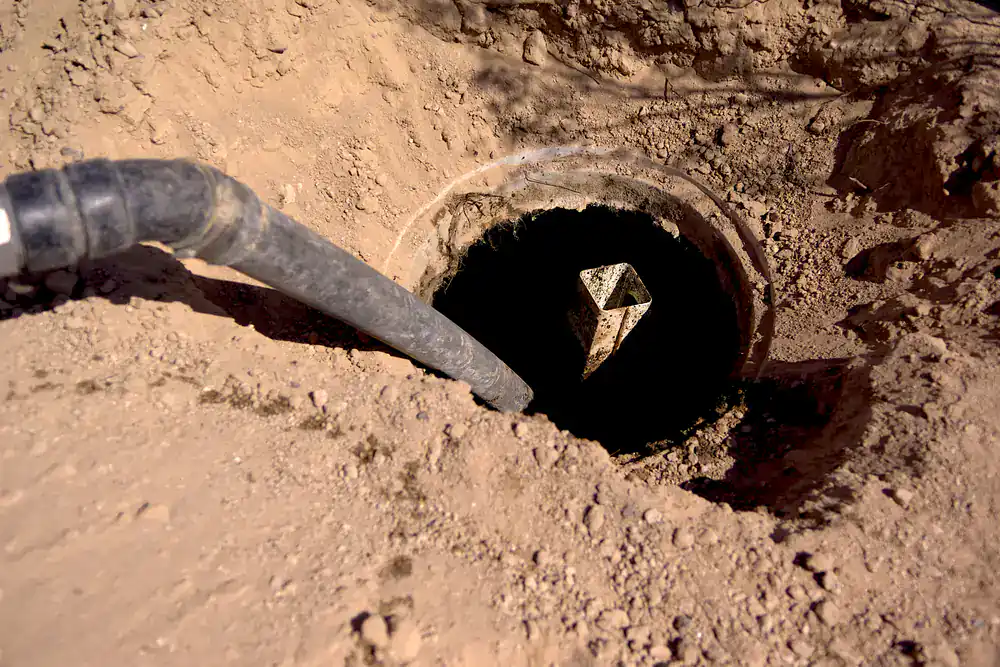
You’re not alone. A large portion of Lake Ronkonkoma’s housing stock was built in the 1960s and 1970s, and it’s very common for tank lids to be buried under several feet of soil, sod, or landscaping that’s accumulated over decades. Some homeowners have no idea where the tank even is, let alone the lid.
We specifically handle hard-to-find cesspools and tanks it’s listed as a specialty for good reason, because this situation comes up constantly on older Long Island properties. Locating the tank involves a combination of probing, reviewing property records where available, and experience with how systems were typically positioned in homes of a given era. Once it’s found, the lid is accessed and the service proceeds from there. If excavation is needed to reach the lid, that’s factored into your estimate before work begins not added on after the fact.
Not necessarily but it depends on the condition of your system and what a buyer’s inspection turns up. Suffolk County’s 2019 regulatory change means that if a cesspool or septic system fails and needs to be replaced, it can no longer be replaced in kind. It has to be upgraded to a conventional septic system or an Innovative/Alternative Onsite Wastewater Treatment System. That rule applies at the point of replacement, not automatically at the point of sale.
What does come up frequently in real estate transactions is the request for documentation proof that the system has been recently pumped and is in serviceable condition. Lake Ronkonkoma’s housing market is competitive, and buyers and their inspectors are paying attention to septic condition. Having a recent pump-out on record, along with a technician’s assessment of the system’s current state, gives you something concrete to show. It also gives you advance notice if there’s an issue that could complicate a sale, so you’re not finding out during closing negotiations. Scheduling a pump-out before you list is a straightforward way to take that variable off the table.
Hear from Our Customers
When a septic tank is pumped correctly not partially, not rushed you stop sitting on a problem that’s quietly getting worse. Slow drains clear up. That faint odor near the yard disappears. And you know the system has actually been maintained, not left to chance.
For Lake Ronkonkoma homeowners, there’s another layer to this. The lake itself has dealt with algal blooms and swim advisories tied directly to nitrogen from aging septic systems and cesspools. Suffolk County’s Watershed Management Plan calls it out explicitly. When your tank is maintained on schedule, you’re not just protecting your property you’re keeping that load out of the water your family swims in.
The housing stock here also means buried lids are common. Homes built in the late 1960s often have tanks that haven’t been located in decades, let alone pumped. Getting ahead of that before a backup forces the issue is the difference between a routine service call and an emergency on a Saturday night.
We’ve been working on Long Island septic and cesspool systems since 2002, with a team that collectively brings over 30 years of hands-on experience to every job. That experience is specific it’s central Suffolk County housing stock, sandy glacial soil, aging mid-century systems, and the regulatory environment that comes with operating under Suffolk County’s Liquid Waste licensing requirements.
We’re locally owned and operated out of West Babylon, NY, and service all of Suffolk County, including Lake Ronkonkoma and the surrounding Brookhaven and Smithtown areas. This isn’t a national franchise routing calls through a regional hub. It’s a real Long Island business with a traceable address and technicians who know the difference between a system that needs pumping and one that needs replacing and won’t tell you it’s the latter when it’s the former.
We’re available 24 hours a day, seven days a week including weekends and holidays, with free estimates and upfront pricing before anyone shows up at your door.

It starts with a call and a free estimate. Before anyone drives out, you’ll know what the service covers and what it costs. No teaser pricing, no fees that appear on the invoice that weren’t mentioned upfront.
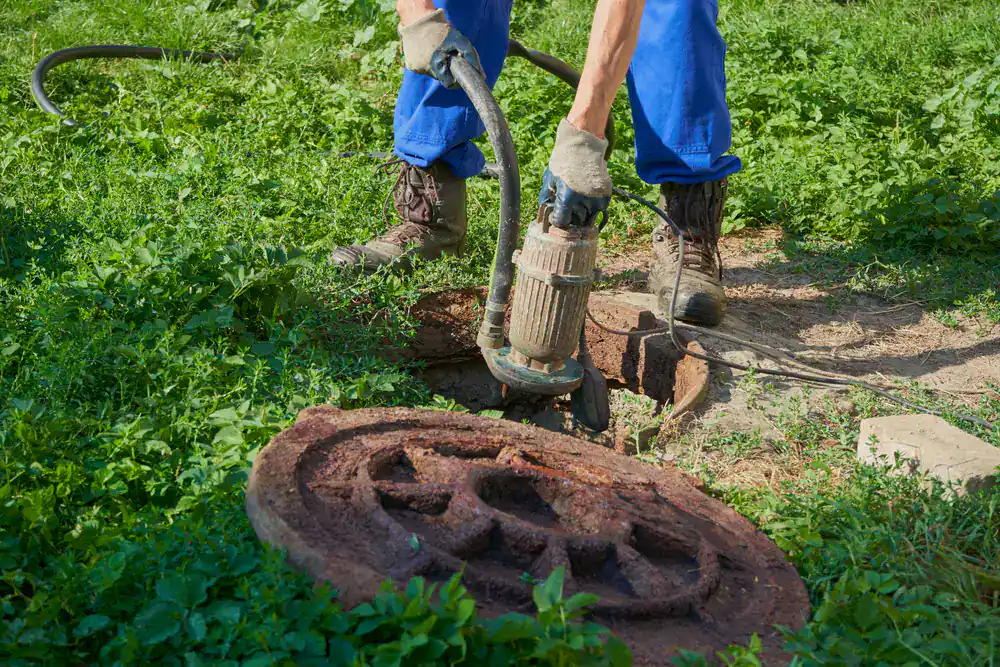
When our crew arrives, the first step is locating and accessing the tank. In Lake Ronkonkoma, where a significant number of homes were built in the 1960s and 1970s, lids are frequently buried under years of soil and landscaping. We specialize in locating hard-to-find cesspools and tanks this is a specific capability, not something every company handles well. Once the lid is accessed, the tank is fully pumped, not partially.
All waste is transported and disposed of legally at a licensed facility, which matters both for compliance and for the health of the sole-source aquifer that supplies drinking water across Long Island. After pumping, our technician assesses the system’s condition checking baffles, looking for signs of infiltration or damage, and letting you know what’s there and what, if anything, warrants attention. You get the information. You make the call on next steps. Nothing gets recommended that isn’t actually needed.
Ready to get started?
Septic tank pumping is our core service, but the scope goes further than that for most Lake Ronkonkoma properties. We handle drain cleaning, drywell cleaning, cesspool pumping, main sewer line service, house trap replacements, and full system installation residential and commercial. If our technician finds a secondary issue during a pump-out, you don’t have to schedule a second company and start the process over.
For homeowners in Lake Ronkonkoma, that full-service capability is practical. Many properties here sit across the Town of Brookhaven and Town of Smithtown lines, and some have systems that haven’t been touched in years. The combination of aging infrastructure and Suffolk County’s 2019 regulatory change which now requires failed cesspools to be upgraded rather than replaced in kind means that understanding your system’s actual condition matters more than ever.
A pump-out that includes a real assessment gives you that information before it becomes an emergency. If you’re preparing to sell, documentation of service is often requested before closing. Lake Ronkonkoma’s real estate market moves fast, and having a recent pump-out on record keeps your transaction on track. We provide that documentation as part of the service.