Useful Links
Other Services we provide in West Islip
The standard guidance for septic tanks is every three to five years, and for cesspools every one to two years but those ranges assume average conditions. In West Islip, particularly in the southern neighborhoods near the canal network and the Great South Bay, conditions aren’t always average. High water tables reduce the surrounding soil’s ability to absorb effluent, which means systems in those areas fill faster and come under more stress during and after heavy rain events or coastal storms.
If you’re in a canal-adjacent neighborhood, or if your property sits in a low-lying area that takes on water after a nor’easter, it’s worth having your system assessed more frequently than the generic schedule suggests. The right answer depends on your tank size, your household size, and your specific location within West Islip not just a number someone found online. When we service your system, that assessment is part of the conversation, not an afterthought.
Standard residential septic tank pumping in Suffolk County runs between $225 and $600 depending on tank size. A 1,000-gallon tank typically falls in the $225 to $400 range; larger systems around 2,000 gallons run closer to $400 to $600. Those are the real market numbers for 2024 and 2025 not a teaser rate designed to get a truck in your driveway.
Where homeowners in West Islip sometimes get caught off guard is lid excavation. A large share of homes here were built in the 1950s and 60s, and many of those original lids are now buried under years of soil and landscaping. If your lid needs to be dug out before the tank can be accessed, that’s an additional cost and it can range from $300 to $1,200 depending on how deep and how difficult the access is. We’re upfront about this before work begins, not after. If excavation is needed, you’ll know what it involves before anyone starts digging.
This is one of the most common questions on Long Island, and it’s completely understandable especially if you bought your home without a detailed maintenance history. The short answer is that most homes built before the 1970s in West Islip are more likely to have a cesspool, while homes built or significantly updated after that period may have a conventional septic tank. But the only way to know for certain is to have someone locate and inspect the system.
The practical difference matters because cesspools and septic tanks behave differently and need service at different intervals. Cesspools have no separation of solids from liquids, which is why they need pumping every one to two years. Septic tanks, which do separate waste, can go three to five years between pump-outs under normal conditions. Getting this wrong treating a cesspool like a septic tank and waiting too long is one of the more common reasons systems in older West Islip neighborhoods end up in distress. If you’re not sure what you have, that’s a good reason to call before you’re dealing with a problem.
Yes, and this is something we specifically handle. Locating hard-to-find cesspools is a stated specialty not a workaround. In West Islip, where roughly 70 percent of the housing stock was built between 1940 and 1969, buried lids are the norm rather than the exception. Decades of lawn grading, landscaping, and soil movement can put a lid anywhere from a few inches to well over a foot below the surface.
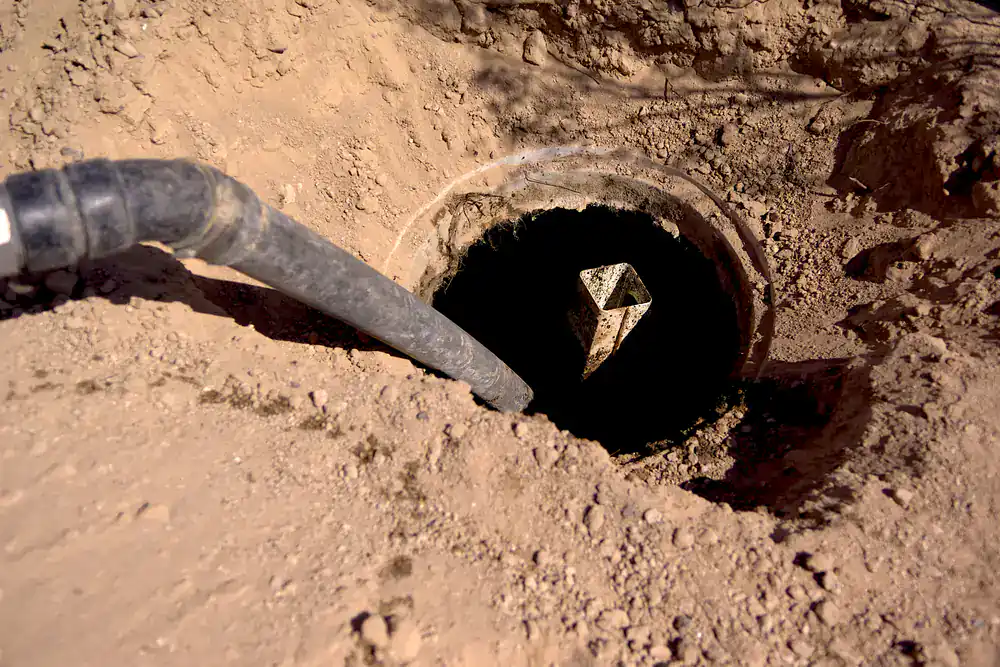
The process involves locating the tank first, then carefully excavating to reach the lid without unnecessary damage to the surrounding yard. If your system hasn’t been serviced in many years and you genuinely don’t know where the tank is, that’s not a problem it’s just the starting point. We arrive prepared for this scenario, and the excavation process is explained to you upfront so there are no surprises on the bill when the job is done.
It’s a reasonable question West Islip has been named in Suffolk County’s Southwest Sewer District No. 3 expansion planning, and federal funding has been formally requested for the project. That’s real progress, and eventually connecting to public sewer will eliminate the need for an onsite system entirely. But the timeline for actual connection to most West Islip properties is measured in years, not months.
In the meantime, your cesspool or septic system is still doing the same job it’s always done and it still fails on the same schedule if it’s neglected. A system that backs up or fails before the sewer connection arrives can cost $10,000 to $15,000 or more to address, depending on the extent of the damage. Routine pumping a fraction of that cost keeps the system functional through the transition period. Deferring maintenance because sewers are coming is one of the more expensive assumptions a West Islip homeowner can make right now.
The early signs are usually subtle drains that run a little slower than usual, a faint odor in the yard near the tank, or wet spots in the lawn that don’t dry out the way they should. Most homeowners don’t connect those signs to the septic system right away, which is part of why neglected systems tend to get worse before anyone calls.
When a tank goes too long without pumping, the accumulated solids eventually overflow into the drainfield the surrounding soil that absorbs treated effluent. Once solids clog a drainfield, it doesn’t unclog with a pump-out. Drainfield failure is a separate, much more expensive repair that can run $10,000 to $15,000 or more. In West Islip, where the soil near the bay and the canals already operates with limited absorption capacity due to high water tables, a compromised drainfield has even less margin for recovery than it would in a drier, inland environment. Getting ahead of the problem with regular pumping is genuinely the less expensive path not just in theory, but in the numbers.
Hear from Our Customers
When your septic tank is properly maintained, you stop worrying about it. No slow drains, no odors creeping into the yard, no surprise backups on a holiday weekend. That’s the actual goal a system that runs quietly in the background while you go about your life.
For West Islip homeowners near the canals and the Great South Bay, that peace of mind requires more attention than it does in inland towns. The water table in southern West Islip runs high year-round, and after a nor’easter rolls through, it rises even higher. That soil saturation puts real pressure on cesspool and septic systems they fill faster, they stress more easily, and they need more frequent service than the generic “every few years” advice you’ll read online.
Getting your system pumped on a proper schedule for your specific location means you’re not caught off guard when the ground is already saturated from a storm and your system has nowhere left to go. It also means you’re protecting a property that, in West Islip, is worth protecting median home values here sit around $725,000, and a failing septic system is one of the fastest ways to complicate a sale or trigger a health department notice.
We operate out of West Babylon directly on West Islip’s western border. When you call, you’re not getting a company dispatching from Nassau County or routing a crew from the North Shore. You’re getting a team that already works these streets, knows the housing stock, and has been handling South Shore septic and cesspool systems for over 30 years.
West Islip isn’t a generic Long Island town. The majority of homes here were built in a compressed window between 1940 and 1969, and the systems installed during that era have had decades to age, shift, and get buried under layers of soil and landscaping. We specialize in locating hard-to-find cesspools exactly the kind of problem that shows up constantly in neighborhoods like this.
Our approach is straightforward: show up, assess the actual condition of your system, do the work that’s needed, and tell you honestly if something else requires attention. No unnecessary recommendations, no inflated bills for simple jobs.

It starts with locating the tank. For a lot of West Islip properties especially homes built in the 1950s and 60s the lid isn’t sitting at the surface waiting for you. Decades of lawn grading, landscaping, and soil settling mean it could be buried under a foot or two of earth. We come prepared for that. Finding the system is part of the job, not an excuse to add a surprise charge once the truck is in your driveway.
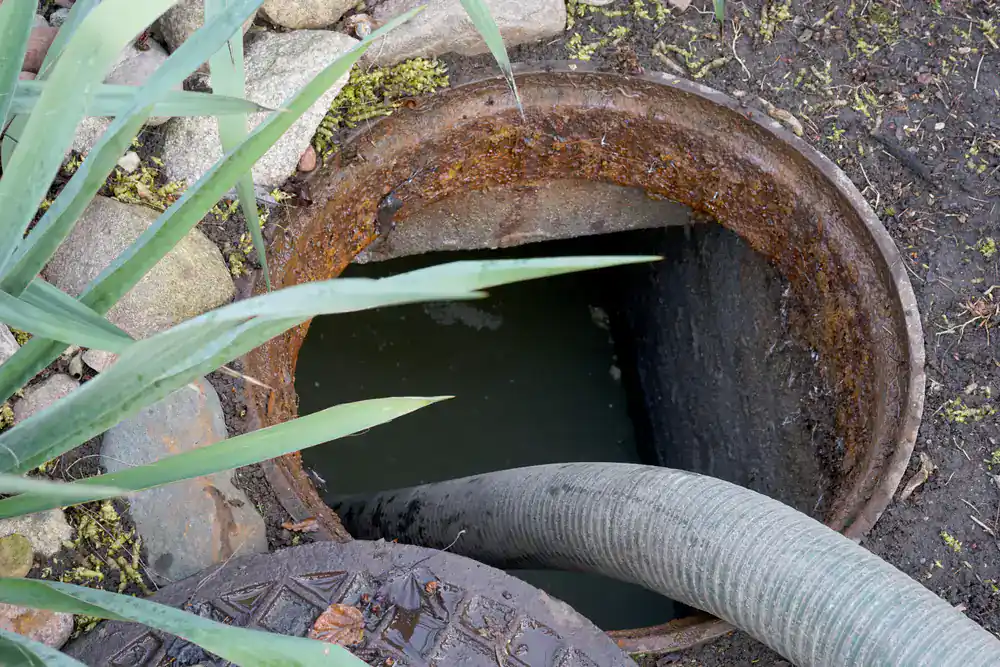
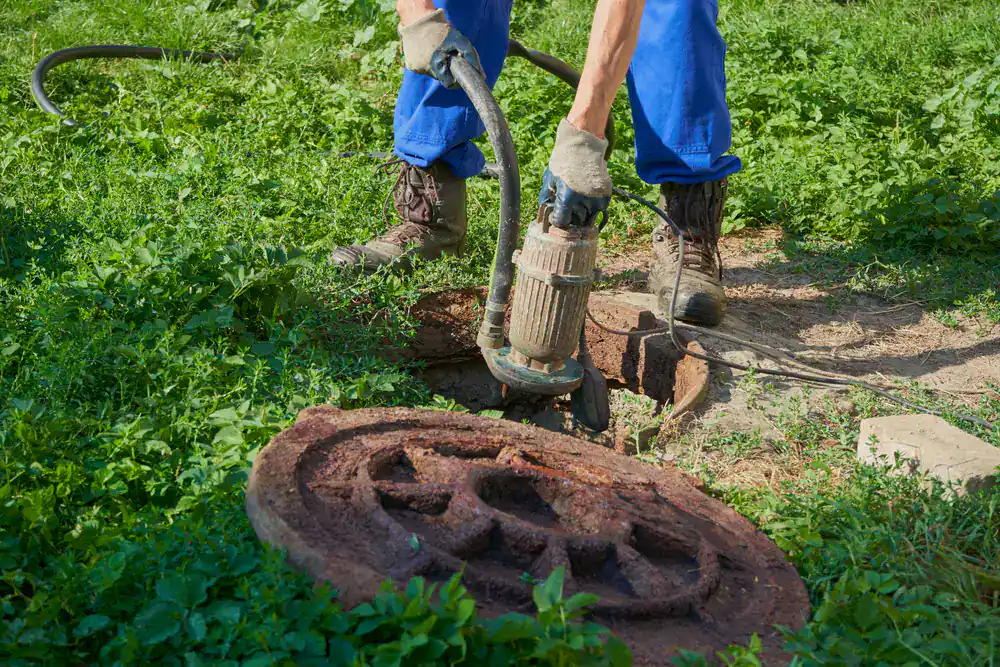
Once the tank is located and accessed, the pumping process removes all accumulated sludge and scum not just the surface layer. A partial pump-out might look like a completed job, but it leaves material behind that shortens the time before your next service call. The goal is a full clean-out, followed by a visual assessment of the tank’s condition: checking baffles, looking for signs of infiltration, and flagging anything that warrants attention before it becomes a real problem.
In West Islip, that assessment step carries extra weight. Properties near the canal network and the bay operate in conditions where groundwater can infiltrate a compromised tank faster than it would in an inland community. Knowing the difference between a system that’s performing normally for its location and one that’s showing early warning signs is something that comes from working South Shore systems for a long time not from reading a manual.
Ready to get started?
Septic tank pumping is the core of what brings most West Islip homeowners to call but it’s rarely the only thing a system that’s been sitting for years actually needs. We handle the full picture: septic pumping, cesspool pumping, drain cleaning, drywell cleaning, house trap replacements, and main sewer line cleaning and replacement. If your 1958 Cape Cod has multiple drainage components that haven’t been looked at in a decade, you don’t need to coordinate three different contractors. One call covers it.
Suffolk County’s regulatory environment has also shifted significantly in recent years. Since 2019, any cesspool that fails and requires replacement can no longer be swapped out like-for-like it has to be upgraded to a more advanced system. That’s a Suffolk County rule that applies directly to West Islip properties, and it’s something worth knowing before a system reaches the point of failure. Routine pumping and honest system assessments are the most practical way to stay ahead of that situation.
There’s also a sewer expansion on the horizon for West Islip the town has been specifically named in Suffolk County’s Southwest Sewer District No. 3 planning, and federal funding requests have been submitted for the project. Connection is years away for most properties, and your system doesn’t know that. Keeping it properly maintained through the transition period is the only thing that protects you in the meantime.