By submitting you consent to receive service-related texts from Drastic Drainage. Reply STOP to opt out. Msg & data rates may apply. Consent not required to book service.
Useful Links
There’s a specific kind of dread that comes with a slow drain or a smell you can’t place near the back of your yard. You’re not sure if it’s minor or serious, and you’re not sure who to call. What you want is a straight answer — not a sales pitch, not a vague quote over the phone, and definitely not someone who shows up and starts digging before they’ve told you what they found.
That’s the starting point for most West Islip homeowners who call us. The median home here was built around 1960, which means the cesspool beneath it has already outlasted the 20-to-40-year design lifespan by a wide margin. A system that’s been quietly doing its job for decades can reach a tipping point — and on the South Shore, that tipping point often comes faster than expected.
West Islip sits directly on the Great South Bay coastal plain, where the water table is naturally close to the surface. After a nor’easter pushes bay water inland or a heavy rain saturates the ground, the soil around your leaching field loses its ability to absorb. A system that was borderline functional on a dry Tuesday in August can back up by Friday after a storm. That’s not a generic Long Island problem — it’s a South Shore reality that we’ve been navigating for over 30 years.
The general recommendation for cesspool pumping is every one to three years, depending on the size of your household and the capacity of your system. Most Long Island cesspools hold between 500 and 1,500 gallons, and a household of three or more people will fill that faster than the rule of thumb suggests.
In West Islip specifically, the age of the housing stock adds another layer to this. If your home was built in the 1950s or 1960s and you’ve never had the system professionally assessed, you may be working with a cesspool that’s been in the ground for 60-plus years. At that age, the structure itself may have deteriorated, and the leaching field may have reduced absorption capacity regardless of how often you pump. A video inspection alongside your pump-out gives you a real picture of the system’s condition — not just how full it is, but how much useful life it has left.
The most common early signs are slow drains throughout the house — not just one fixture, but multiple at the same time — along with gurgling sounds in the pipes, a sewage odor inside or outside the home, and wet or unusually green patches in your yard near where the system is located. If you’re noticing any of these, the system is already under stress.
In West Islip, one pattern that comes up more often than in inland communities is post-storm failure. Because the hamlet sits on the Great South Bay coastal plain with a naturally shallow water table, heavy rainfall or coastal flooding from the bay can saturate the soil around your leaching field rapidly. A system that was functioning adequately before a nor’easter can back up within 24 to 48 hours of significant storm activity. If you’re seeing problems after a storm, that context matters — it affects the diagnosis and what the actual fix looks like.
Not anymore. Suffolk County banned the installation of new traditional cesspools effective July 1, 2019. If your system has failed and requires full replacement, you cannot simply put another conventional cesspool in the ground. The replacement must include at minimum a septic tank preceding any leaching structure, and in many cases the county will require an Innovative/Alternative (IA) onsite wastewater treatment system — a more advanced setup that reduces nitrogen in wastewater by up to 70%.
This is a significant change that a lot of West Islip homeowners aren’t fully aware of until they’re already in the middle of a failure situation. The good news is that qualifying homeowners may be eligible for combined county and state grant funding of up to $45,000 to help offset the cost of an IA system installation. The application process has specific requirements, and we can help you understand whether your property and situation qualify before you commit to anything.
Free, no-obligation estimates on cesspool, sewer, and drain work.
We get there quickly. No waiting days for a callback.
Backups don’t wait for business hours. Neither do we.
Fully licensed and insured across Long Island.
Up-to-date trucks and tools for cleaner, faster jobs.
Straight quotes, no surprises on the bill.
Hear from Our Customers

There’s a specific kind of dread that comes with a slow drain or a smell you can’t place near the back of your yard. You’re not sure if it’s minor or serious, and you’re not sure who to call. What you want is a straight answer — not a sales pitch, not a vague quote over the phone, and definitely not someone who shows up and starts digging before they’ve told you what they found.
That’s the starting point for most West Islip homeowners who call us. The median home here was built around 1960, which means the cesspool beneath it has already outlasted the 20-to-40-year design lifespan by a wide margin. A system that’s been quietly doing its job for decades can reach a tipping point — and on the South Shore, that tipping point often comes faster than expected.
West Islip sits directly on the Great South Bay coastal plain, where the water table is naturally close to the surface. After a nor’easter pushes bay water inland or a heavy rain saturates the ground, the soil around your leaching field loses its ability to absorb. A system that was borderline functional on a dry Tuesday in August can back up by Friday after a storm. That’s not a generic Long Island problem — it’s a South Shore reality that we’ve been navigating for over 30 years.
We’re based in West Babylon — which puts us directly on West Islip’s western border. This isn’t a company routing calls through a regional dispatch center. When you call (631) 422-4122, a real person answers. That detail has shown up in customer reviews more than once, and it matters more than it sounds when you’re dealing with a backup on a Sunday night.
We’ve been licensed, insured, and bonded for over 30 years, holding Suffolk County Liquid Waste License #LW-63684. That’s not a credential to gloss over — in Suffolk County, working with an unlicensed operator can leave you personally exposed to permit violations that surface during a future home sale. The regulatory environment here is specific, and we know it well.
From the aging postwar cesspools under homes near Montauk Highway to the South Shore properties with no visible access point on their system, we’ve seen the full range of what West Islip’s housing stock presents. The work gets explained, the estimates are free, and nothing starts until you know what you’re paying and why.
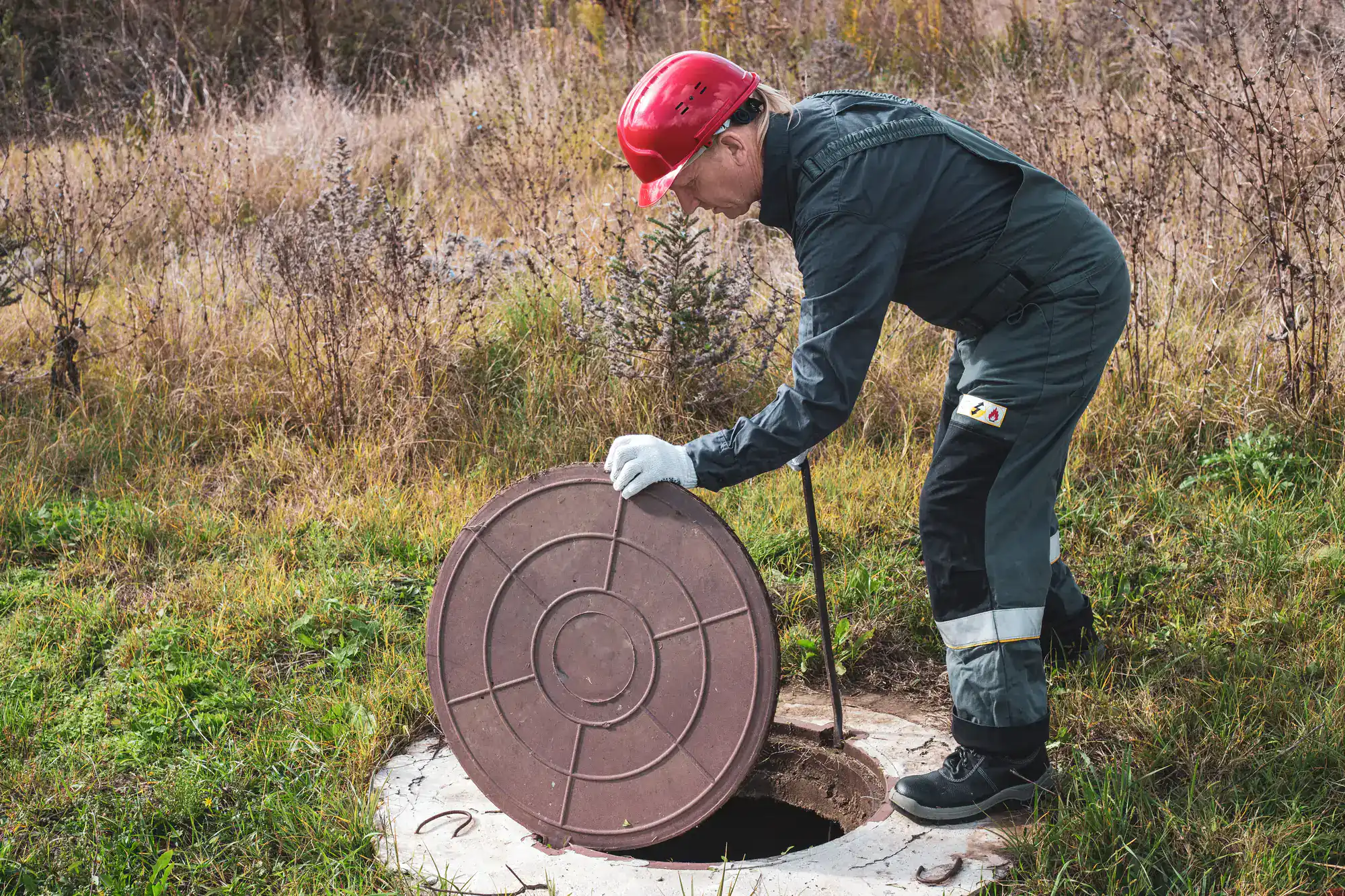
It starts with a phone call — and an actual conversation, not a form submission. You describe what you’re seeing or smelling, and we help you figure out whether this is an emergency or something that can be scheduled. If sewage is backing up or surfacing in your yard, our 24-hour emergency line gets you a real response, not a callback window.
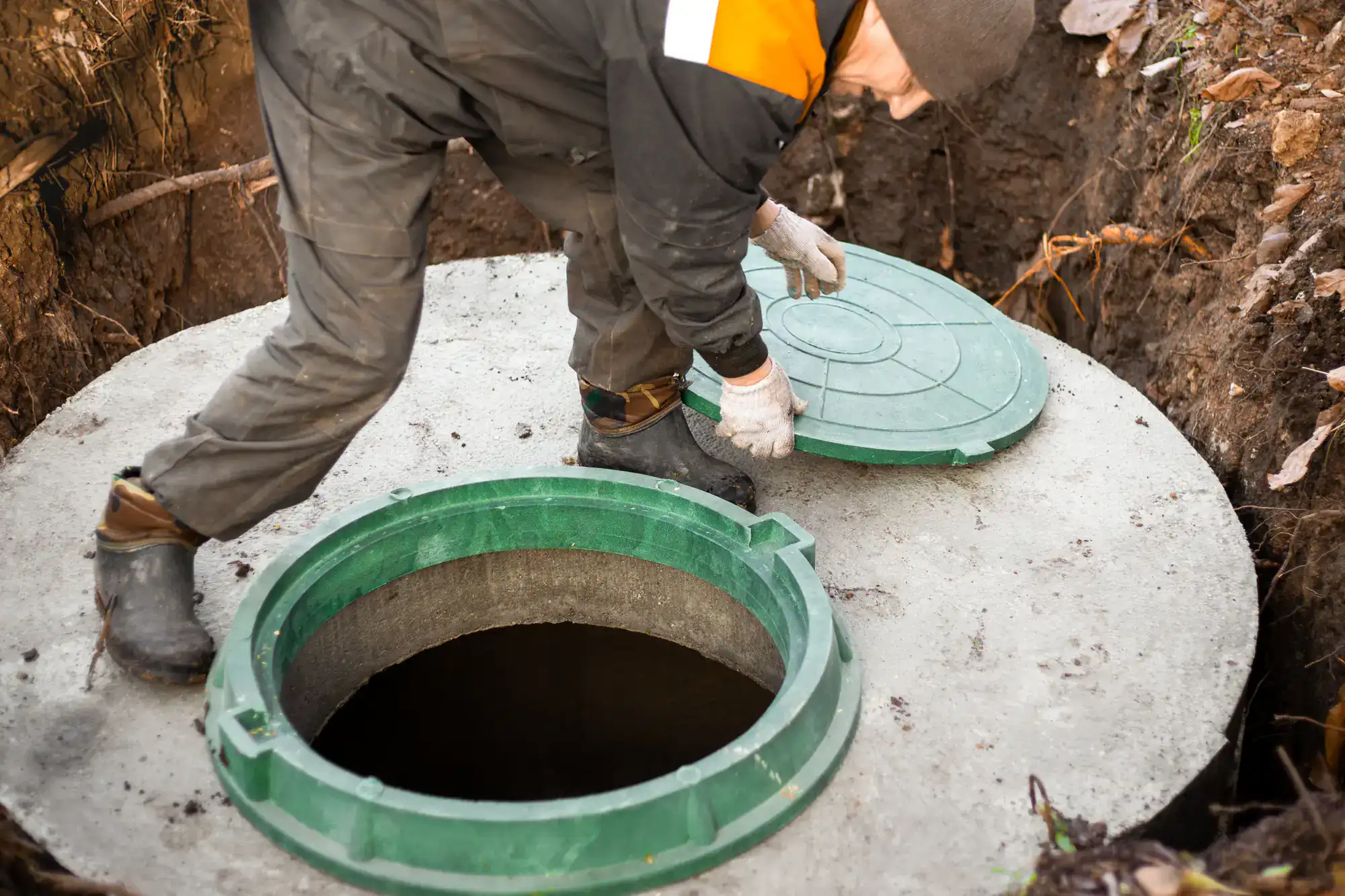
Once on-site, the first step is assessment. Before any excavation happens, we use waterproof video camera technology to see what’s going on underground. This is important in West Islip, where a lot of older homes have cesspools with no visible cover or access point — locating the system is sometimes step one. The camera inspection gives a clear picture of the actual problem, which means no unnecessary digging and no guesswork driving the quote.
From there, the scope becomes clear. A routine pump-out gets handled the same day in most cases. If the inspection reveals something more involved — a damaged structure, a leaching field that’s saturated beyond recovery, or a system that’s reached the end of its life — you’ll hear that directly, along with what the repair or replacement involves. In West Islip, repairs and replacements require permits from both the Town of Islip and Suffolk County Department of Health Services, and we handle that process. You’re not left to figure out the paperwork on your own.
Ready to get started?
We handle the full range of cesspool and drain services — not just pump-outs. For West Islip homeowners, that means routine cleaning and pumping, video pipe inspections, cesspool locating for systems with no visible access point, drywell cleaning, house trap replacements, main sewage line cleaning and replacement, storm drain cleaning, and complete cesspool installation when a system has reached the end of its life.
The cesspool installation side of our business is increasingly relevant in West Islip. Suffolk County banned new traditional cesspool installations in July 2019, which means any system that fails and requires full replacement must be upgraded to an Innovative/Alternative (IA) onsite wastewater treatment system. These systems cost more upfront, but qualifying West Islip homeowners may be eligible for combined county and state grants of up to $45,000 to offset that cost. We can walk you through whether your situation qualifies.
For homeowners selling a property, the real estate certification service is handled in-house. West Islip’s median home value sits above $600,000, and homes here are going to pending in roughly 17 days. A cesspool that isn’t properly documented and certified can stall or kill a closing. The inspection and documentation we provide satisfies the requirements from Suffolk County DHS, lenders, and real estate attorneys — so the deal doesn’t fall apart over something that could have been handled cleanly before listing.