By submitting you consent to receive service-related texts from Drastic Drainage. Reply STOP to opt out. Msg & data rates may apply. Consent not required to book service.
Useful Links
When a cesspool is properly inspected and serviced, you stop guessing. The slow drain that’s been bothering you for months gets diagnosed — not just temporarily relieved. The odor near the backyard disappears. And you’re not lying awake wondering whether the system under your property is one heavy rain away from backing up into your basement.
For Coram homeowners specifically, that peace of mind carries a little more weight. The sandy, glacially deposited soils throughout central Suffolk County drain fast — which is exactly why cesspools work here in the first place. But that same fast drainage means a failing or overloaded system doesn’t give you much warning before contaminants are moving toward the groundwater beneath your neighborhood. Regular inspection and service is the buffer between a manageable maintenance call and an expensive remediation.
The age factor matters too. Homes in ZIP code 11727 were predominantly built in the 1960s, meaning original cesspool systems are now well past the 20 to 40 year typical service life. If yours has never been fully inspected or replaced, you’re not dealing with a question of if it needs attention — it’s a question of when, and whether you’re the one who decides the timing or the system does.
For most households in Coram, a cesspool should be pumped every one to three years depending on household size, water usage, and the age and capacity of the system. Homes with more people using the system daily — or households where someone works from home and is running water throughout the day — tend to reach capacity faster than a two-person household that’s out of the house most of the time.
What makes Coram a little different from some other communities is the age of the housing stock. If your home was built in the 1960s and the cesspool has never been replaced, you may be working with a system that’s operating well past its typical service life. In that case, inspection matters as much as pumping — because a pump-out on a structurally compromised system just delays the inevitable. Suffolk County also has a three-year inspection and reporting requirement for cesspool owners, so staying on a regular schedule keeps you compliant and ahead of any issues before they become emergencies.
The most common early signs are slow drains throughout the house — not just one fixture, but multiple — along with gurgling sounds in the pipes, a sewage odor near the yard or in the basement, and wet or unusually green patches of grass over where the system is located. Any one of these is worth a call. All of them together means you’re likely dealing with a system that’s either full, losing absorption capacity, or structurally compromised.
In central Suffolk County around Coram, the sandy soil drains quickly under normal conditions. When you start seeing water surfacing in the yard, that’s a sign the leaching pools have lost their ability to disperse effluent — and in soil that’s supposed to drain fast, that’s a serious indicator. Don’t wait on it. A cesspool backup that gets into the basement typically costs between $3,000 and $7,000 to remediate, not counting any structural repairs. Catching it at the slow-drain stage is significantly cheaper and less disruptive.
Not necessarily, but it depends on what’s actually down there. A cesspool from the 1960s that has been regularly pumped and maintained may still have usable life — but one that’s been neglected, or that’s showing signs of structural failure or lost absorption, is a different story. The only way to know for certain is a proper inspection, ideally with video camera technology that can show the actual condition of the system without requiring excavation first.
What’s changed in recent years is what happens if the system does need to be replaced. Since July 2019, Suffolk County has banned the installation of new conventional cesspools. If your system fails and requires full replacement, it must be replaced with an Innovative/Alternative (IA) advanced treatment system — which costs more upfront than a conventional replacement would have. The good news is that the 2024 Suffolk Water Quality Restoration Act expanded the county’s reimbursement program to cover up to 75% of the project cost, with a maximum of $25,000 for qualifying upgrades. Getting an inspection now — before a failure forces the decision — gives you time to plan and apply for assistance rather than scrambling in a crisis.
Free, no-obligation estimates on cesspool, sewer, and drain work.
We get there quickly. No waiting days for a callback.
Backups don’t wait for business hours. Neither do we.
Fully licensed and insured across Long Island.
Up-to-date trucks and tools for cleaner, faster jobs.
Straight quotes, no surprises on the bill.
Hear from Our Customers

When a cesspool is properly inspected and serviced, you stop guessing. The slow drain that’s been bothering you for months gets diagnosed — not just temporarily relieved. The odor near the backyard disappears. And you’re not lying awake wondering whether the system under your property is one heavy rain away from backing up into your basement.
For Coram homeowners specifically, that peace of mind carries a little more weight. The sandy, glacially deposited soils throughout central Suffolk County drain fast — which is exactly why cesspools work here in the first place. But that same fast drainage means a failing or overloaded system doesn’t give you much warning before contaminants are moving toward the groundwater beneath your neighborhood. Regular inspection and service is the buffer between a manageable maintenance call and an expensive remediation.
The age factor matters too. Homes in ZIP code 11727 were predominantly built in the 1960s, meaning original cesspool systems are now well past the 20 to 40 year typical service life. If yours has never been fully inspected or replaced, you’re not dealing with a question of if it needs attention — it’s a question of when, and whether you’re the one who decides the timing or the system does.
We’ve been servicing cesspools and drainage systems across Nassau and Suffolk Counties for over 30 years. That’s three decades of working in the same sandy soils, under the same Town of Brookhaven regulations, on the same style of mid-century housing stock that fills Coram, Middle Island, Selden, and Gordon Heights. The experience isn’t a number — it’s the difference between a technician who knows what a 1960s-era cesspool looks like when it’s approaching failure and one who’s just reading from a checklist.
We’re licensed (LW-63684), insured, and bonded. When you call (631) 422-4122, a real person picks up — not an answering service, not a voicemail queue. That’s been true for 30 years, and it’s one of the things customers mention most when they leave a review. If you need someone out the same day, or at 11 PM on a Sunday, that’s not a problem. It’s part of how we operate.
It starts with a call. When you reach out to us, you’ll talk to someone who can actually answer your questions — not schedule you into a callback loop. We’ll ask about what you’re experiencing, give you a realistic timeframe, and confirm a free estimate before any work begins. No surprises on the invoice before the truck even pulls in.
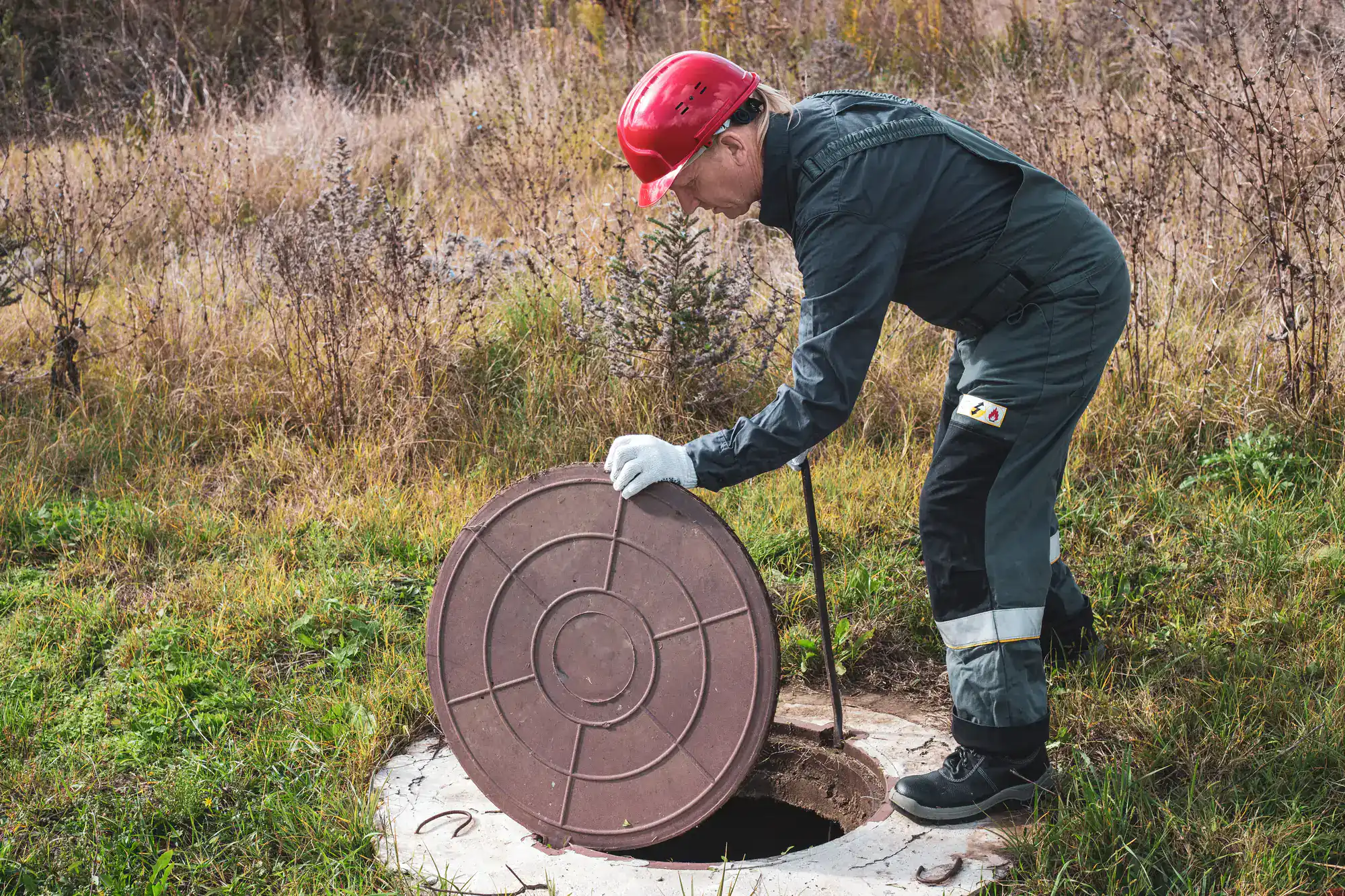
When our crew arrives, the first step is assessment. For older systems common in Coram’s housing stock, that often means locating the cesspool itself — many mid-century homes have no visible access point, and finding the system is a skill in its own right. If the situation calls for it, a waterproof video camera goes underground before any digging happens. That inspection tells you exactly what’s going on: whether it’s a straightforward pump-out, a leaching pool that’s lost absorption capacity, a line that needs clearing, or something that requires a more involved repair or replacement conversation.
From there, the work is done, explained, and documented. If you’re in a situation where Suffolk County’s regulations apply — like a failed system that now requires an Innovative/Alternative replacement under the 2019 county ban — we’ll walk you through what that means, what the 2024 Suffolk Water Quality Restoration Act reimbursement program covers, and what your actual options are. You leave knowing what was done and why, not just handed a bill.

Ready to get started?
We’re a full-service operation, which matters more in a community like Coram than it might elsewhere. When your home’s cesspool was installed in the 1960s, it was built as a complete system — the cesspool itself, the leaching pools, the house trap, the main line connecting it all. If one part of that system is struggling, the others are usually feeling it too. Bringing in a company that can only handle one piece means coordinating multiple contractors, multiple schedules, and multiple invoices.
Our services include cesspool cleaning and pumping, cesspool installation, leaching pool service, drywell cleaning, house trap replacements, main sewage line cleaning and replacement, storm drain cleaning, video pipe inspection, cesspool location, and real estate certifications for property transfers. That last one is worth noting if you’re selling a home in Coram — a cesspool inspection and certification is a required step in any Suffolk County property transfer, and having it handled by the same licensed team that services the system means one less thing to coordinate before closing.
For commercial properties along the Middle Country Road corridor, the same full-service scope applies. Restaurants, service businesses, and retail operations generate substantially more wastewater than residential homes, and the cesspool demands that come with that are handled with the same licensed, insured, and bonded crew. License number LW-63684 is on file and verifiable — because in Suffolk County, that’s the baseline you should be asking for before anyone touches your system.