By submitting you consent to receive service-related texts from Drastic Drainage. Reply STOP to opt out. Msg & data rates may apply. Consent not required to book service.
Useful Links
When your cesspool is running the way it should, you stop noticing it and that’s exactly the point. No slow drains, no smell creeping into the house, no standing water in the yard after a rainstorm. For most Smithtown homeowners, that’s the version of normal they want back.
Smithtown sits on Long Island’s sole-source aquifer, and the groundwater beneath your property flows north toward the Nissequogue River and Smithtown Bay. That bay has been flagged as a nitrogen priority water body, with documented low-oxygen events and fish kills. The nitrogen leaving a neglected cesspool doesn’t stay in your yard it moves. Regular pumping is one of the most direct things you can do to slow that down, and it protects your property at the same time.
The other thing worth saying plainly: the median home value in Smithtown is over $763,000. A cesspool that backs up or fails structurally doesn’t just cost you a service call it threatens that asset. Routine pumping at $200–$500 is not a luxury. It’s the least expensive version of this conversation you’ll ever have.
For most residential cesspools on Long Island, the realistic pumping schedule is every one to three years and in Smithtown, that range leans toward the more frequent end. Here’s why: the North Shore’s sandy glacial soil and relatively high water table mean cesspools fill faster than they would in drier, lower-water-table environments. When the water table rises after heavy rain which happens regularly during Long Island’s spring and fall seasons a cesspool’s effective leaching capacity shrinks, and the system fills more quickly than its normal rate would suggest.
If your Smithtown home was built in the 1960s or earlier, your cesspool has likely been in the ground for 50 to 60 years. Older single-chamber systems fill faster than modern septic tanks by design, and they don’t give you much warning before they become a problem. The EPA recommends pumping when sludge reaches within 12 inches of the outlet but most homeowners have no way to monitor that without a professional inspection. Scheduling service every one to two years for an older Smithtown home is a reasonable baseline, and it keeps you ahead of the emergency call.
For a standard residential pump-out in Suffolk County, you’re generally looking at $200 to $500 depending on tank size, how accessible the cover is, and how full the system is at the time of service. A 1,000-gallon tank typically runs $225 to $400. A 2,000-gallon tank runs $400 to $600 or more. Emergency calls where you’re dealing with an active backup or same-day dispatch will cost more than a scheduled appointment.
What matters as much as the number is how the quote is given. A common complaint in this industry is the low phone quote that jumps significantly once the crew is on-site. Ask upfront what’s included in the quoted price, whether there are additional charges for locating a buried cover, and whether the quote changes based on how full the tank is. Get the specifics before anyone shows up.
The most obvious signs are slow drains throughout the house not just one fixture, but multiple combined with gurgling sounds from toilets or drains, sewage odors coming up through the drains or appearing outside near the tank area, and soft or wet ground over the cesspool location in your yard. If you’re noticing any of these, the system is already under stress. Waiting to see if it gets better on its own is how a manageable pump-out turns into an emergency repair.
In Smithtown specifically, spring and post-storm periods are when these symptoms tend to appear most suddenly. A heavy rain raises the water table, reduces the cesspool’s ability to drain, and can push a system that was borderline full into active backup territory within a day or two. If you had a wet spring and haven’t pumped in two or more years, that combination is worth taking seriously before you’re dealing with sewage backing up into the house.
No and this is one of the more important things to understand about the current project. The Town of Smithtown has secured over $80 million in grants for sewer infrastructure, and crews have been actively installing lines along Route 25A in the Smithtown Business District. It’s a significant project, and if you’ve driven through the area you’ve seen the overnight construction work firsthand.
But the expansion covers the business district, not residential neighborhoods. The overwhelming majority of Smithtown’s roughly 8,000 occupied households will remain on cesspools for the foreseeable future likely years, possibly longer. The sewer news has raised awareness about nitrogen and groundwater locally, which is a good thing, but it hasn’t changed the maintenance reality for residential properties. Your cesspool still needs regular pumping on its normal schedule. If anything, the public conversation around water quality that the sewer project has generated is a good reminder of why staying current on maintenance matters.
This is more common than most people realize, especially in Smithtown’s older housing stock. Homes built in the 1950s and 1960s frequently have cesspools with no surviving location records the documentation was never kept, was lost over decades, or was simply never passed along when the property changed hands. If you bought your home without a clear record of the system’s location, you’re not alone.
We specifically list hard-to-find cesspools as a specialty. We carry the equipment to locate systems that aren’t marked and don’t have visible covers, and we’ve handled this situation many times across Long Island’s older communities. Before you assume you need to dig up the yard or call a separate locating service, call us directly. Locating the system is part of the job, not an obstacle that stops the work from happening.
They’re related but not identical, and the difference matters for what you’re actually getting. Pumping removes the liquid and floating waste from the tank it’s the core of what most service calls involve. Cleaning is more thorough: it includes removing hardened sludge that has settled at the bottom of the tank, inspecting the internal walls of the system, and evaluating the structural condition of the cesspool itself. Not every service call needs to be a full cleaning, but knowing which one you’re getting is important.
For homeowners in Smithtown with older systems particularly pre-1973 construction periodic cleaning and inspection makes more sense than pumping alone. Concrete block cesspools from that era can develop cracks, shifting, or wall deterioration that isn’t visible from the surface and doesn’t announce itself until something goes wrong. A cleaning that includes a proper look at the system’s condition gives you real information about where things stand, not just a tank that’s been emptied. If you’re not sure what you’ve had done in the past, that’s a reasonable question to ask when you call.
Free, no-obligation estimates on cesspool, sewer, and drain work.
We get there quickly. No waiting days for a callback.
Backups don’t wait for business hours. Neither do we.
Fully licensed and insured across Long Island.
Up-to-date trucks and tools for cleaner, faster jobs.
Straight quotes, no surprises on the bill.
Hear from Our Customers

When your cesspool is running the way it should, you stop noticing it and that’s exactly the point. No slow drains, no smell creeping into the house, no standing water in the yard after a rainstorm. For most Smithtown homeowners, that’s the version of normal they want back.
Smithtown sits on Long Island’s sole-source aquifer, and the groundwater beneath your property flows north toward the Nissequogue River and Smithtown Bay. That bay has been flagged as a nitrogen priority water body, with documented low-oxygen events and fish kills. The nitrogen leaving a neglected cesspool doesn’t stay in your yard it moves. Regular pumping is one of the most direct things you can do to slow that down, and it protects your property at the same time.
The other thing worth saying plainly: the median home value in Smithtown is over $763,000. A cesspool that backs up or fails structurally doesn’t just cost you a service call it threatens that asset. Routine pumping at $200–$500 is not a luxury. It’s the least expensive version of this conversation you’ll ever have.
We’re a family-owned, family-operated company based in West Babylon, Suffolk County. We’ve been working on Long Island cesspools for over 30 years and that distinction matters here, because Long Island systems are not like systems anywhere else. The soil conditions, the high water table on the North Shore, the pre-1973 housing stock, the Suffolk County licensing requirements none of that is something you learn from a manual. You learn it from doing the work, in this county, for decades.
Smithtown’s neighborhoods from the central hamlet near the Bull statue at Routes 25 and 25A, out through Kings Park, Nesconset, St. James, and Fort Salonga are full of homes built during the post-war boom with cesspools that have never been replaced. We’ve seen these systems up close, including the ones where the original location records are long gone. That’s not an obstacle for us. It’s a specialty.
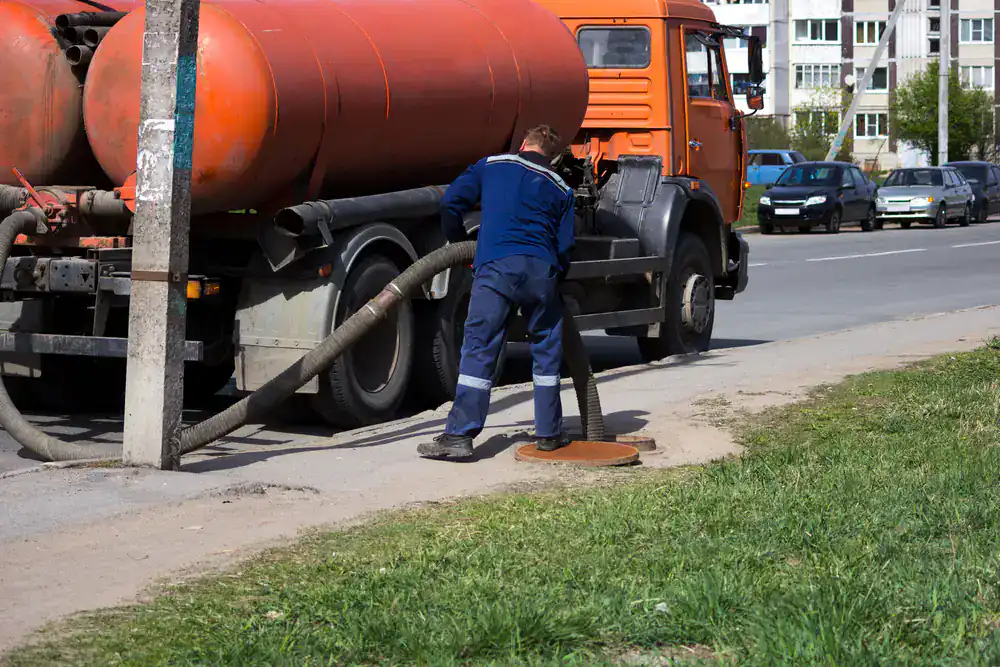
It starts with a phone call, and someone actually picks up. We operate 24 hours a day, seven days a week including for emergency situations. You’ll get a real person, a real time window, and a clear sense of what to expect before anyone shows up at your door.
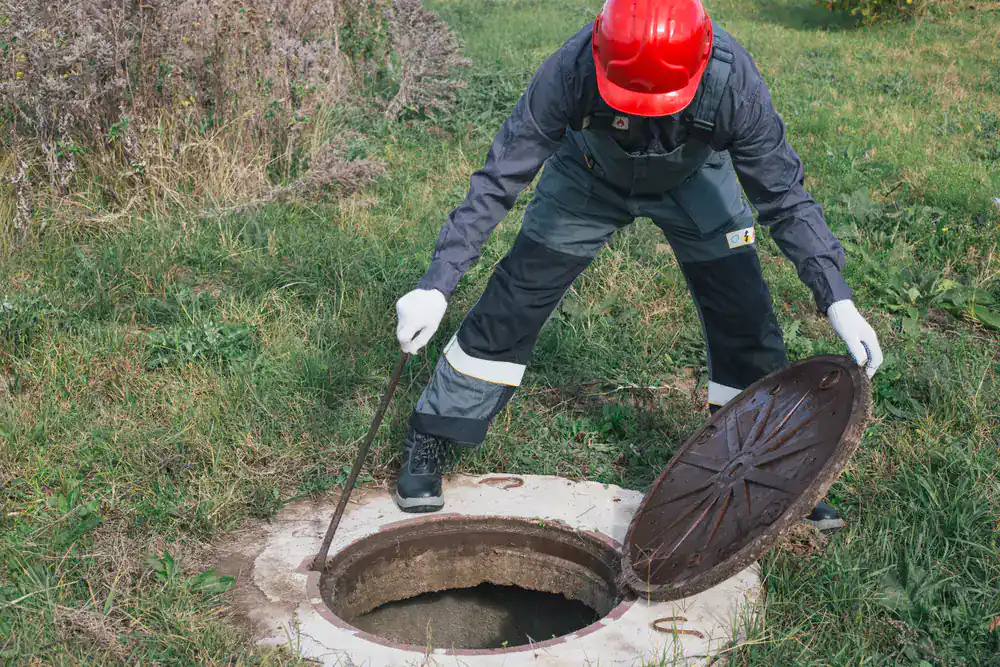
When our crew arrives, the first step is locating and accessing the cesspool. For newer Smithtown homes this is straightforward. For older properties particularly those built in the 1950s and 1960s the cover may be buried, and the system’s location may not be documented anywhere. We handle this regularly and carry the equipment to locate systems that other companies can’t find. Once access is confirmed, we pump out the tank fully and assess the system’s condition while we’re on-site. You’ll know what we found, not just what we did.
After the job is done, you receive written service documentation. That matters more than most homeowners realize especially in Smithtown’s real estate market, where buyers and their attorneys routinely ask for cesspool maintenance records before closing. One service call, properly documented, is an asset when it’s time to sell.
Ready to get started?
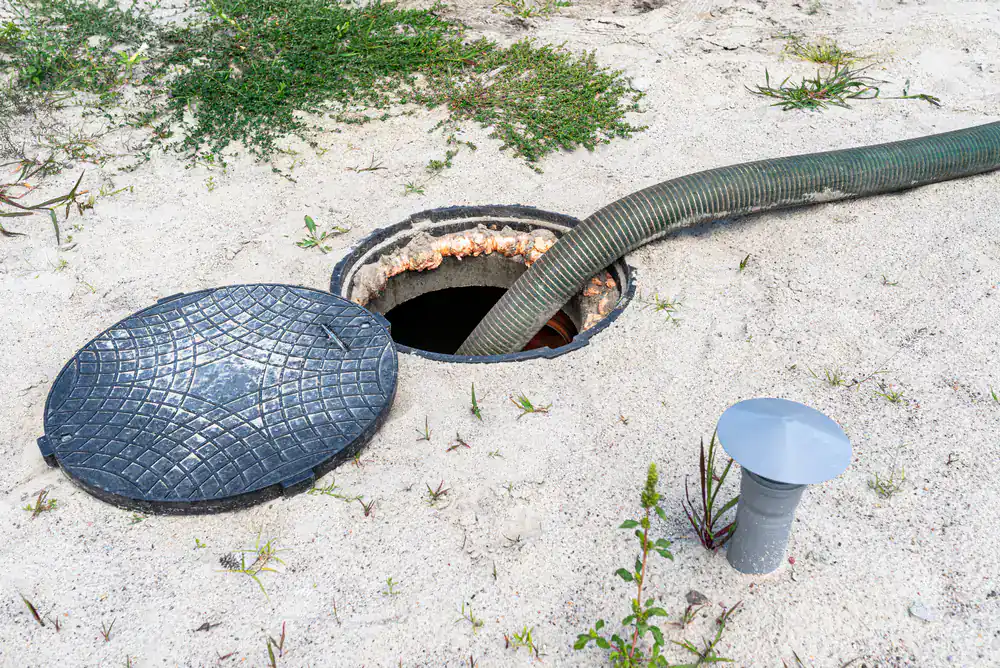
Cesspool pumping and cesspool cleaning are not the same thing, and it’s worth knowing the difference before you book. Pumping removes the liquid and floating waste from the tank. Cleaning goes further it involves more thorough removal of accumulated sludge, an inspection of the system’s internal walls, and a closer look at whether the structure itself is holding up. We provide thorough service that doesn’t stop at the surface level, and our drain cleaning work includes sewer inspection as a standard part of the process.
For Smithtown homeowners with older systems, this matters for a specific reason. Many of the cesspools in this area were built before 1973 using concrete block construction that has well exceeded its designed lifespan. A system that appears to be functioning can still have structural stress that only becomes visible during a proper inspection. Catching that early during a routine service call is far less expensive than discovering it after a sinkhole appears in your backyard.
We handle the full scope of what might come next: drain clearing, septic pumping, and full system installation if replacement becomes necessary. All work is performed under Suffolk County Consumer Affairs licensing requirements, and we carry the LILWA certification required for septic pumping endorsement under Suffolk County Article VII. You don’t need to track down three different contractors. One call covers it.