Useful Links
Other Services we provide in Great River
No and this is one of the most common misconceptions among homeowners in Suffolk County. As of July 1, 2019, Suffolk County banned cesspool-only replacements. If your system fails or needs to be replaced, the new installation must include at minimum a septic tank preceding the leaching structure. You can no longer swap one cesspool for another.
For Great River homeowners, this has a practical implication: the replacement you install today will be a different type of system than what’s currently in the ground. That’s not necessarily a problem it’s actually a more effective setup but it does mean the permitting process, the design requirements, and the installation scope are more involved than a simple swap. We handle all of that, including the SCDHS permit application and the coordination of the required inspections, so you’re not navigating county regulations on your own.
It affects almost every part of the design. Great River sits at 13 feet above sea level, which means the water table is consistently close to the surface and after significant rainfall or a coastal storm event, it rises further. That proximity limits how deep certain system components can be installed and directly affects how well the soil can absorb effluent from the leaching pool.
In practical terms, this means the leaching area for a Great River installation may need to be larger than what would be required for the same-sized home in a higher-elevation inland community. It also means the system needs to be properly sized and placed from the start an undersized leaching pool in saturated soil will show signs of failure faster than almost anything else. This is why a site evaluation that accounts for actual local soil conditions matters so much, and why experience with South Shore Suffolk County properties is not interchangeable with general Long Island experience.
Yes, always. All cesspool installations and replacements in Suffolk County require permits from the Suffolk County Department of Health Services. There are no exceptions for simple swaps or partial replacements. The permit application requires engineered plans, soil testing results, and documentation of setback distances from wells, property lines, and any nearby surface water.
That last requirement is particularly relevant in Great River, where homes near the Connetquot River or along the waterfront have less margin between the property and the water than most inland lots. Setback distances from surface water are a real constraint here, not a formality. Skipping the permit process isn’t just a regulatory risk it can void your certificate of occupancy, create liability during a future home sale, and potentially require you to redo the entire installation at your own cost. We handle the permit application as part of the installation process, including all required documentation and inspection scheduling.
Yes, and they’re worth knowing about before you commit to anything. Suffolk County’s Septic Improvement Program offers combined State and County grants of up to $45,000 for eligible homeowners installing I/A OWTS systems the nitrogen-reducing alternative to conventional cesspools. These grants are disbursed directly to the licensed installer after the final inspection, so you pay only the balance after the grant is applied.
For Great River homeowners, this program is directly relevant. The Connetquot River watershed which includes Great River has been identified by New York State as a nitrogen remediation priority, and the I/A OWTS systems covered by this grant program are specifically designed to reduce nitrogen loading into groundwater and surface water. Grant funding is first-come, first-served and not unlimited, so it’s worth asking about eligibility early in the process rather than after you’ve already made a decision. We can walk you through what you may qualify for before any work is scheduled.
The physical installation itself typically takes one to five days for a residential property, depending on the complexity of the system and the specific conditions of the lot. A straightforward replacement on a standard residential lot moves faster. A more involved installation one that requires a larger leaching area due to soil conditions, or one where the old system needs to be located before it can be decommissioned takes longer.
What adds time to any Great River project is the permit process, which happens before excavation begins. SCDHS permit applications typically take two to four weeks to process. That timeline is predictable and can be planned around it’s not a reason to delay getting started, because the permit clock doesn’t start until the application is submitted. The sooner the site evaluation happens and the permit application goes in, the sooner the installation can be scheduled. We build that lead time into the project schedule from the first conversation.
Given Great River’s elevation and its position adjacent to the Connetquot River and Great South Bay, storm-related cesspool stress is a real and recurring issue here not a hypothetical. Heavy rainfall raises the water table, which reduces the soil’s ability to absorb effluent from the leaching pool. When that happens, the system can back up quickly, and the signs show up fast: slow drains inside the house, wet spots or odors in the yard, or sewage surfacing near the system.
We offer 24-hour emergency services, every day of the week. If your system backs up after a nor’easter or during a wet spring, we answer the phone and dispatch a crew. Emergency service can address the immediate backup and assess whether the underlying system needs repair or full replacement. In a community where the water table rises with every significant rain event and the nearest tidal waterway is steps away, having a licensed, responsive contractor you can call at any hour isn’t a luxury it’s the practical reality of owning a home in Great River.
Hear from Our Customers

When your cesspool is installed correctly permitted, inspected, and sized for your actual soil conditions you stop worrying about it. No wet patches showing up in the lawn after a heavy rain. No odors creeping into the yard. No phone call from a home inspector derailing a future sale. You get a system that works quietly in the background the way it’s supposed to.
That matters more in Great River than in most parts of Suffolk County. The hamlet sits at 13 feet of elevation, which means the water table is consistently close to the surface. After a nor’easter or a wet spring, that table rises further. A system that wasn’t properly designed for these conditions wrong leaching pool size, wrong placement, wrong depth will show you the problem sooner rather than later, usually at the worst possible time.
There’s also the Connetquot River to consider. It runs directly through Great River before emptying into the Great South Bay, and state environmental agencies have specifically identified this watershed as a nitrogen remediation priority. A properly installed system doesn’t just protect your property it keeps what you moved here for intact. The water, the open space, the quiet.
We are a family-owned, fully licensed, insured, and bonded cesspool company based in West Babylon a straight shot down Montauk Highway from Great River. Our license #LW-63684, issued by Suffolk County, is publicly verifiable. That’s not a detail we mention to check a box; it’s there because in this industry, it’s the first thing you should be asking for.
We’ve been doing this work on Long Island for over 30 years. That means we’ve installed systems in South Shore communities that share Great River’s exact challenges high water tables, proximity to tidal waterways, aging mid-century housing stock, and the SCDHS permit process that governs all of it. We know what the soil near the Connetquot River does after a wet winter. We know what a 1960s-era cesspool looks like when it finally gives out.
We handle both residential and commercial work, with one crew from the first assessment through the final inspection. No subcontractors, no handoffs.

It starts with a site evaluation. Before anything is quoted or scheduled, the conditions of your property need to be assessed where the existing system is located, what condition it’s in, and what your soil and lot can support. In Great River, this step matters more than it does in inland communities. Lots near the Connetquot River or along Timber Point Road may have setback requirements from the waterway that affect where a new system can be placed. That gets worked out before excavation begins, not during.
From there, we handle the permit application with the Suffolk County Department of Health Services. Since July 2019, Suffolk County has prohibited replacing a cesspool with a cesspool any replacement must include at minimum a septic tank preceding the leaching structure. If your property qualifies for an I/A OWTS system under the county’s nitrogen-reducing program, that gets factored in as well, along with any available grant funding. Permit processing typically takes two to four weeks, and that timeline is built into the project schedule upfront.
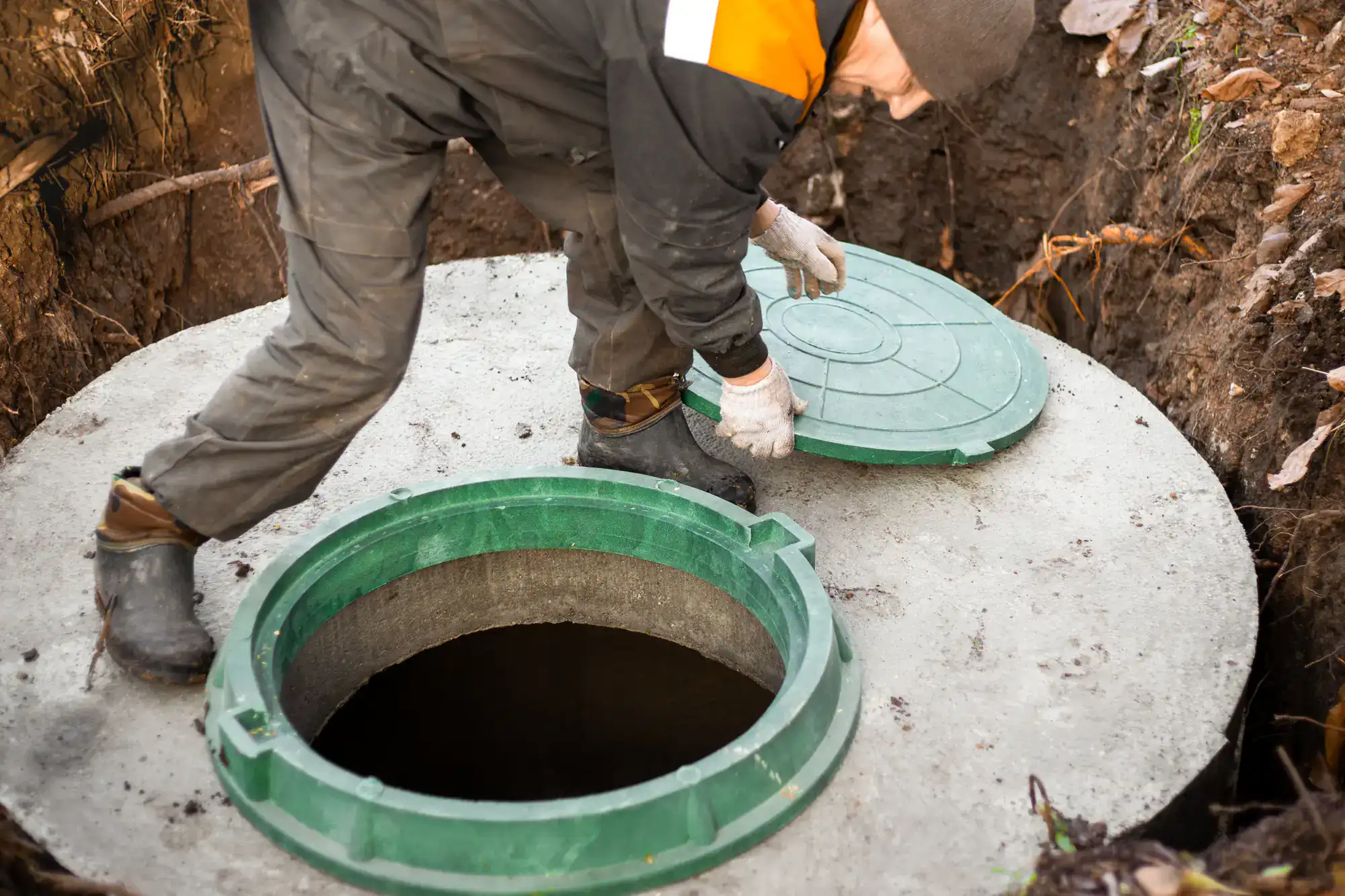
Once permits are approved, the installation itself moves quickly. Most residential jobs in Great River take one to five days depending on system complexity and site conditions. We handle excavation, old system decommissioning, new tank and leaching pool installation, connection to your home’s sewer line, backfill, and site restoration. The job isn’t done until the SCDHS final inspection is complete and the paperwork is clean.
Ready to get started?
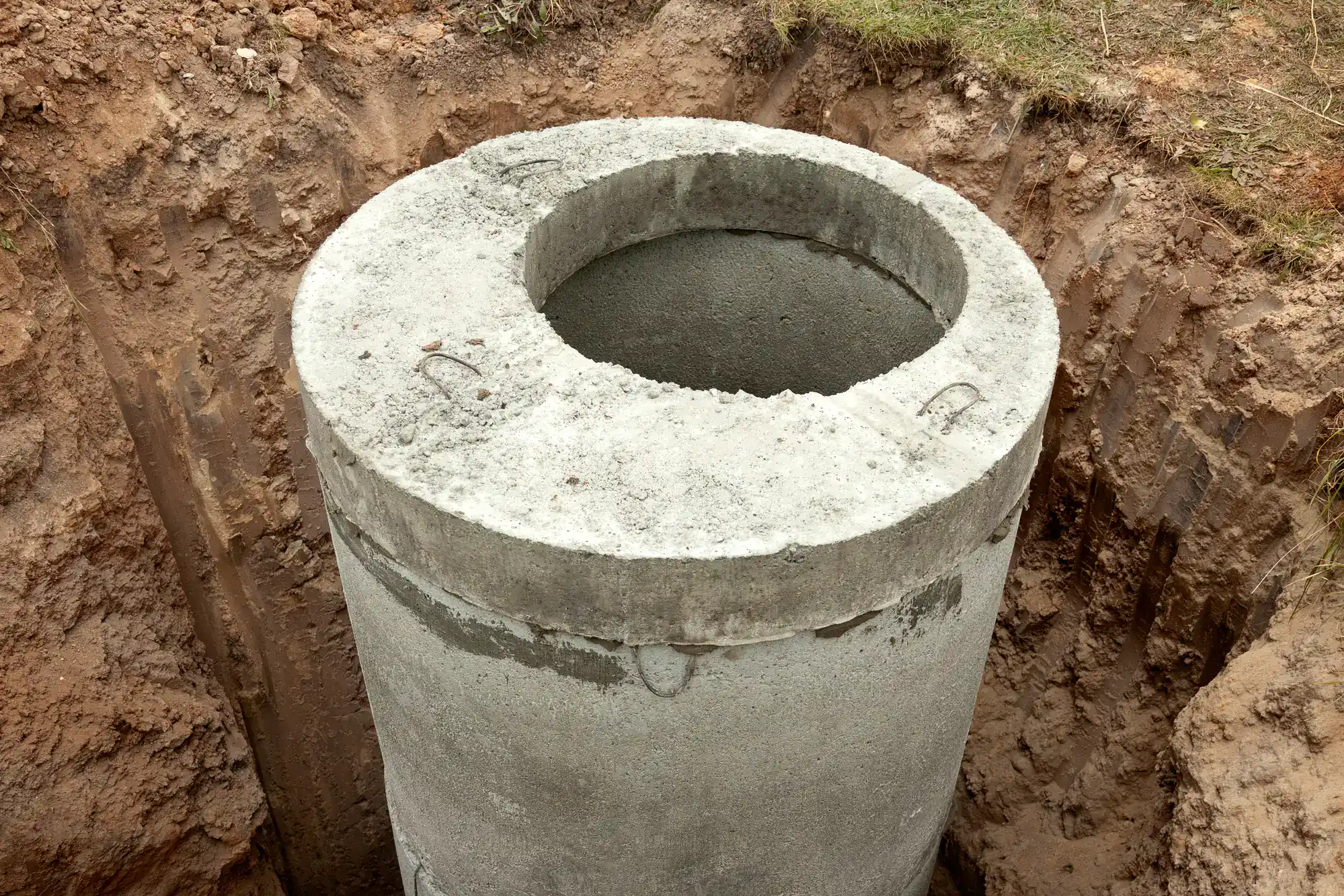
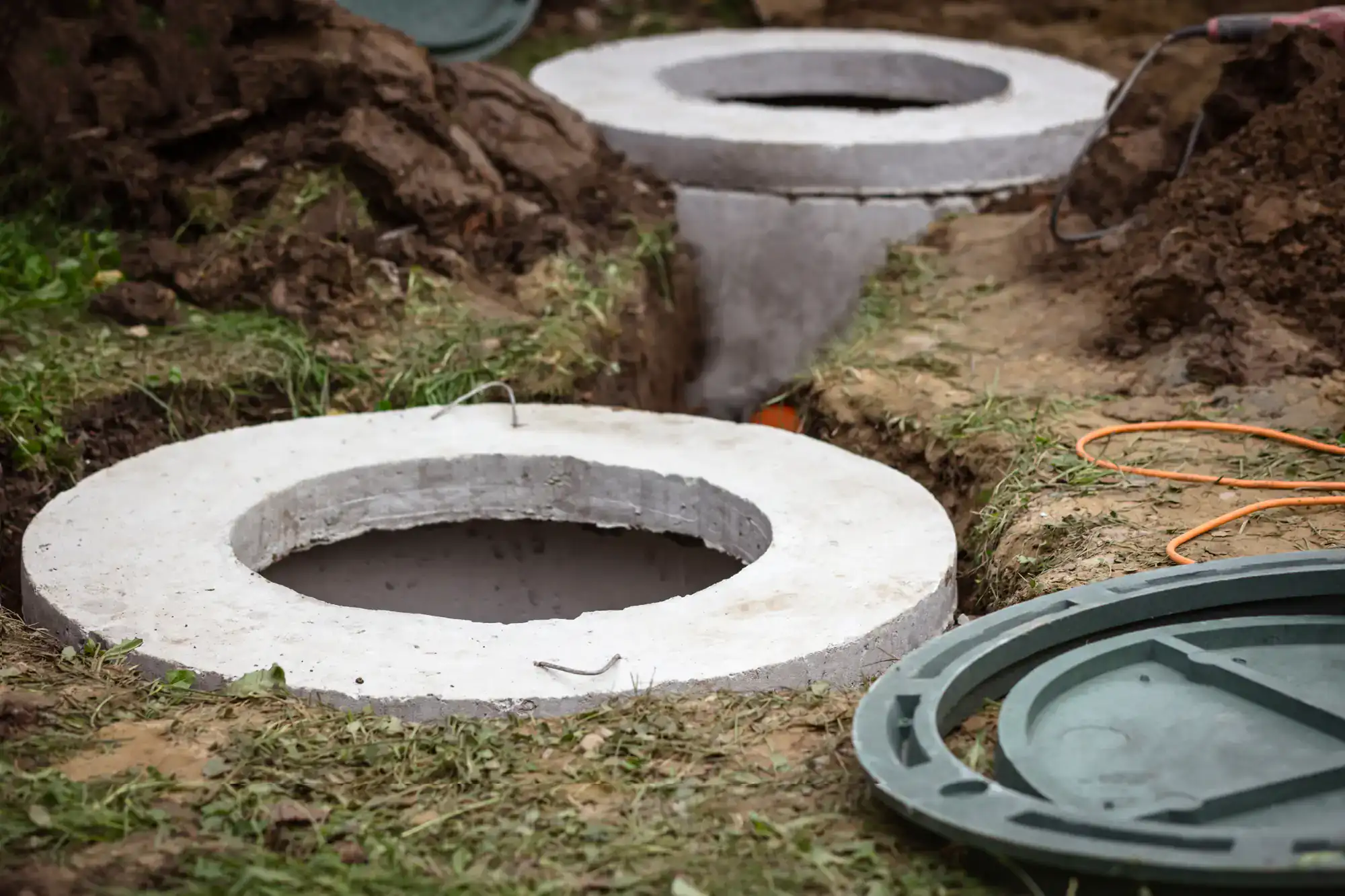
A cesspool installation from us covers the full scope not just the tank drop. That means site prep, excavation, decommissioning the old system, installing the new tank and leaching pool with proper gravel bedding, connecting to your existing sewer line, backfilling, and restoring the site after we leave. Permit acquisition and SCDHS inspection coordination are included in the process, not treated as add-ons you have to manage yourself.
For Great River specifically, leaching pool sizing and placement require careful attention. The hamlet’s near-sea-level elevation and proximity to the Connetquot River mean that soil percolation rates here can be lower than in higher-elevation inland communities, and the leaching area may need to be larger to compensate. This is the kind of detail that gets missed when a contractor isn’t familiar with South Shore Suffolk County conditions and it’s the kind of detail that shows up as a problem two years after installation.
If your home is among the many in Great River built in the 1950s, 1960s, or 1970s, there’s a reasonable chance the existing cesspool has no documented location on file. We specialize in locating hard-to-find systems a real and specific skill that saves you the cost of unnecessary digging and the frustration of a crew that doesn’t know where to start. We serve both residential and commercial properties throughout the Islip Town area.