By submitting you consent to receive service-related texts from Drastic Drainage. Reply STOP to opt out. Msg & data rates may apply. Consent not required to book service.
Useful Links
When your septic system is properly maintained, you stop worrying about what’s happening underground. No slow drains creeping up on you, no soggy patches spreading across the lawn, no smell drifting in from the yard. You just live in your home the way you’re supposed to.
For Great River homeowners, that peace of mind carries a little more weight than it does in other parts of Suffolk County. The South Shore water table is notoriously shallow and on waterfront and near-waterfront properties along the Connetquot River corridor, the margin between your system and the groundwater below it can be uncomfortably thin. When a nor’easter rolls through or a heavy rain season saturates the ground, a system that’s already full has nowhere left to go. Staying on top of pumping isn’t optional here it’s what keeps a manageable maintenance call from turning into an emergency.
The other thing that changes when your system is properly serviced is what you know. Many Great River homes were built around 1964, with some historic properties going back much further. If you’ve never had the system properly assessed, you may not know whether you have a cesspool or a septic tank, when it was last pumped, or what condition the components are actually in. A thorough pump-out answers those questions before they become expensive ones.
The honest answer depends on what type of system you have. Great River’s older housing stock means many homes are running on cesspools rather than modern septic tanks and cesspools need pumping more frequently, typically every one to two years, because they don’t separate solids from liquids the way a septic tank does. A conventional septic tank, by comparison, generally needs pumping every three to five years, though a household of four using a 1,000-gallon tank is often looking at every three to four years in practice.
What makes Great River’s situation a little different is the South Shore water table. When the ground is already saturated after a nor’easter, a heavy rain season, or the spring thaw a system that’s running full has no buffer. Pumping on schedule keeps that buffer in place. If you don’t know when your system was last serviced, or what type of system you even have, that’s the first thing to sort out. A pump-out and assessment will answer both questions at once.
Standard residential septic tank pumping in Suffolk County runs roughly $225 to $600 depending on tank size. A 1,000-gallon tank typically falls in the $225 to $400 range; a 2,000-gallon system is generally $400 to $600. Those figures reflect current market rates for a legitimate, complete pump-out with licensed waste disposal not a teaser price that gets adjusted once the truck is in your driveway.
The number that surprises Great River homeowners most is the lid excavation cost. If your tank lid is buried which is common on Great River’s older properties, especially anything built before 1970 accessing it can add anywhere from $300 to $1,200 depending on how deep it is and what’s been built up over it. A company that quotes you a low base price without mentioning this possibility isn’t being upfront with you. We give you a free estimate that accounts for what the job actually involves before anyone starts digging.
This is one of the most common questions on Long Island, and it’s especially relevant in Great River where a significant portion of the housing stock predates modern septic systems. Homes built before roughly 1970 almost universally have cesspools. Homes built after that era are more likely to have conventional septic tanks, though there are exceptions in both directions.
The practical difference matters for maintenance. A cesspool is a single chamber that collects everything solids, liquids, and all and relies on the surrounding soil to absorb liquid waste. It needs more frequent pumping and is more vulnerable to failure when the water table rises, which is a real concern on Great River’s South Shore. A septic tank separates solids from liquids before the liquid moves to a drain field, which is a more efficient design. If you genuinely don’t know which system you have, a technician can determine it during a service call. It’s worth knowing, because it affects how often you should be pumping and what your options are if the system ever needs replacement.
The math is straightforward and not in your favor. Routine pumping costs a few hundred dollars. A drainfield failure which is what happens when a neglected tank overflows solids into the absorption area can cost $10,000 to $15,000 or more to repair, plus whatever landscaping and property restoration follows. On a Great River waterfront property where the yard and dock access are part of what you paid for, the disruption of emergency excavation is its own cost on top of the repair bill.
The other risk specific to Suffolk County is regulatory. Since 2019, any failed cesspool that needs to be replaced cannot simply be swapped out in kind it must be upgraded to a more advanced system. That requirement makes a surprise failure significantly more expensive than it would have been even a few years ago. Staying on a regular pumping schedule is the most straightforward way to avoid landing in that situation. It also gives a technician the opportunity to flag developing problems early, when they’re still manageable.
Yes, and it’s one of the more underappreciated factors for homeowners in Great River specifically. Suffolk County data shows that tens of thousands of South Shore homes have less than 10 feet of separation between their septic systems and the water table. For properties close to the Connetquot River estuary or along the Great South Bay waterfront, that number can be even smaller.
When the water table rises during nor’easters, tropical storms, or periods of sustained heavy rain a septic system or cesspool that sits close to groundwater can become partially submerged. When that happens, the system can’t drain properly, and waste has nowhere to go but back up. A tank that’s already full going into a storm event is a much bigger problem than one that’s been recently pumped. This is one of the reasons Great River homeowners, more than those in many other parts of Suffolk County, benefit from staying ahead of their pumping schedule rather than waiting for symptoms to appear.
Yes. This is actually one of the things we specifically market locating and servicing hard-to-find cesspools. It’s a real and common problem in Great River, where many homes date back to the mid-20th century or earlier and where decades of landscaping, soil settling, and property improvements have buried lids that haven’t been touched since the system was installed.
Some companies charge heavily for lid location, or simply can’t do it without extensive and expensive excavation. Our team has 30-plus years of experience working on Long Island’s older housing stock, which means we know what to look for and how to find a buried system without turning the job into a guessing game at your expense. If you’ve been putting off service because you’re not sure where your tank even is, that’s not a reason to wait it’s exactly the kind of situation we handle regularly. A free estimate call is the right first step.
Free, no-obligation estimates on cesspool, sewer, and drain work.
We get there quickly. No waiting days for a callback.
Backups don’t wait for business hours. Neither do we.
Fully licensed and insured across Long Island.
Up-to-date trucks and tools for cleaner, faster jobs.
Straight quotes, no surprises on the bill.
Hear from Our Customers

When your septic system is properly maintained, you stop worrying about what’s happening underground. No slow drains creeping up on you, no soggy patches spreading across the lawn, no smell drifting in from the yard. You just live in your home the way you’re supposed to.
For Great River homeowners, that peace of mind carries a little more weight than it does in other parts of Suffolk County. The South Shore water table is notoriously shallow and on waterfront and near-waterfront properties along the Connetquot River corridor, the margin between your system and the groundwater below it can be uncomfortably thin. When a nor’easter rolls through or a heavy rain season saturates the ground, a system that’s already full has nowhere left to go. Staying on top of pumping isn’t optional here it’s what keeps a manageable maintenance call from turning into an emergency.
The other thing that changes when your system is properly serviced is what you know. Many Great River homes were built around 1964, with some historic properties going back much further. If you’ve never had the system properly assessed, you may not know whether you have a cesspool or a septic tank, when it was last pumped, or what condition the components are actually in. A thorough pump-out answers those questions before they become expensive ones.
We’ve been working on Long Island’s septic and cesspool systems for over 30 years. That experience isn’t generic it’s built on the specific conditions that define Great River and the South Shore: shallow water tables, older housing stock, buried lids that haven’t been touched in decades, and a coastal environment that doesn’t forgive neglect.
We’re locally based out of West Babylon, roughly 10 to 12 miles west of Great River along the same South Shore corridor. That proximity matters when you need someone who can actually get there, understands what they’re walking into, and isn’t dispatching from a regional hub three counties away.
What sets us apart isn’t a slogan it’s a stated policy. We don’t recommend unnecessary work, don’t charge high prices for simple jobs, and won’t leave until the job is done right. In a hamlet like Great River, where reputation travels fast through fewer than 500 households, that kind of consistency is what keeps customers calling back and sending their neighbors.
It starts with a call and a free estimate. Before any truck pulls up to your property, you’ll know what the job involves and what it costs. No vague ranges, no “we’ll see once we get there.” That estimate is the price.
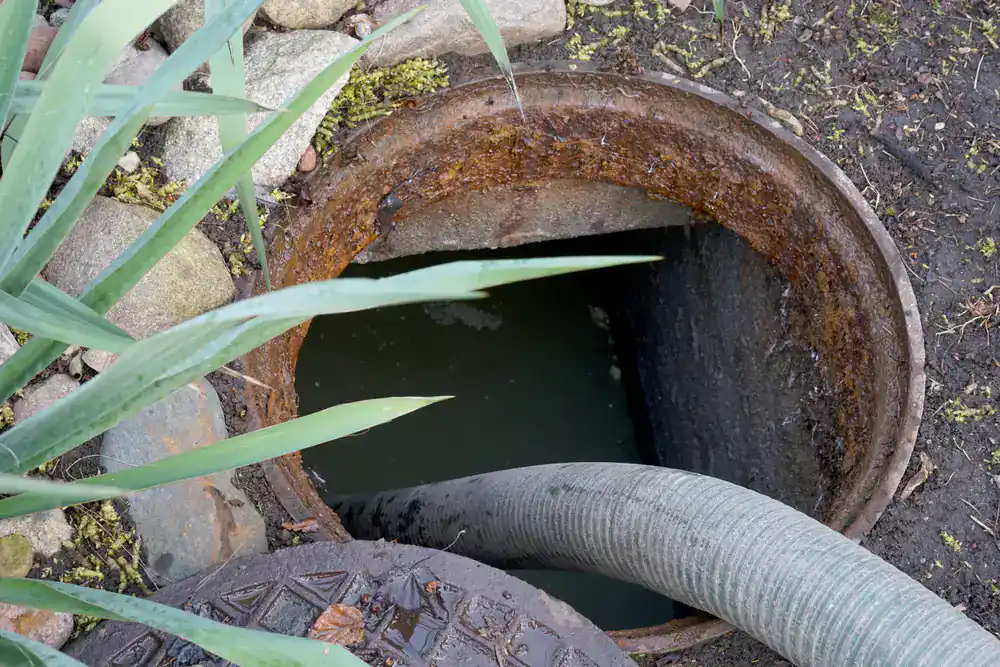
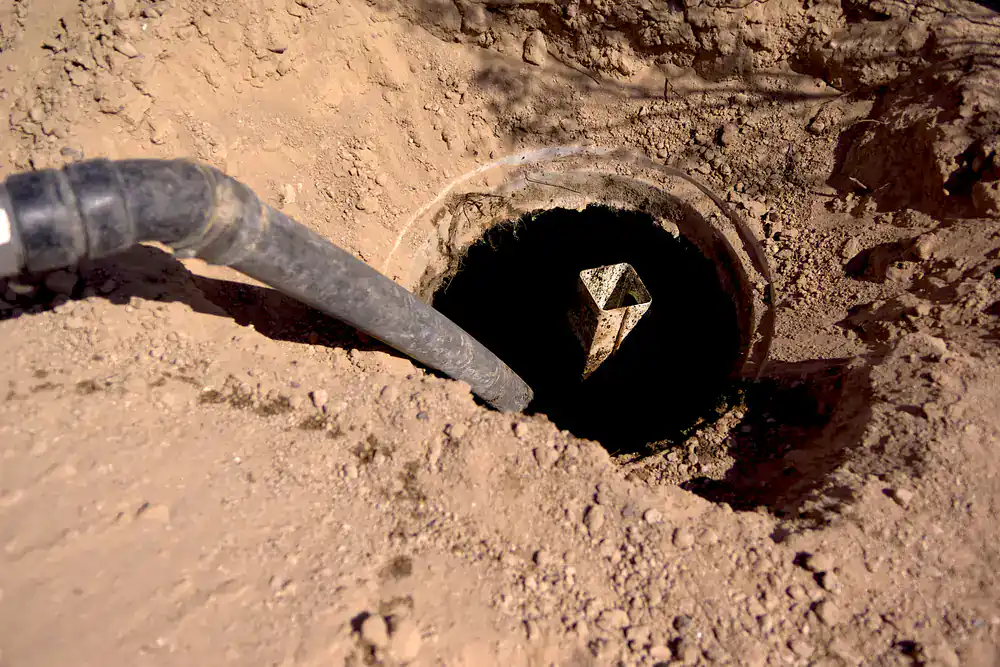
When our crew arrives, the first order of business is locating and accessing your tank. For many Great River homes particularly the older colonials and historic properties along River Road and Timber Point Road the lid may be buried under years of soil and landscaping. We specialize in locating hard-to-find cesspools and septic tanks, which means this step doesn’t turn into a guessing game or an excuse to charge extra.
Once the lid is accessed, the tank is fully pumped out not just skimmed. Every bit of accumulated sludge and waste is removed, which is the only way the service actually does what it’s supposed to do.
After pumping, our technician will assess the condition of the system checking for signs of damage, infiltration, or components that need attention. If something needs to be addressed, you’ll hear about it clearly and honestly, with an explanation of what’s necessary versus what can wait. Suffolk County’s regulations mean that any failed system requiring replacement must now be upgraded rather than replaced in kind, so understanding your system’s current condition is genuinely useful information to have. You’ll leave the conversation knowing exactly where things stand.
Ready to get started?
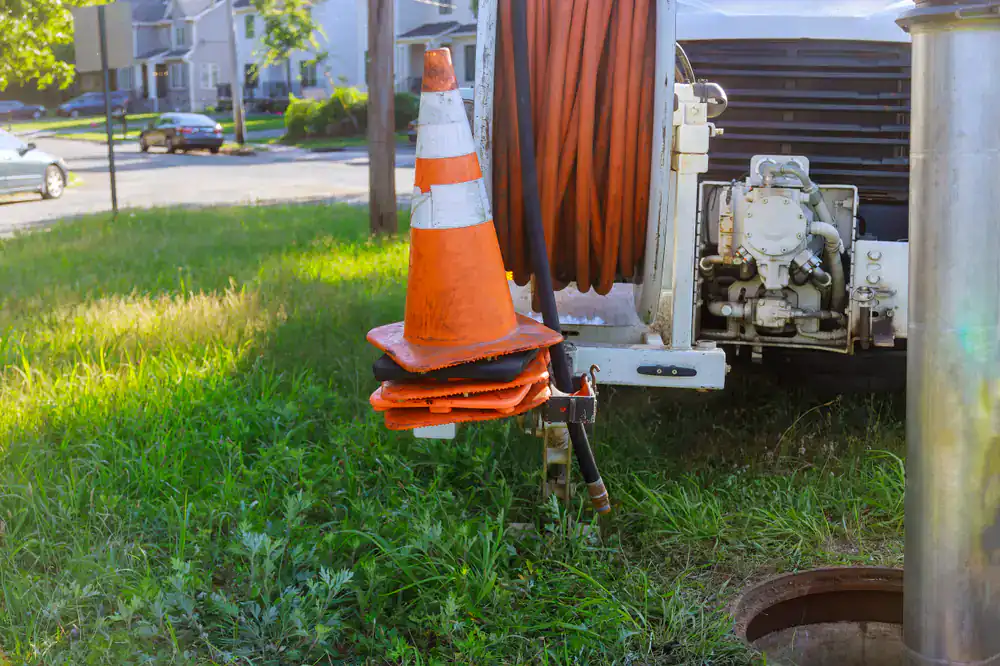
Septic tank pumping is the core of what brings most Great River homeowners to call but it’s rarely the only thing a South Shore property needs over time. We handle the full range: septic pumping, cesspool pumping, cesspool and septic installation, drain cleaning, drywell cleaning, house trap replacements, and main sewage line cleaning and replacement. One call, one company, one less thing to coordinate.
For properties near the Connetquot River or along the Great South Bay waterfront, proper waste handling isn’t just a household concern it’s an environmental one. Suffolk County research points to cesspools and septic systems as the source of roughly 68 to 69 percent of the nitrogen entering the Great South Bay. Legal, licensed septage disposal is part of every job we run waste is transported and disposed of at a licensed treatment facility, not handled carelessly. The Suffolk County Liquid Waste License that governs this work requires verified trade experience and a dedicated pump truck, and it’s the credential that separates legitimate operators from the ones cutting corners on disposal.
Whether you’re dealing with a routine pump-out on a mid-century ranch off Great River Road, a system assessment on a waterfront estate near Timber Point, or an emergency backup that can’t wait, the same upfront approach applies. You get a real price before work starts and a complete job when it’s done.