By submitting you consent to receive service-related texts from Drastic Drainage. Reply STOP to opt out. Msg & data rates may apply. Consent not required to book service.
Useful Links
Living along the Connetquot River puts your property in one of the most hydrologically sensitive spots in all of Suffolk County. When a nor’easter rolls through or a sustained rain season saturates the South Shore, the margin between your cesspool’s leaching field and the groundwater beneath it can get uncomfortably thin. A system that’s well-maintained handles that pressure. One that’s been ignored for a few years often doesn’t — and you’ll know about it fast.
The homes in Great River were built primarily around 1964, which means a lot of systems out here are 60 years old or older. That’s well past the typical 20 to 40-year lifespan for a cesspool. If yours has never been properly assessed, you may not even know whether it’s a cesspool or a septic tank, let alone when it was last pumped. Getting ahead of that — before a storm, before a home sale, before the backup — is exactly what a thorough service call accomplishes.
When the work is done right, you get clarity. You know what you have, what condition it’s in, what it needs, and what it doesn’t. That’s worth more than a quick pump-and-go from someone who doesn’t know Great River.
For most households, pumping every one to three years is the standard recommendation — but that range shifts depending on how many people are in the home, how much water the system handles daily, and how old the system is. In Great River specifically, the shallow water table along the Connetquot River corridor adds another variable. When groundwater sits close to your leaching field, the system’s ability to drain efficiently is already reduced compared to an inland property with deeper soil separation. That means a system here can reach capacity faster than the same-sized cesspool in a drier location.
If your home was built around 1964 — which is the median build year for Great River — and you’ve never had the system assessed or pumped, that’s the first conversation to have. A 60-year-old cesspool that’s never been serviced isn’t just overdue. It may be operating on borrowed time, and the signs won’t always be obvious until something backs up. Starting with a pump-out and inspection gives you an accurate baseline and a realistic maintenance schedule going forward.
The most common early signs are slow drains throughout the house — not just one fixture, but multiple — combined with gurgling sounds in the pipes when water drains. A sewage smell either inside the home or in the yard is another clear signal. If you notice a soft, wet, or unusually green patch of grass over or near where the system is located, that’s often a sign the cesspool is saturated and pushing effluent to the surface rather than absorbing it properly.
In Great River, storm events accelerate this progression. If your system is already near capacity and a nor’easter saturates the ground, the water table can rise fast enough to essentially cut off your leaching field’s ability to drain at all. What might have been a slow-developing problem becomes an emergency within hours. If any of these signs appear — especially after heavy rain — the right move is to call for service before it backs up into the house. A sewage backup that overflows into a basement can cost anywhere from $3,000 to $7,000 to remediate, not counting any structural repairs. A pump-out costs a fraction of that.
No — and this is one of the most important regulatory changes Great River homeowners need to understand. As of July 1, 2019, Suffolk County banned the installation of new traditional cesspools. If your existing system fails and requires replacement, it must be replaced with an Innovative/Alternative (IA) onsite wastewater treatment system. These advanced systems are designed to reduce nitrogen in residential wastewater by up to 70%, which is directly relevant to Great River’s position along the Connetquot River and adjacent to the Great South Bay — waterways where nitrogen from cesspools and septic systems has been a documented environmental problem for years.
The cost of an IA system replacement is significantly higher than a traditional cesspool installation, but the financial picture improved considerably in 2024. The Suffolk Water Quality Restoration Act, signed in May 2024, expanded the county’s reimbursement program to cover up to 75% of project costs, with a maximum reimbursement of $25,000 for qualifying upgrades. If your system is aging and you’re concerned about what happens when it eventually fails, it’s worth understanding this program before you’re in a crisis situation and making decisions under pressure.
Free, no-obligation estimates on cesspool, sewer, and drain work.
We get there quickly. No waiting days for a callback.
Backups don’t wait for business hours. Neither do we.
Fully licensed and insured across Long Island.
Up-to-date trucks and tools for cleaner, faster jobs.
Straight quotes, no surprises on the bill.
Hear from Our Customers

Living along the Connetquot River puts your property in one of the most hydrologically sensitive spots in all of Suffolk County. When a nor’easter rolls through or a sustained rain season saturates the South Shore, the margin between your cesspool’s leaching field and the groundwater beneath it can get uncomfortably thin. A system that’s well-maintained handles that pressure. One that’s been ignored for a few years often doesn’t — and you’ll know about it fast.
The homes in Great River were built primarily around 1964, which means a lot of systems out here are 60 years old or older. That’s well past the typical 20 to 40-year lifespan for a cesspool. If yours has never been properly assessed, you may not even know whether it’s a cesspool or a septic tank, let alone when it was last pumped. Getting ahead of that — before a storm, before a home sale, before the backup — is exactly what a thorough service call accomplishes.
When the work is done right, you get clarity. You know what you have, what condition it’s in, what it needs, and what it doesn’t. That’s worth more than a quick pump-and-go from someone who doesn’t know Great River.
We’ve been servicing cesspools and drainage systems throughout Nassau and Suffolk County for over 30 years. Our base in West Babylon — about 10 to 12 miles west of Great River along the same South Shore corridor — means we understand the coastal conditions, the shallow water table, and the older housing stock that define this part of the island. This isn’t knowledge from a manual. It’s from three decades of working in the ground out here.
We’re licensed (License #LW-63684), insured, and bonded. When you call, a real person answers — not a service, not a voicemail. The technicians who show up are the same ones you’ll see named in reviews: Mike, Lucas, George. Our owner, Michael Chiofalo, runs a company where accountability isn’t a talking point. It’s just how the work gets done.
For Great River homeowners — whether you’re on Great River Road near Timber Point, backing up to the arboretum, or anywhere in between — that local familiarity matters when something goes wrong.

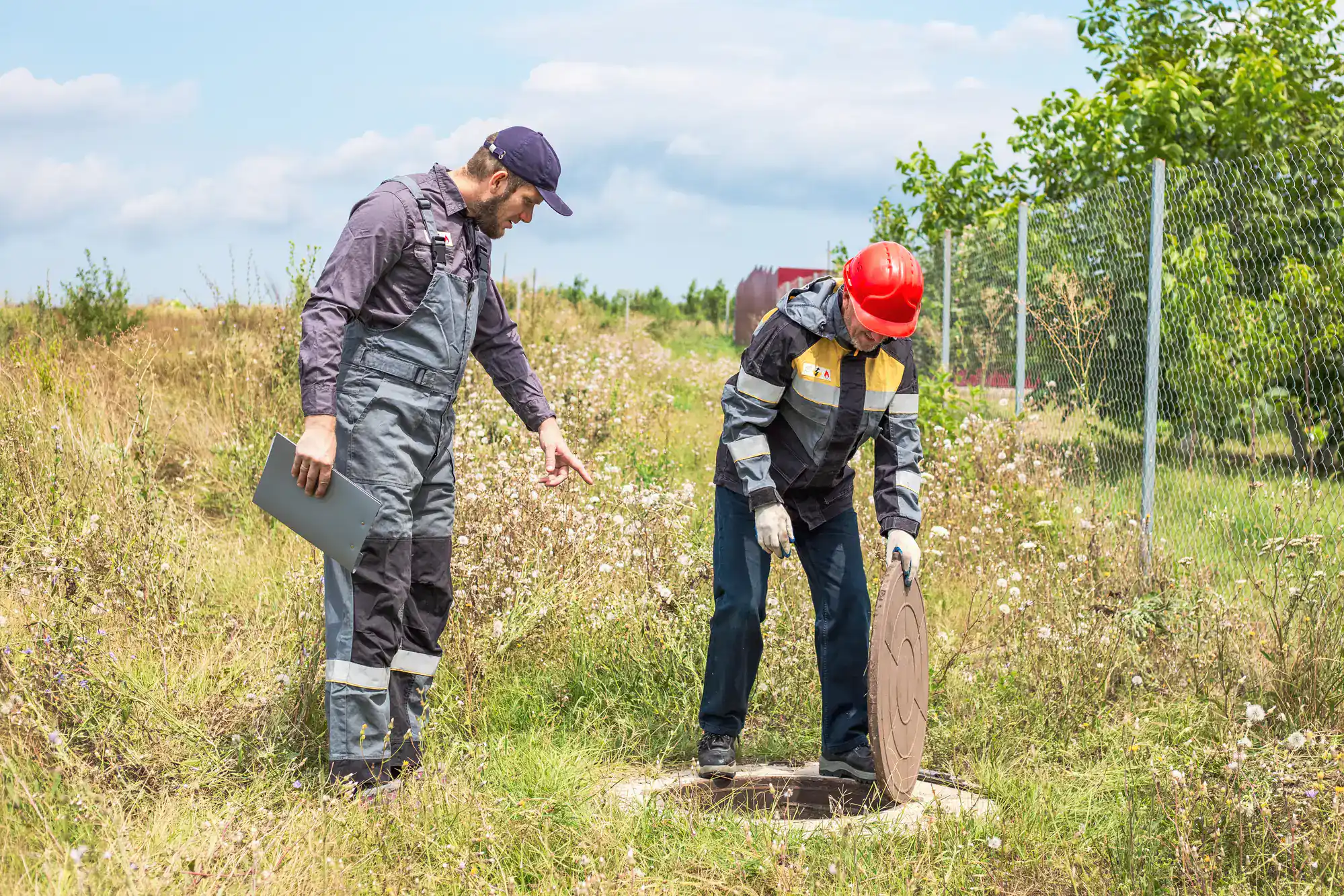
The first thing that happens when we arrive is an assessment, not an invoice. Before any equipment gets deployed, our team evaluates your system — what type it is, where the access point is, and what the current condition looks like. In Great River, that often means locating a buried lid first. Many homes here have systems with no visible cover, especially on older properties where records are incomplete or nonexistent. We use electronic locating equipment to handle that step before anything else begins.
Once access is established, a waterproof video camera goes into the line if there’s any question about what’s happening underground. This is how you avoid paying for excavation that wasn’t necessary, and how you protect a yard that took years to establish. If it’s a straightforward pump-out, our truck handles it efficiently. If the camera reveals something more serious — a cracked wall, a collapsed leaching pool, a line that’s compromised — you get a clear explanation of what was found and what the realistic options are.
In Suffolk County, any replacement work on a failed system now requires an Innovative/Alternative treatment system under the 2019 cesspool ban. If that conversation becomes relevant to your situation, we walk you through it — including the county’s grant program, which as of 2024 offers reimbursement of up to 75% of project cost, capped at $25,000 for qualifying upgrades.
Ready to get started?
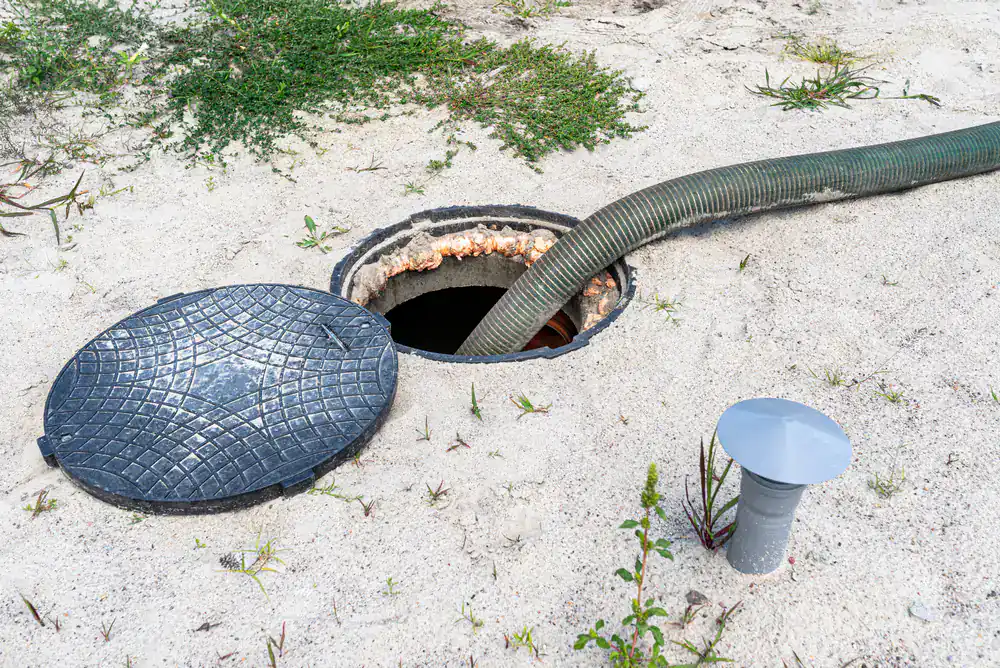
We handle the full scope of cesspool and drainage work — not just the easy jobs. For Great River homeowners, that typically includes cesspool pumping and cleaning, leaching pool service, video pipe inspection, cesspool location, drywell cleaning, house trap replacements, main sewage line cleaning and replacement, and storm drain cleaning. Emergency service runs 24 hours a day, every day.
Real estate certifications are also handled in-house. Given that the median home sale price in Great River is around $1.6 million, a cesspool inspection tied to a property transfer isn’t a formality — it’s a high-stakes step with a closing date attached. Having the same team that services the system also certify it removes the coordination problem and reduces the risk of a finding that derails a deal at the worst possible moment.
For properties along the Connetquot River corridor and near Timber Point where the water table sits closest to the surface, cesspool maintenance is less of a routine chore and more of a seasonal necessity. We understand that dynamic specifically — not as a general South Shore observation, but as the actual condition of Great River. Free estimates are available before any work begins, and there are no surprise charges when the truck pulls up.