Useful Links
Other Services we provide in Huntington Station
This is one of the most common questions coming from Huntington Station residents right now, and the short answer is: probably not. The sewer line currently under construction along New York Avenue (Route 110) is designed to serve the commercial corridor near the LIRR station the businesses and mixed-use properties in the immediate revitalization zone. It is not being extended into the surrounding residential neighborhoods.
If you own a home on a side street off Jericho Turnpike, in the Half Hollow area, in West Hills, or anywhere outside that specific commercial corridor, your property is almost certainly not part of this project. Your house will continue to rely on a private cesspool or septic system, and that system if it was installed when your home was built in the 1950s, 60s, or 70s is worth having assessed sooner rather than later. If you’re not sure whether the sewer expansion affects your specific address, we can help you figure that out during the free estimate.
No and this surprises a lot of homeowners who replaced a cesspool years ago and assume the same process still applies. As of July 1, 2019, Suffolk County banned cesspool-only replacements. Any new system installed to replace an existing one must include at minimum a septic tank preceding the leaching structure. You can no longer swap a failing cesspool for an identical cesspool.
For new single-family home construction, the bar is even higher. Since July 1, 2021, new builds must install Innovative and Alternative Onsite Wastewater Treatment Systems I/A OWTS which are nitrogen-reducing systems that treat wastewater before it reaches the soil. These are more involved and more expensive than conventional systems, but they’re also eligible for significant grant funding. The regulatory landscape has changed considerably in the last several years, and what was true the last time you dealt with a cesspool may no longer be accurate. Working with a licensed contractor who knows current Suffolk County requirements is the only way to make sure your installation is done right.
The honest answer is that it depends on the scope of work, the condition of your existing system, and what type of replacement system your property requires under current Suffolk County regulations. A conventional cesspool-to-septic replacement typically runs in the range of $10,000 to $25,000 for a residential property. If your situation calls for an I/A OWTS nitrogen-reducing system, the cost before grants is generally in the $15,000 to $40,000 range, with an average closer to $25,000.
The grant piece is significant. As of July 2025, eligible Suffolk County homeowners replacing their system with a qualifying I/A OWTS can access combined State and County grants of up to $45,000. Those funds go directly to your licensed installer after the final county inspection you pay only what’s left over. Grant funding is limited and distributed on a first-come, first-served basis, so if you think you might qualify, it’s worth starting that conversation now rather than waiting until the system has already failed. We provide free, written estimates so you know exactly what you’re looking at before any work begins.
For most residential properties in Huntington Station, the physical installation takes one to five days once permits are approved. Simpler jobs where the leaching field is intact and only the tank needs replacing, or where site access is straightforward can be completed in one to two days. More complex installations, particularly those involving full system replacements on tighter lots or variable soil conditions, can run closer to four or five days.
The part that takes longer is the permitting process. Suffolk County requires approval from the Department of Health Services before any installation can begin, and that process submitting engineered plans, soil testing results, and setback documentation typically takes two to four weeks. We handle all of that on your behalf, so you’re not navigating the county permit process on your own. The North Shore moraine terrain in and around Huntington Station has more variable soil than other parts of Suffolk County, which is why soil testing is part of every permit application it determines how the system needs to be sized for your specific lot.
Waiting until a complete failure is one of the more costly decisions a homeowner can make, and not just because of the repair bill. When a cesspool fails suddenly sewage backing up into the house, a wet and odorous yard, or a full overflow you’re no longer in a position to compare quotes, apply for grant funding, or plan the timing around your schedule. You need it fixed immediately, and that urgency works against you.
We offer 24/7 emergency response for exactly these situations. But a planned replacement is almost always less expensive and less disruptive than an emergency one. There’s also the grant consideration: the Suffolk County Septic Improvement Program requires an application process that takes time. If your system fails before you’ve started that process, you may miss the window to qualify. Given that Huntington Station’s housing stock is predominantly 50 to 70 years old, the reality is that most original cesspool systems in this area are not just aging they’re overdue. A proactive assessment costs nothing. Waiting for a failure costs significantly more.
That’s exactly the right question to ask before anyone starts digging. The answer depends on what’s actually failing the tank itself, the leaching rings, the connection between the system and your home’s sewer line, or the leaching field. Each of those has a different fix, and not every problem requires a full replacement.
In Huntington Station, where a large share of the housing stock dates to the 1950s through 1970s, it’s common to find systems where the tank is structurally compromised but the leaching field is still functional or vice versa. In those cases, targeted work like cesspool ring replacement or leaching pool repair may extend the life of the system without the cost of a full installation. The only way to know for sure is to have someone assess the system in person. We offer free estimates that function as a real diagnostic not just a sales call. We’ll tell you what’s actually going on and what the options are, including whether a partial repair makes more sense than a full replacement for your specific situation.
Hear from Our Customers

When a cesspool is failing, you feel it before you can explain it. There’s a smell you can’t place. A patch of lawn that stays wet. A drain that takes a little longer than it used to. These aren’t minor annoyances they’re early signs that a system installed decades ago is telling you it’s done.
Getting a new cesspool installed means those problems stop. No more guessing whether the smell is going to get worse. No more wondering if this is the week it backs up into the house. You get a system that’s built to current Suffolk County code, inspected, and designed to handle the demands of your household for the next 30 to 40 years.
For Huntington Station specifically, this matters more than people realize. The hamlet’s housing stock is predominantly ranches, Colonials, and Cape Cods built between the 1950s and 1970s which means original cesspool systems that are now 50 to 70 years old. These weren’t designed to last this long. Because Huntington Station is one of the more densely developed communities on the North Shore, the lots are smaller, the systems are closer together, and when one fails, the impact on your property is immediate. A properly installed replacement system, sized and sited correctly for your specific lot, protects your home, your yard, and the value you’ve built into this property.
We’re a family-owned cesspool and drainage company based in West Babylon, NY, fully licensed (Lic# LW-63684), insured, and bonded. Our team has been doing this work on Long Island for over 30 years which means we’ve seen what happens when installations are done right and what it costs homeowners when they’re not.
We serve all of Nassau and Suffolk Counties, and Huntington Station is one of the communities we know well. That matters because cesspool work on the North Shore isn’t one-size-fits-all. The moraine terrain around Huntington Station has more variable soil than the sandy stretches of central and southern Suffolk, and that affects how a system needs to be sized and installed. Getting it wrong isn’t just inconvenient it shortens the life of the system you just paid for.
We handle the full job: permit applications, excavation, installation, inspection coordination, and site restoration. You don’t manage the process. We do.

It starts with a free estimate. We come out, look at your property, assess the existing system, and tell you exactly what needs to happen and what it’s going to cost in writing, before any work begins. No vague ranges. No numbers that change once the truck shows up.
Once you’re ready to move forward, the permit process starts. In Suffolk County, all cesspool installations and replacements require approval from the Suffolk County Department of Health Services. That means submitting engineered plans, soil testing results, and documentation of setback distances from wells and property lines. We handle all of that. Permit processing typically takes two to four weeks, and skipping it isn’t an option unpermitted work can void your certificate of occupancy and leave you personally liable for violations down the road.
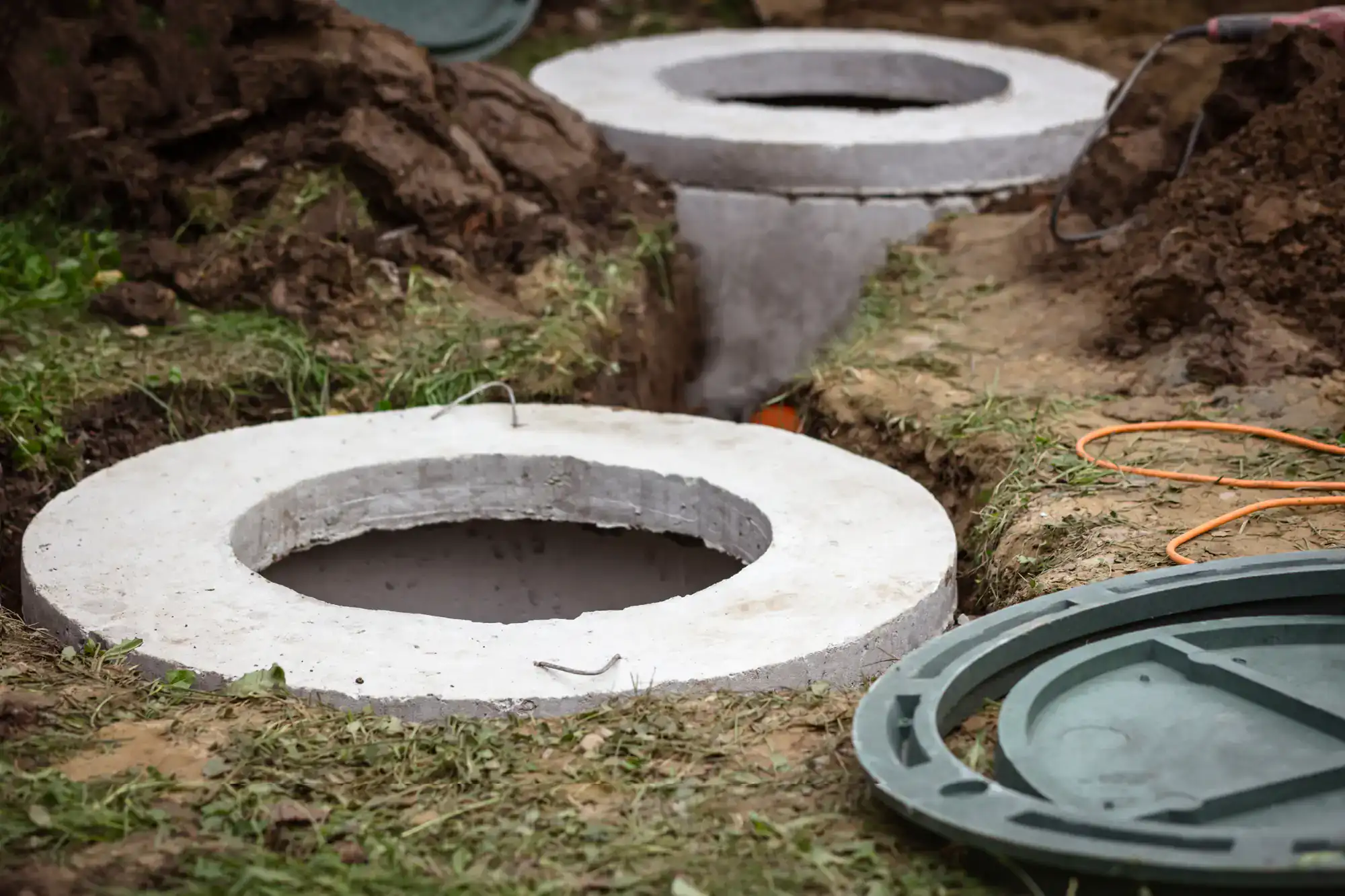
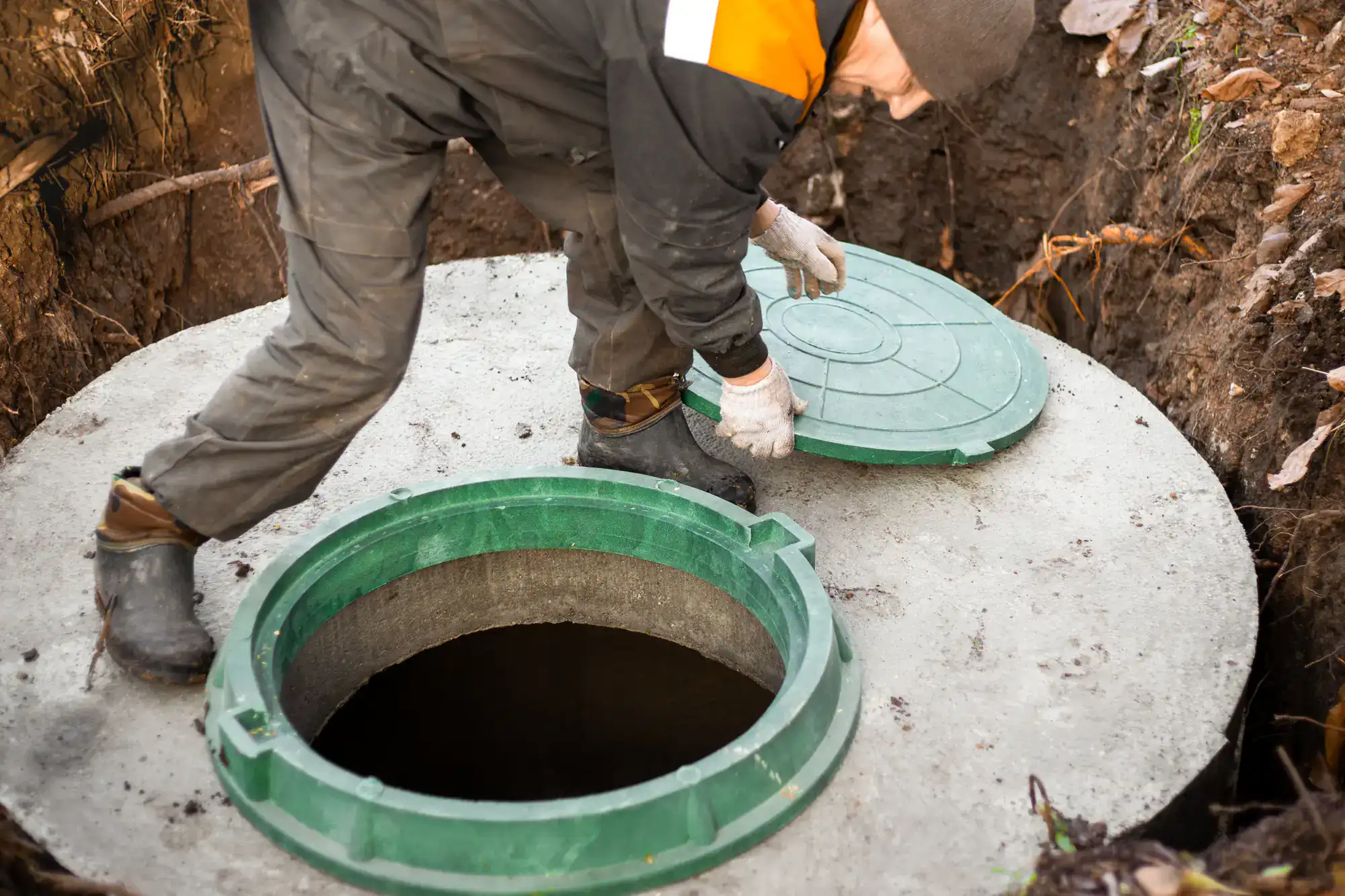
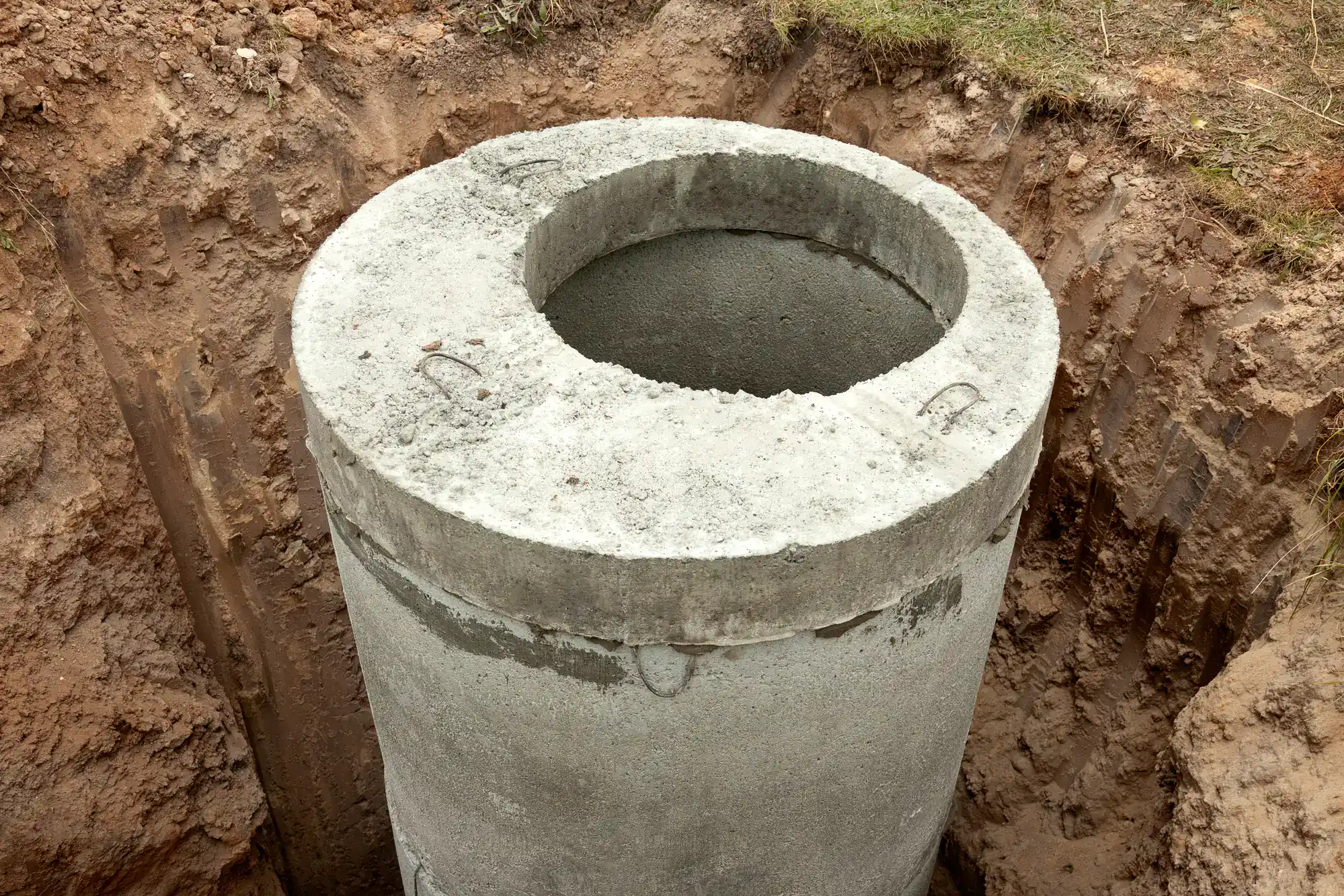
When permits are approved, our crew comes in and does the full job: excavating the site, decommissioning the old system, installing the new tank and leaching pool, connecting everything to your home’s existing sewer line, and then backfilling and restoring the site. Most residential installations in Huntington Station take one to five days depending on the complexity of the job and the soil conditions on your specific lot. When it’s done, the system gets inspected by the county before it goes live. That’s the process no shortcuts, no handoffs to subcontractors, no loose ends.
Ready to get started?
There are a few different scenarios that bring Huntington Station homeowners to this conversation, and the scope of work and cost depends on which one applies to you.
If your existing cesspool has failed or is failing, the first thing to know is that Suffolk County no longer allows a straight cesspool-to-cesspool replacement. Since July 2019, any replacement system must include at minimum a septic tank preceding the leaching structure. That regulatory change catches a lot of homeowners off guard, especially those who haven’t replaced a system before. We stay current on every Suffolk County requirement so your installation is compliant from day one.
If you’re eligible for an Innovative and Alternative Onsite Wastewater Treatment System the nitrogen-reducing I/A OWTS systems now required for new construction since July 2021 there’s a meaningful financial incentive worth knowing about. As of July 2025, eligible Suffolk County homeowners can access combined State and County grants of up to $45,000 for qualifying installations. These grants are disbursed directly to your licensed installer after final inspection, so you only pay the balance. The catch is that funding is first-come, first-served, and it does run out. If you think you might qualify, it’s worth asking about sooner rather than later.
Beyond full system replacements, we also handle leaching pool and drywell installation, cesspool ring replacement, and drain cleaning so if the issue turns out to be more contained than a full replacement, there may be a more targeted solution that fits your situation.