Useful Links
Other Services we provide in Huntington Station
It depends on what type of system you have, and in Huntington Station, that’s not always a straightforward answer. Many of the hamlet’s older homes particularly those built in the 1940s through 1960s have cesspools rather than true septic tanks. Cesspools don’t separate solids from liquids the way a septic tank does, so they fill up faster and need pumping more frequently, typically every one to two years for an active household.
If your home has a conventional septic tank, the general guidance is every three to five years, though a family of four with a 1,000-gallon tank often lands closer to every three to four years in practice. The honest answer is that if you don’t know when your system was last serviced which is common for anyone who bought a Huntington Station home without complete records from the previous owners you should get it pumped and assessed now, regardless of where you think you are in the cycle. Starting from a known baseline is worth far more than guessing.
Standard residential septic tank pumping in Suffolk County runs roughly $225 to $600 depending on tank size. A 1,000-gallon tank typically falls in the $225 to $400 range; larger systems around 2,000 gallons run closer to $400 to $600. Those are the numbers for the pump-out itself under normal access conditions.
Where costs can increase is lid excavation. In Huntington Station’s older homes, cesspool lids are frequently buried under years of soil and landscaping sometimes a foot or more down. Excavating to reach a buried lid can add anywhere from $300 to $1,200 to a service call depending on depth and access. This is one of the most common “surprise” charges in the industry, and it’s worth asking about upfront before anyone arrives. We’re straightforward about what the estimate includes and won’t hit you with fees that weren’t discussed. If excavation is likely, you’ll know before the truck pulls up.
This is one of the most common questions from Huntington Station homeowners, and the confusion is completely understandable. The short answer: if your home was built before the 1970s, there’s a good chance you have a cesspool. Cesspools were the standard installation for most of Long Island’s mid-century housing stock, and Huntington Station where the median construction year is 1961 has a high concentration of them.
A cesspool is a single underground chamber that collects waste and allows liquids to seep out through the walls into the surrounding soil. A septic tank is a two-compartment system that separates solids from liquids before the liquid effluent moves to a drainfield. The practical difference for you as a homeowner is pumping frequency and what happens when the system fails. You can sometimes find out which system you have through your Suffolk County Department of Health Services property records, or a technician can identify it on-site. If you’re not sure, that’s worth figuring out before you’re overdue on service.
When a cesspool or septic tank goes too long without pumping, solids build up past the point where the system can handle them. At that point, waste has nowhere to go and it starts going places it shouldn’t. You might notice slow drains throughout the house, gurgling sounds in the pipes, sewage odors inside or outside, soggy spots in the yard, or in the worst cases, sewage backing up into basement drains or fixtures.
Beyond the immediate mess, the bigger risk is drainfield damage. Once solids migrate out of the tank and into the surrounding soil, the absorption capacity of the drainfield degrades sometimes permanently. Restoring or replacing a failed drainfield is a serious repair. In Suffolk County, a failed system that requires replacement also cannot be swapped out in kind under the 2019 regulatory change it must be upgraded to a more advanced system, which adds significantly to the cost. A routine pump-out is a fraction of what that repair looks like. The math is straightforward.
Probably not, and it’s worth being clear on this because there’s real confusion in the community about what that project covers. The New York Avenue sewer expansion currently under construction serves approximately 224 properties along a narrow commercial corridor running along New York Avenue from East Second Street to East 15th Street, plus a short stretch on Depot Road. That’s it. If your home is on a residential street anywhere else in Huntington Station, you are not part of this project and your private cesspool or septic system remains your full responsibility.
The project is real and it’s underway, but it was designed to address commercial and mixed-use properties along the main corridor not the hamlet’s residential neighborhoods. There is no current plan to extend public sewer service to the broader residential areas of Huntington Station in the near term. Deferring maintenance on your private system while waiting for sewer service that isn’t coming to your street is one of the more costly mistakes a homeowner can make. Keep your system on schedule regardless of what you’ve heard about the sewer project.
Get the system pumped and assessed before you settle into a routine. This is especially true in Huntington Station, where a large portion of the housing stock dates to the 1950s and 1960s and changes hands without complete maintenance records. The previous owners may have pumped the system regularly or they may not have touched it in a decade. You have no way of knowing, and your home inspector almost certainly didn’t pump the tank or assess the system’s condition beyond a visual check.
A pump-out when you move in gives you a real baseline. We remove whatever has accumulated, inspect the tank and baffles, and tell you honestly what condition the system is in. If everything looks fine, you leave knowing exactly when the clock restarted. If there’s a concern a cracked baffle, signs of infiltration, a system that’s closer to the end of its life than you’d like you find out now, when you have time to plan, rather than when the drains stop working on a Sunday night. For a home that’s likely 60-plus years old, that information is worth having early.
Hear from Our Customers
When the system under your Huntington Station home gets pumped on schedule, you’re not just avoiding a mess you’re avoiding the kind of repair bill that turns a routine maintenance call into a months-long headache. A failed drainfield doesn’t give you much warning. One day the drains are slow, and a few weeks later you’re looking at a five-figure repair. Routine pumping is what keeps that from happening.
Huntington Station’s housing stock makes this more urgent than most people realize. The median home here was built in 1961, which means a significant portion of the hamlet’s cesspools are well past their designed lifespan. These older systems handle a full household’s waste load every single day, often on smaller lots with less room for error. Getting them pumped regularly and having someone actually assess the condition while they’re at it is the difference between a system that keeps working and one that doesn’t.
The other thing people don’t think about until it’s too late: if you bought your home in the last few years and don’t have records from the previous owners, you may have no idea when that system was last serviced. That uncertainty alone is reason enough to call.
We’ve been handling cesspool and septic work across Suffolk County since 2002. Our team brings over 30 years of hands-on experience with Long Island’s specific conditions older homes, buried lids, systems that haven’t been touched in years, and everything in between. That experience matters when you’re dealing with a 1960s-era cesspool on a modest Huntington Station lot that nobody’s documented properly.
Our approach is simple: show up, assess what’s actually going on, do what the system needs, and tell you honestly if something else requires attention. We don’t recommend unnecessary techniques or charge high prices for simple tasks. That’s not just language on a website it’s the reason customers refer us to their neighbors.
We operate out of West Babylon, a real Suffolk County address, and service the full hamlet of Huntington Station not just the commercial strip along New York Avenue, but the residential streets throughout the community that the sewer project doesn’t touch.

It starts with a call. You describe what’s going on slow drains, an odor, a system that hasn’t been serviced in years, or just a new home purchase where you want to know what you’re working with. From there, we schedule a visit and give you a clear estimate before anyone starts digging.
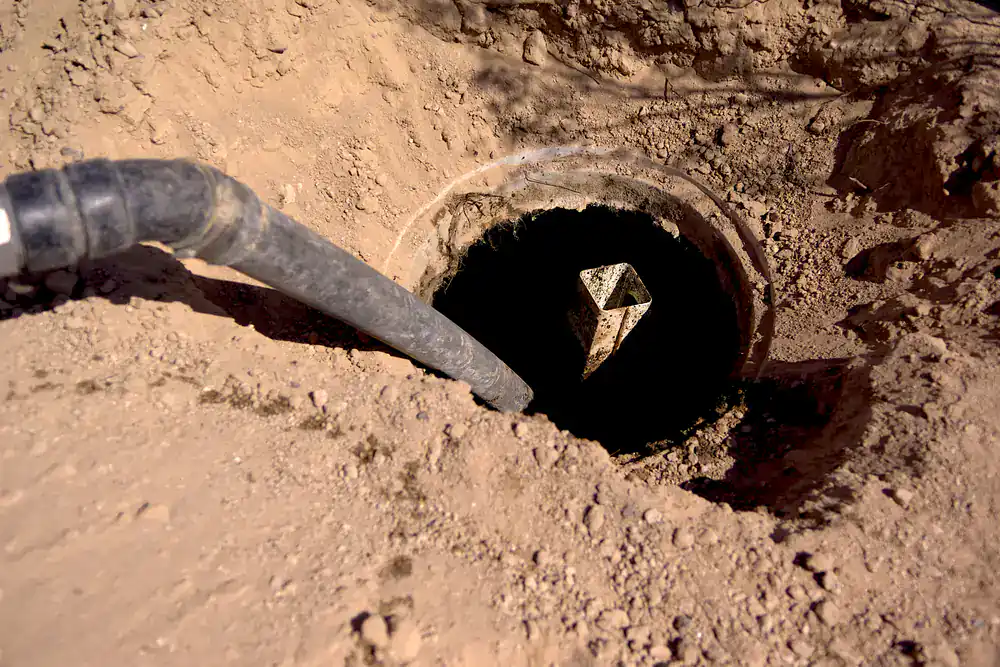
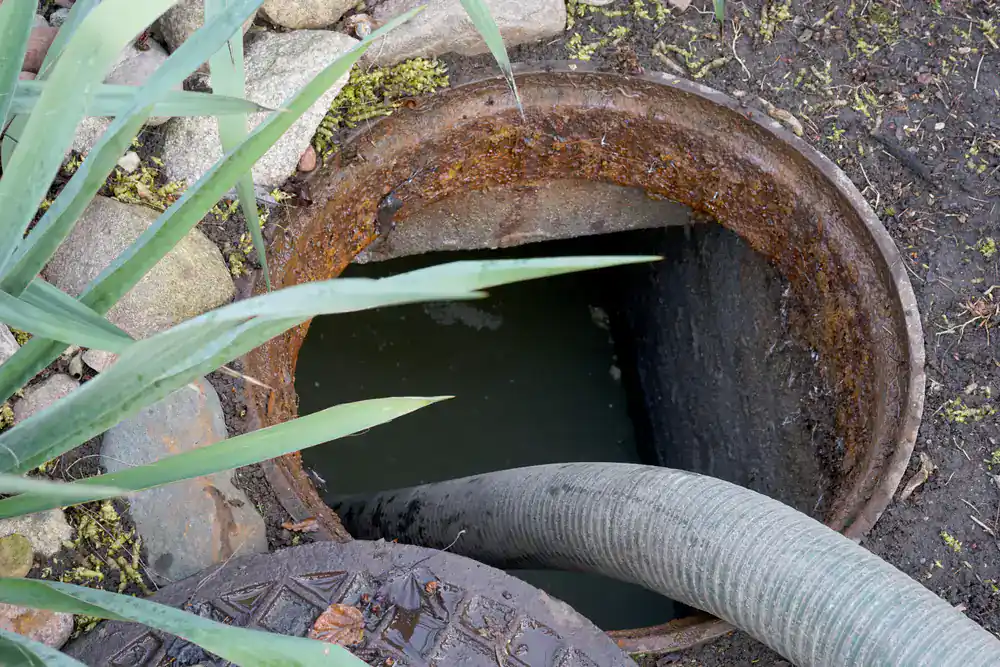
On-site, the first step is locating the tank. In Huntington Station, this is often more involved than people expect. Homes built in the 1950s and 1960s frequently have cesspool lids buried under years of soil and landscaping no markings, no records, sometimes no idea where to start. We specifically list hard-to-find cesspools as a specialty, which matters in a hamlet where this is a common, real problem.
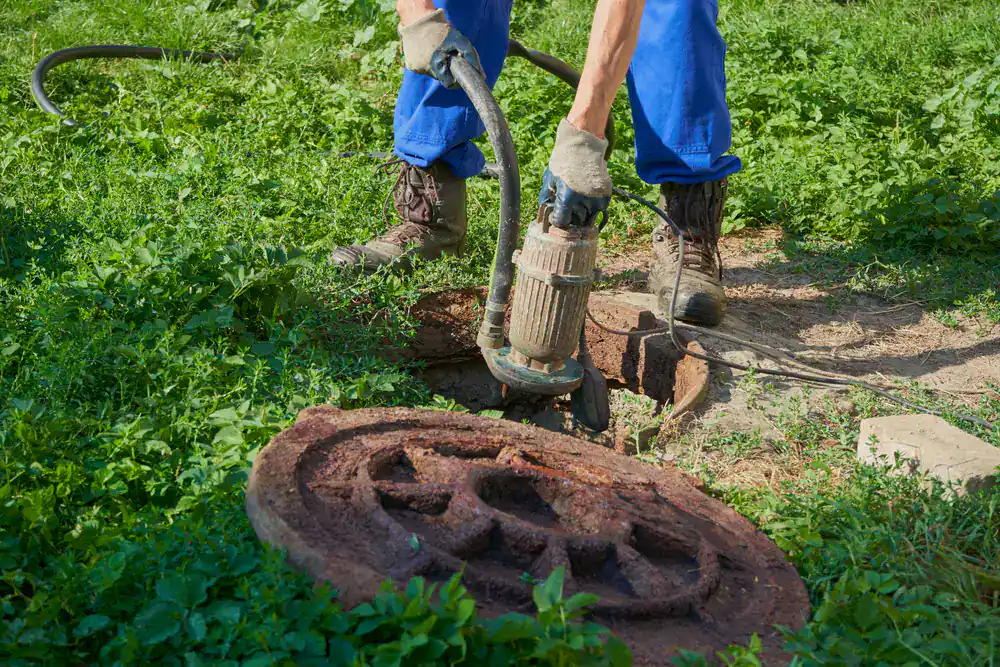
Once the lid is located and accessed, we perform a full pump-out not a partial one removing accumulated sludge and waste completely. After pumping, we assess the condition of the system: baffles, tank integrity, any signs of infiltration or damage that you should know about.
You’ll hear what was found and what, if anything, needs follow-up. If it’s just a routine pump-out and everything looks fine, that’s exactly what you’ll be told. Suffolk County’s 2019 regulatory change also means any failed system that needs replacement must be upgraded not replaced in kind so if there’s a concern, knowing early gives you options.
Ready to get started?
Septic tank pumping is the core of what brings most Huntington Station homeowners to the phone, but it’s rarely the only thing a system needs over time. We handle the full picture: cesspool pumping, septic pumping, drain cleaning, drywell cleaning, house trap replacements, main sewage line cleaning and replacement, and full cesspool or septic installation when a system reaches the end of its life. That matters when you’re dealing with older infrastructure and don’t want to coordinate three different companies for three different problems.
For Huntington Station residents specifically, a few things are worth knowing. The New York Avenue sewer project currently underway serves approximately 224 properties along a narrow commercial corridor if your home is on a residential street, you are not part of that project and your private system remains entirely your responsibility. Properties that are being connected to the new sewer line are required to properly abandon their existing cesspools, which is also a service we can handle.
For everyone else in the hamlet, the maintenance schedule hasn’t changed. Cesspools which are common in Huntington Station’s older housing stock typically need pumping every one to two years. Septic tanks generally run three to five years between service visits depending on household size and use. If you’re not sure which system you have or when it was last serviced, that’s exactly the kind of question a free estimate call is designed to answer.