

Useful Links
Other Services we provide in Huntington Station
Not every situation calls for a full replacement, but in Huntington Station, the odds are higher than average that it does. When more than half the housing stock dates to the 1940s through 1960s, a lot of the cesspools in the ground are approaching or well past their functional lifespan. A cesspool installed in 1955 was designed to last somewhere between 25 and 40 years under the usage patterns of that era. Many of them are still in the ground, running modern dishwashers, washing machines, and higher daily water loads they were never built for.
The honest answer is that you won’t know what you’re dealing with until someone actually looks at the system and evaluates it. Some situations call for pumping and maintenance. Others have already crossed the line where repair doesn’t make sense and in those cases, Suffolk County’s 2019 regulations mean the replacement has to meet current standards regardless. Getting a proper site assessment is the only way to know which category you’re in, and it’s worth doing before a slow drain turns into a full backup.
I/A OWTS stands for Innovative and Alternative Onsite Wastewater Treatment System. It’s an advanced septic system that treats wastewater more thoroughly than a conventional cesspool or basic septic tank specifically, it removes a much higher percentage of nitrogen before anything reaches the groundwater. Conventional cesspools release roughly 40 pounds of nitrogen per household per year into the soil. An I/A OWTS system can cut that by up to 70%.
Whether you need one depends on your situation. For straightforward cesspool replacements on existing residential properties, a conventional modern septic system may meet Suffolk County’s requirements. But if your project involves new construction, major renovation, or a property that triggers certain thresholds under Suffolk County’s Article 6, an I/A OWTS is required. The system type also affects your grant eligibility the Suffolk County Septic Improvement Program is specifically designed for I/A OWTS installations, which is where the up-to-$45,000 in combined funding comes in. A site assessment and conversation with a licensed installer is the right starting point for figuring out exactly what applies to your property.
The Suffolk County Septic Improvement Program commonly called the SIP provides grant funding to help homeowners cover the cost of upgrading to an I/A OWTS nitrogen-reducing system. As of July 2025, the combined state and county grant amount is up to $45,000, and Huntington Station homeowners are fully eligible. There’s no geographic carve-out for this hamlet.
The part that surprises most people is how the timing works. You have to apply for the grant and receive your grant certificate before installation begins. The funding is assigned directly to the approved installer it doesn’t come to you as a reimbursement after the fact. That means if you hire a contractor and get the work done first, you’ve already disqualified yourself from the grant. The application process involves confirming eligibility, selecting a contractor who is on the SIP approved installer list, and getting the certificate issued before any digging starts. If you’re looking at a $20,000 to $40,000 installation cost, understanding this process upfront is what makes the difference between a manageable project and one that costs far more than it needed to.
The active installation work itself excavation, system installation, abandonment of the old system typically takes one to three days for a standard residential property. What adds time is the permit process. Before any work can begin, a permit application has to go through the Suffolk County Department of Health Services, which involves submitting soil evaluation and percolation test results along with the proposed system design. That review process can add a few weeks of lead time before the crew can actually start digging.
In Huntington Station specifically, there’s a seasonal factor worth planning around. Fall tends to be when homeowners who’ve been putting off a problem finally have to deal with it and the window between September and November fills up fast because nobody wants to be trying to schedule an installation in January when the ground is frozen. If you’ve noticed signs of a failing system, the earlier you get the assessment done and the permit process started, the more scheduling flexibility you’ll have. Waiting until there’s an emergency compresses everything and limits your options.
This is one of the most common situations that brings people to the phone with a real sense of urgency, and it happens regularly in Huntington Station given how active the real estate market is and how old the housing stock is. When a home inspector flags a cesspool whether it’s age, condition, or a failed dye test it typically becomes a negotiating point or a condition of sale. Buyers ask for remediation. Sellers either need to handle it before closing or negotiate a price adjustment that accounts for it.
The challenge is that closing timelines are fixed. You can’t wait two months to find a contractor who returns calls. What you need is a licensed installer who can get out to the property quickly, give you a clear written assessment of what’s needed, and move through the permit and installation process as efficiently as possible. Suffolk County still requires permits before work begins there’s no shortcut around that but an experienced contractor who knows the SCDHS process can move through it without unnecessary delays. Getting the assessment done immediately after the inspection report lands gives you the most time to work with.
It has to be a licensed installer and not just any license. Septic and cesspool work in Suffolk County requires a Liquid Waste License issued specifically by the Suffolk County Department of Labor, Licensing and Consumer Affairs under Chapter 563, Article VII of the county code. A general plumbing license doesn’t cover it. A contractor who does this kind of work in another state or county isn’t automatically qualified to do it here.
The licensing requirement exists because the work is regulated, permitted, and inspected by the Suffolk County Department of Health Services. If an unlicensed contractor does the installation, it won’t pass inspection, permits can’t be filed under their name, and any grant funding tied to the project is off the table. Beyond the legal issues, unlicensed work on a system this significant creates real liability when you go to sell the property. Verifying that a contractor holds a current Suffolk County Liquid Waste License before signing anything is one of the most straightforward ways to protect yourself and it’s a question any legitimate installer should be able to answer immediately without hesitation.
Hear from Our Customers
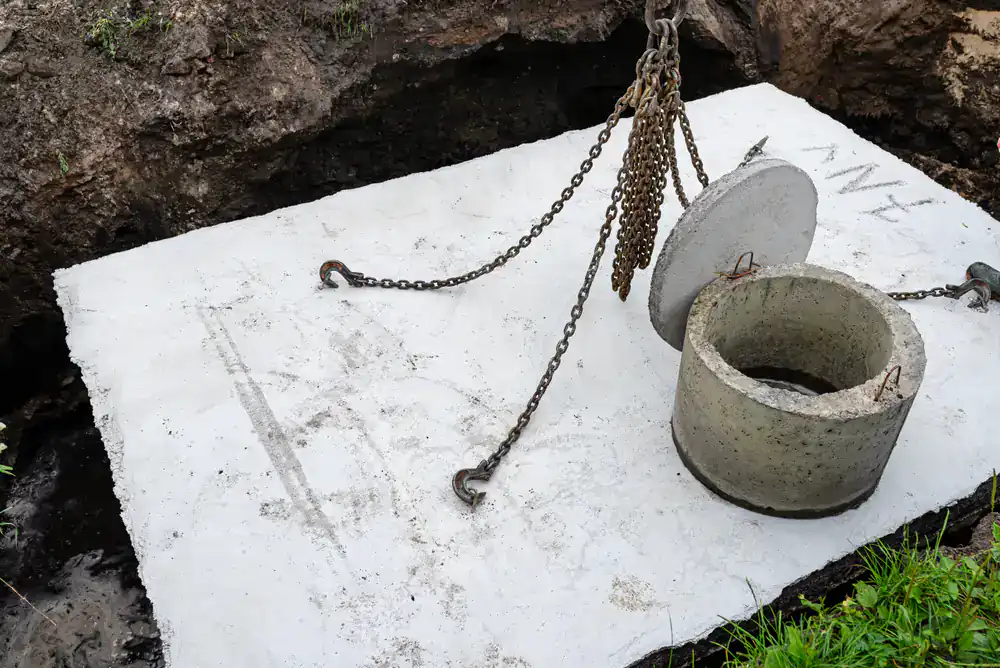
When a septic installation is handled right, you stop thinking about what’s underground. No more slow drains that don’t make sense, no wet patches showing up in the yard, no smell that you keep hoping is coming from somewhere else. The problem gets fixed at the source, properly documented, and permitted through Suffolk County not patched until the next failure.
Huntington Station has one of the oldest housing stocks in the Town of Huntington. The median construction year here is 1961, and more than half the homes were built between the 1940s and 1960s. A cesspool that went in the ground in 1958 was designed for a different era smaller households, lower water usage, none of the appliances running in a modern home today. When those systems start to go, they don’t always announce it loudly. By the time you notice something obvious, the problem has usually been building for a while.
The density here matters too. At over 6,300 people per square mile, Huntington Station is significantly more packed than most Suffolk County hamlets. When a cesspool fails in a neighborhood this tight, it doesn’t stay contained to your lot. Getting a proper system in the ground one that meets current Suffolk County standards protects your property and keeps the problem from becoming your neighbor’s problem too.
We’re a family-owned operation based in West Babylon, and Huntington Station has been part of our service territory for decades. The owner’s name is Michael Chiofalo, and the same crew that shows up on your job is the crew that has been doing this work across Nassau and Suffolk Counties since we started.
That kind of experience matters in a place like Huntington Station. The soil on Long Island’s North Shore isn’t uniform you can have two properties a few blocks apart with completely different conditions underground. Knowing what to expect, how to read a perc test result, and how to work through the Suffolk County Department of Health Services permit process without delays that comes from doing this work here, not from a national manual.
Our customers consistently mention that a real person answers the phone, that the crew shows up when we say we will, and that the work gets explained along the way. That’s not a policy it’s just how we run the business.
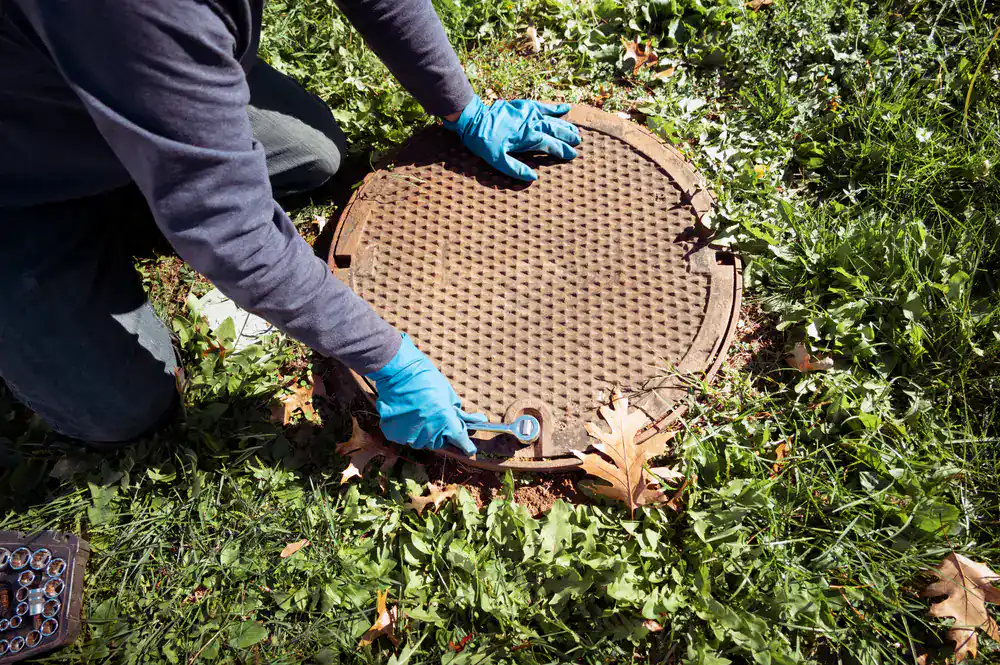
It starts with a site assessment. Before anything gets quoted or scheduled, we need to see the property where the existing system is located, what the soil conditions look like, and what Suffolk County’s Article 6 requirements mean for your specific lot. In Huntington Station, where many homes have changed hands multiple times since the 1950s and original cesspool records are often missing or incomplete, locating the existing system is sometimes the first real task. We have cesspool location experience built into the process, so you’re not starting with guesswork.
Once the site is evaluated, a percolation test gets conducted. This determines how your soil handles water drainage, which directly affects what system design is appropriate and what the permit application needs to show. The permit goes to the Suffolk County Department of Health Services no work starts before that’s in order. Most residential installations take one to three days of active work once permits are secured.
In Huntington Station, fall tends to be a high-urgency window, since homeowners who discover problems in September or October are racing to get installation completed before the ground freezes in January or February. After installation, the old system gets properly abandoned pumped, filled, and documented. You receive installation records for the new system, and a post-installation inspection gets coordinated with SCDHS. The job isn’t done until everything is filed and confirmed.
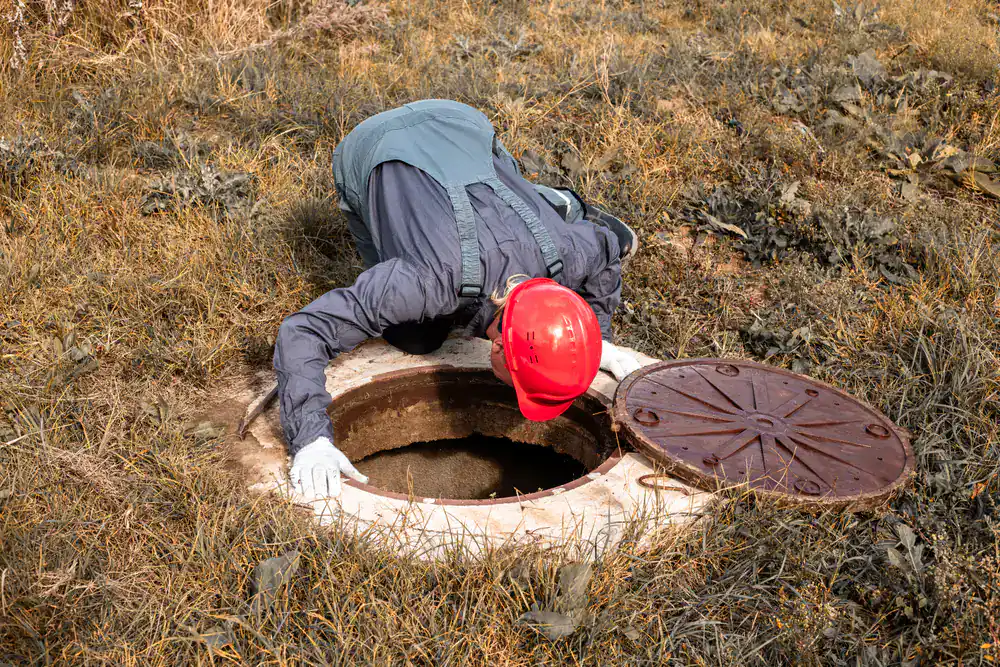
Ready to get started?
Suffolk County banned new cesspool-only installations as of July 1, 2019. That means if your existing system needs replacement whether it’s failing on its own or flagged during a home inspection what goes in the ground has to meet modern septic standards at minimum. For many properties in Huntington Station, particularly those undergoing significant renovation, the requirement steps up further to an I/A OWTS system: an innovative, advanced treatment unit that reduces nitrogen output by up to 70% compared to a conventional cesspool.
The Suffolk County Septic Improvement Program (SIP) exists specifically to help homeowners cover the cost of these upgrades. As of July 2025, combined state and county grants of up to $45,000 are available for eligible I/A OWTS installations and Huntington Station homeowners are fully eligible. One thing that catches people off guard: the grant has to be applied for and approved before installation begins. You can’t do the work first and apply for reimbursement after.
We walk through what this process looks like so nothing gets missed. Every installation includes a soil evaluation, permit filing through SCDHS, proper abandonment of the existing system, and full documentation of the new installation. We handle both residential and commercial properties. If you’re on the Nassau/Suffolk County line or dealing with a property that straddles service areas, that’s not a complication we cover both counties.
