
By submitting you consent to receive service-related texts from Drastic Drainage. Reply STOP to opt out. Msg & data rates may apply. Consent not required to book service.
Useful Links
When a cesspool is running the way it should, you don’t think about it. No odors drifting through the house, no slow drains that get worse every week, no standing water showing up in the yard after a rainstorm. That’s the baseline and it’s what routine pumping protects.
In Huntington Station, the majority of the housing stock was built between the 1930s and 1970s. That means most cesspools in this hamlet were installed during the same era single-chamber systems that were never designed to go decades without service. When those systems fill up, they don’t send a warning. The first sign is usually something you can’t ignore: a smell, a backup, or a repair bill that didn’t have to happen.
There’s also the home value side of it. Huntington Station’s median home value sits around $625,000. A cesspool that fails during a sale inspection or worse, backs up while you’re still living there isn’t just an inconvenience. It’s a direct hit to an investment that most people have spent years building. Staying on top of pumping is one of the simplest things you can do to protect it.
The short answer is: probably not. The Route 110 sewer project covers approximately 229 parcels in a narrow corridor along New York Avenue between East Second Street and East 15th Street, plus a stretch of Depot Road near the LIRR station. That’s a small slice of the hamlet. If your home is in Half Hollow, south of Jericho Turnpike, or anywhere in the broader residential neighborhoods that make up most of Huntington Station, you are not in the sewer district and your cesspool is not going anywhere.
Even for properties that are in the project area, the transition requires the existing cesspool to be properly pumped and abandoned before connecting to the municipal line it doesn’t just get capped and forgotten. Until your property is physically connected and the cesspool is decommissioned, you’re still responsible for maintaining it. If you’re not sure whether your address falls within the sewer project boundary, that’s a question worth getting answered before you assume the issue is handled.
For most residential cesspools in Huntington Station, every one to three years is the practical guideline. The exact interval depends on the size of your system, the number of people in the household, and how the system is holding up. A family of four in a 1960s Cape Cod with a single-chamber cesspool is going to fill faster than a two-person household with a larger, better-maintained system.
What makes Huntington Station specifically worth paying attention to is the age of the housing stock. A cesspool installed in 1958 has been accumulating sludge for over 60 years. Even if it pumped out cleanly five years ago, that doesn’t mean it’s operating at full capacity today. Long Island’s sandy soil and fluctuating water table especially after heavy spring rains also accelerate fill rates compared to what national guidelines suggest. If you genuinely don’t know when your system was last serviced, the answer to “how often” is: start now and go from there.
Pumping removes the liquid and the floating solids sitting on top of the waste in your cesspool. It’s the standard service most people schedule, and for a well-maintained system on a regular schedule, it’s often enough. Cleaning is more involved it means breaking up and removing the hardened sludge that builds up along the walls and floor of the chamber over time, which pumping alone won’t fully address.
If your cesspool has been on a consistent schedule and the system is relatively young, pumping is probably what you need. If you’re in an older Huntington Station home and the service history is unclear or if it’s been more than three to four years since anyone touched the system cleaning is worth asking about. Letting sludge accumulate past a certain point reduces the effective capacity of the system and puts stress on the leaching walls, which is how you end up with a much bigger problem than a cleaning would have cost. The technician will be able to tell you what they’re seeing when they open the system.
By the time something visibly goes wrong a sewage smell in the house, a drain that won’t clear, or standing water appearing in the yard the system is already past the point of simple maintenance. At that stage, you’re looking at emergency service pricing, potential excavation, and possibly a system that needs partial or full replacement. In Suffolk County, replacing a cesspool now means installing an Innovative/Alternative Onsite Wastewater Treatment System, which runs $20,000 to $40,000 or more depending on the property.
There’s also the legal side. New York State has fines ranging from $250 to $2,000 for missed pump-outs or compliance failures. And if you’re planning to sell your home in a market where Huntington Station properties are selling at median values around $625,000 a cesspool with no service history or a documented failure is a real liability during the transaction. Buyers’ attorneys increasingly request maintenance records. A gap in that paperwork, or a system that fails inspection, can delay or kill a deal that took months to put together.
This is more common than people expect, especially in Huntington Station where a large share of homes were built in the 1940s, 1950s, and 1960s. Cesspool location records from that era were often never formally documented, and previous owners may have paved over covers, landscaped around them, or simply never passed the information along. If you bought an older home and nobody handed you a diagram, you’re not alone.
Locating a cesspool typically involves a combination of methods: checking any available property records or prior inspection reports, probing the ground in likely areas based on the home’s plumbing layout, and in some cases using a camera or locating equipment. We specifically list hard-to-find cesspools as a specialty it’s not a niche situation for us, it’s a routine part of working on older Long Island housing stock. If you’re not sure where your system is, that’s the starting point, not a reason to put off calling.
The first thing to verify is a Suffolk County Consumer Affairs license. This is the legally required credential for any cesspool contractor operating in the county it’s not optional, and it’s verifiable. Any company that can’t or won’t give you a license number when you ask is a company worth passing on. Beyond that, ask whether the work is done by their own crew or subcontracted out, and ask for a written estimate before anyone starts digging.
The bait-and-switch pattern is a documented problem in this market a low number over the phone that jumps significantly once the truck is in your driveway. Getting a clear quote upfront, in writing, is the simplest way to protect yourself from that. It’s also worth asking whether the company provides written documentation of the service after the job is done. In Huntington Station, where homes are selling at significant values and buyers are asking for maintenance records, that paperwork is not just a receipt it’s part of your property’s history and it matters when the time comes to sell.
Free, no-obligation estimates on cesspool, sewer, and drain work.
We get there quickly. No waiting days for a callback.
Backups don’t wait for business hours. Neither do we.
Fully licensed and insured across Long Island.
Up-to-date trucks and tools for cleaner, faster jobs.
Straight quotes, no surprises on the bill.
Hear from Our Customers
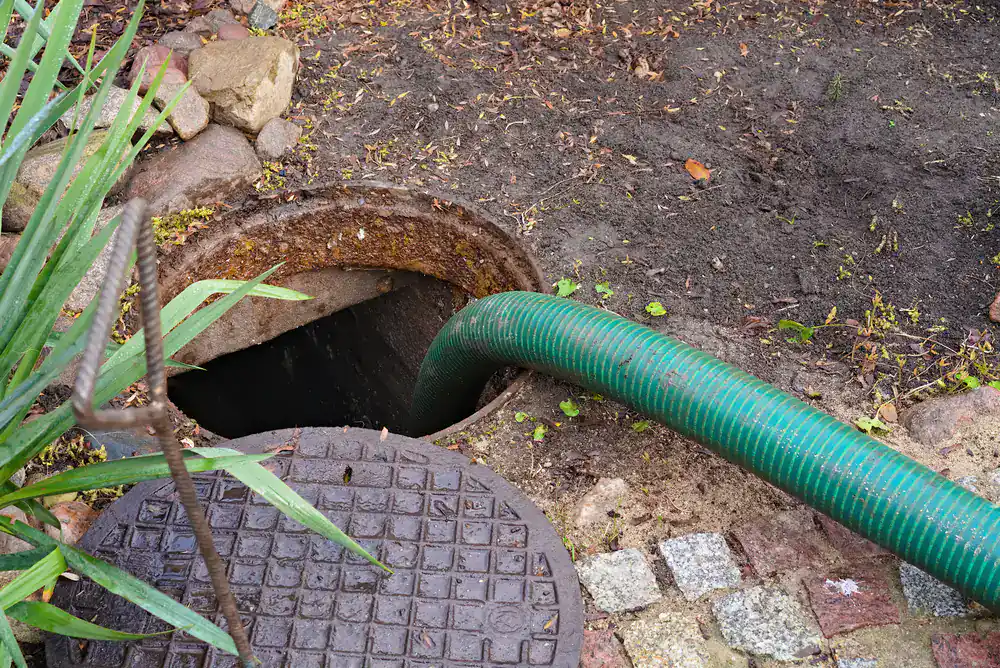
When a cesspool is running the way it should, you don’t think about it. No odors drifting through the house, no slow drains that get worse every week, no standing water showing up in the yard after a rainstorm. That’s the baseline and it’s what routine pumping protects.
In Huntington Station, the majority of the housing stock was built between the 1930s and 1970s. That means most cesspools in this hamlet were installed during the same era single-chamber systems that were never designed to go decades without service. When those systems fill up, they don’t send a warning. The first sign is usually something you can’t ignore: a smell, a backup, or a repair bill that didn’t have to happen.
There’s also the home value side of it. Huntington Station’s median home value sits around $625,000. A cesspool that fails during a sale inspection or worse, backs up while you’re still living there isn’t just an inconvenience. It’s a direct hit to an investment that most people have spent years building. Staying on top of pumping is one of the simplest things you can do to protect it.
We’ve been working on cesspools and drainage systems across Nassau and Suffolk Counties for over 30 years. That’s not a number pulled from a brochure it’s actual time spent learning how Long Island’s soil, water table, and older housing stock behave in real conditions, on real jobs.
The homes in Huntington Station the Cape Cods, the ranches, the Colonials spread through neighborhoods like Half Hollow and south of the Jericho Turnpike are exactly the kind of properties we know well. Older systems, sometimes with no documentation, sometimes buried under decades of landscaping. That’s not a problem. It’s the kind of job we’ve been doing since before most of the newer companies in this market existed.
We’re family-owned and operated, and the technicians who show up are the same people customers mention by name in their reviews. You’re not getting a subcontractor dispatched from a call center. You’re getting a crew that’s been doing this work long enough to know the difference between a system that needs pumping and one that needs more and honest enough to tell you which one you’re dealing with.
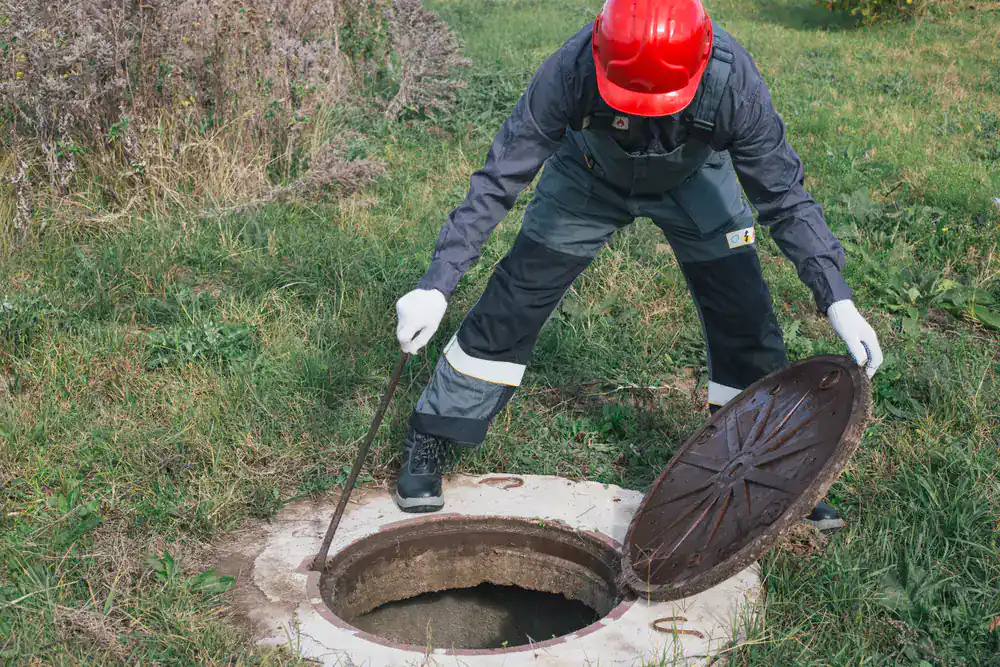
It starts with a call. We answer the phone around the clock, every day of the week which matters if you’re catching a problem on a Tuesday morning before heading to the Huntington LIRR station, or coming home to a slow drain at 9 PM and not wanting to leave it until the morning.
Once a technician arrives, the first step is locating the access point. For a lot of Huntington Station homes, this is where things get complicated. Pre-1970 cesspools were often installed without much documentation, and covers get buried under years of landscaping, paving, or simple neglect. We have a specific specialty in locating hard-to-find systems so if you don’t know exactly where yours is, that’s a solvable problem, not a dead end.
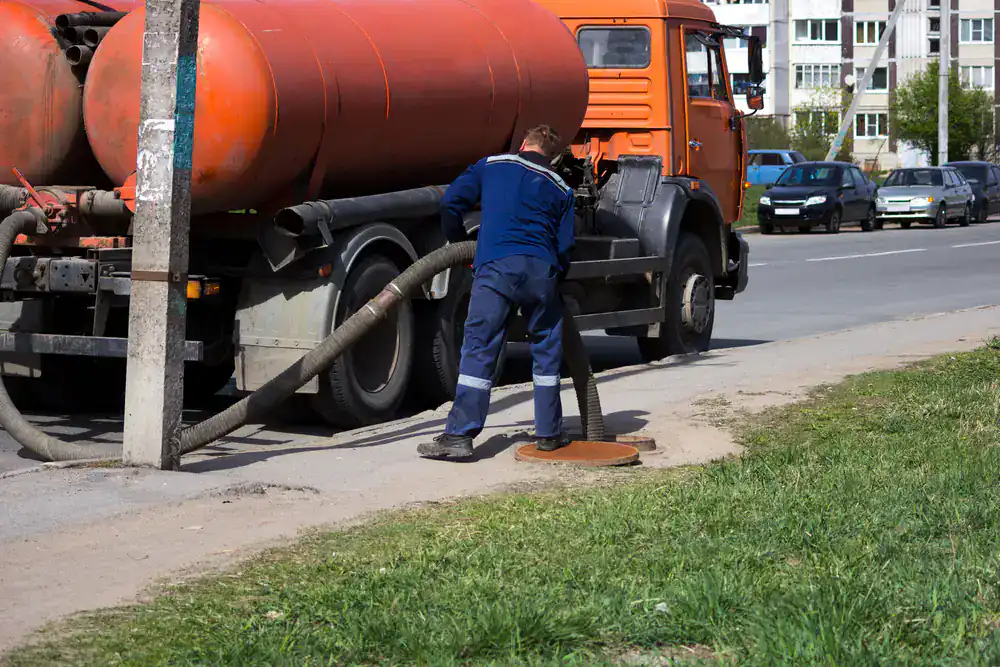
After access is confirmed, the system is pumped down fully not partially. The technician will assess what they’re seeing and let you know the condition of the system honestly. If something looks like it needs attention beyond a standard pump-out, you’ll hear about it before any additional work is discussed. Suffolk County requires licensed contractors for this work, and we operate throughout the county under those requirements. You’ll receive documentation of the service, which matters more than most people realize when it comes time to sell.
Ready to get started?
Cesspool pumping and cesspool cleaning are not the same thing, and it’s worth understanding the difference before you book. Pumping removes the liquid and floating solids from the system. Cleaning goes further it involves more thorough removal of hardened sludge that accumulates along the walls and bottom of the chamber over time. Most Huntington Station homeowners with older systems need a real cleaning at some point, not just a pump-out, especially if the service history is spotty or unknown.
We handle both, along with drain cleaning, septic pumping, and full system inspection. For properties in or near the Route 110 corridor where the new sewer project is bringing municipal service to roughly 229 parcels near the LIRR station, there’s also cesspool abandonment work involved in making the switch. That process requires the existing system to be properly pumped and decommissioned per Suffolk County guidelines it’s not something you can skip, and it’s not something every company handles cleanly from start to finish.
For the majority of Huntington Station homeowners who are not in the sewer district which is most of you the cesspool is your permanent system. Suffolk County banned new cesspool installation in 2019, meaning any replacement now requires an Innovative/Alternative Onsite Wastewater Treatment System, which runs $20,000 to $40,000 or more. A routine pump-out at $200 to $500 is not a luxury. It’s the only maintenance lever you have, and it’s a fraction of what you’ll spend if you ignore it long enough.
