By submitting you consent to receive service-related texts from Drastic Drainage. Reply STOP to opt out. Msg & data rates may apply. Consent not required to book service.
Useful Links
When your cesspool is working the way it should, you stop worrying about slow drains, strange odors, and soggy patches in the yard. You also stop being part of the nitrogen problem that’s been quietly degrading Lake Ronkonkoma for decades. That’s not a small thing if you live here.
Lake Ronkonkoma sits on a closed basin — water comes in through the ground, but it doesn’t flush out through a surface outlet. That means whatever leaches out of aging cesspools in this watershed accumulates in the lake over time. Harmful algal blooms have triggered swim closures and health warnings in recent summers. Officials have publicly said the water quality has deteriorated to the point where the beach has to be shut down. Your cesspool’s condition is directly connected to that.
The homes around Lake Ronkonkoma are also among the oldest in central Suffolk County. Many were built in the 1950s, 60s, and 70s — which means cesspools that were installed during original construction are now 50 to 70 years old, well past the typical 20 to 40 year lifespan. A properly maintained system buys you time, protects your property value, and keeps your household out of an emergency situation that’s far more expensive to fix after the fact.
It’s a fair question, and the honest answer is: possibly, yes. Lake Ronkonkoma is a closed-basin kettle lake with no surface outlet, which means nutrients that enter through the groundwater don’t flush out — they accumulate. Nitrogen from aging cesspools and septic systems has been identified by researchers and county officials as a primary driver of the harmful algal blooms that have triggered swim closures and health warnings at the lake in recent summers. Suffolk County even commissioned an innovative wastewater treatment system at Lake Ronkonkoma County Park specifically to remove over 200 pounds of nitrogen per year from the watershed.
If your cesspool is overdue for pumping or showing signs of failure — slow drains, odors, wet spots in the yard — it’s likely leaching more nitrogen into the groundwater than a properly maintained system would. Regular pumping, typically every one to three years depending on household size, significantly reduces that load. It’s one of the most direct things a homeowner in this watershed can do.
There are a few clear signals. If your system is backing up repeatedly, if you’re seeing sewage surfacing in the yard, or if a camera inspection reveals structural collapse or a leaching pool that’s completely lost its absorption capacity, those are signs that pumping alone won’t solve the problem. Age is also a factor — many homes in Lake Ronkonkoma were built in the 1950s through 1970s, which means the cesspools under them are now 50 to 70 years old. The typical lifespan is 20 to 40 years. A system that old may still be functioning, but it’s operating on borrowed time.
It’s also worth knowing that as of July 2019, Suffolk County banned new traditional cesspool installations. If your system fails and needs to be replaced, it must be replaced with an Innovative/Alternative advanced treatment system — not another conventional cesspool. These systems cost significantly more upfront, but the county’s Septic Improvement Program currently reimburses qualifying homeowners up to 75% of project cost, with a maximum of $25,000. A professional assessment tells you where your system actually stands, so you’re not caught off guard.
Proximity to Lake Ronkonkoma doesn’t automatically change your pumping schedule, but the conditions near the lake do affect how your system performs. Areas around Lake Ronkonkoma have documented shallow groundwater tables — meaning the distance between the bottom of your cesspool and the water table is smaller than in drier parts of Suffolk County. When the water table rises in spring after snowmelt and heavy rain, the effective absorption capacity of your cesspool decreases. That’s when systems that are already full or close to it are most likely to back up or surface.
The general recommendation for most Long Island households is to have the system pumped every one to three years, depending on household size and system capacity. If your home is on the smaller side of that range — say, a two-person household — you might get closer to three years between pump-outs. A larger family in a home with a 500-gallon system should be on a tighter schedule. A quick inspection can tell you where your system stands and help you set a realistic maintenance interval.
Free, no-obligation estimates on cesspool, sewer, and drain work.
We get there quickly. No waiting days for a callback.
Backups don’t wait for business hours. Neither do we.
Fully licensed and insured across Long Island.
Up-to-date trucks and tools for cleaner, faster jobs.
Straight quotes, no surprises on the bill.
Hear from Our Customers
When your cesspool is working the way it should, you stop worrying about slow drains, strange odors, and soggy patches in the yard. You also stop being part of the nitrogen problem that’s been quietly degrading Lake Ronkonkoma for decades. That’s not a small thing if you live here.
Lake Ronkonkoma sits on a closed basin — water comes in through the ground, but it doesn’t flush out through a surface outlet. That means whatever leaches out of aging cesspools in this watershed accumulates in the lake over time. Harmful algal blooms have triggered swim closures and health warnings in recent summers. Officials have publicly said the water quality has deteriorated to the point where the beach has to be shut down. Your cesspool’s condition is directly connected to that.
The homes around Lake Ronkonkoma are also among the oldest in central Suffolk County. Many were built in the 1950s, 60s, and 70s — which means cesspools that were installed during original construction are now 50 to 70 years old, well past the typical 20 to 40 year lifespan. A properly maintained system buys you time, protects your property value, and keeps your household out of an emergency situation that’s far more expensive to fix after the fact.
We’ve been servicing cesspools across Nassau and Suffolk Counties for over 30 years. That’s not a number for its own sake — it means our team has worked with the specific soil conditions, housing stock, and regulatory requirements of Lake Ronkonkoma and surrounding communities throughout our entire operating history. We know the sandy outwash soils in the southern sections of the hamlet drain differently than the heavier glacial deposits near the lake shore. We know the shallow groundwater table near Lake Ronkonkoma makes a failing system here more urgent than it would be in a drier part of the county.
Lake Ronkonkoma also spans three separate town governments — Brookhaven, Smithtown, and Islip — which means permits and inspections can route through different municipal offices depending on where your property sits. We hold License #LW-63684, are fully insured and bonded, and have navigated this kind of local regulatory complexity for decades. You get a company that already knows the lay of the land.

It starts with a phone call — and a real person answers. You describe what you’re seeing: slow drains, a smell outside, a wet spot near the yard, or maybe nothing at all and you just know it’s been too long. From there, we give you a free estimate and schedule a time that works.
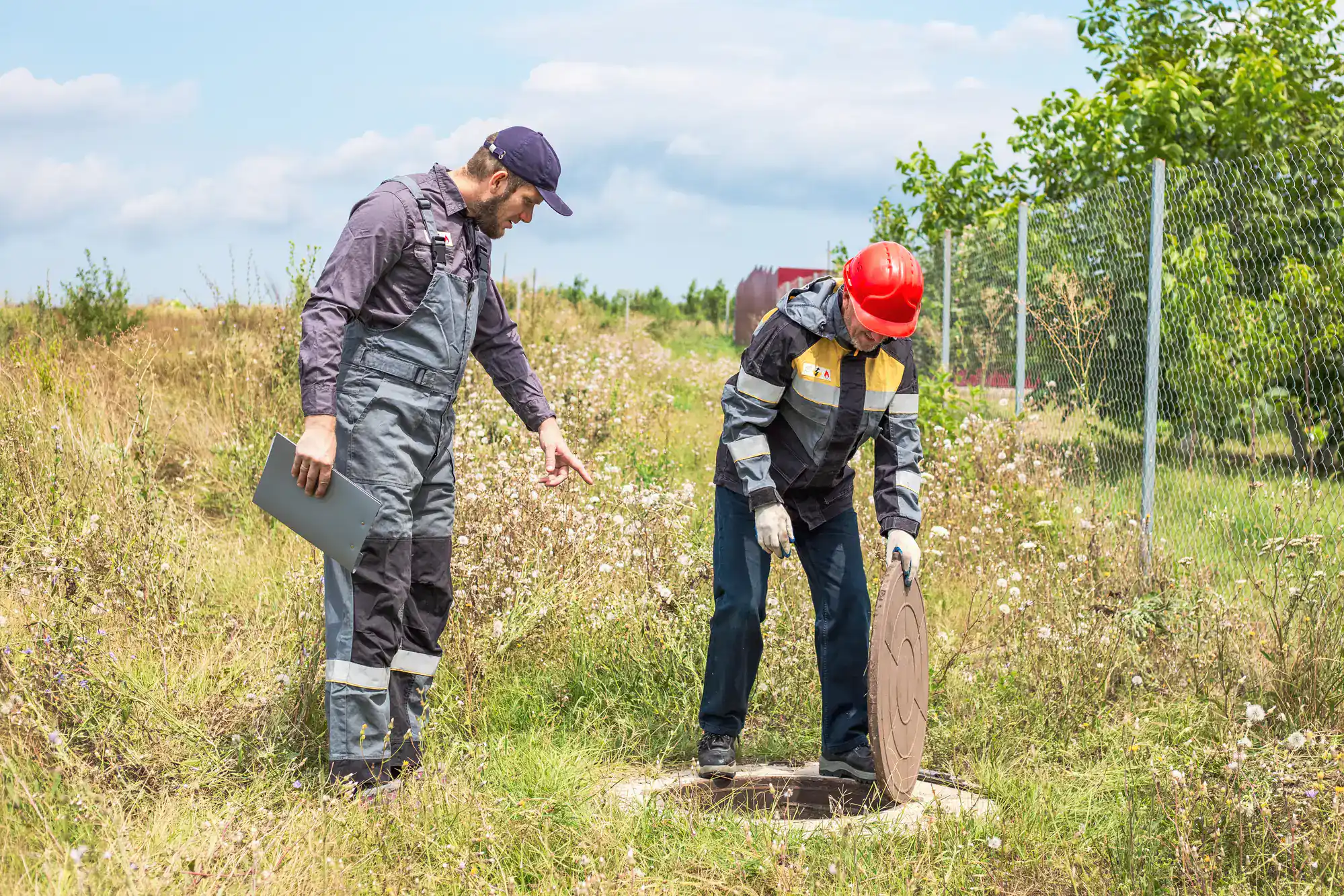
When our crew arrives, we start by locating the system if there’s no visible access point. This matters more in Lake Ronkonkoma than in newer communities — many of the older lakeshore homes and postwar ranch houses in the hamlet have cesspools with no cover visible at grade. Once the system is located and accessed, a video camera inspection goes underground before any digging happens. This is how we confirm exactly what’s going on — whether it’s a routine pump-out, a blockage in the line, a leaching pool that’s lost absorption capacity, or something that needs a more involved repair. You get a clear picture of what’s wrong and what it takes to fix it, not a guess.
If the system needs replacement, we can walk you through the current Suffolk County requirements — including the county’s Septic Improvement Program, which was expanded in 2024 to reimburse qualifying homeowners up to 75% of project cost, with a maximum of $25,000, for approved advanced treatment system upgrades. Given the county’s documented focus on Lake Ronkonkoma’s nitrogen problem, homeowners in this watershed are well-positioned to ask about eligibility.

Ready to get started?
We handle the full range of cesspool and drainage needs — from routine pumping and cleaning to video pipe inspections, cesspool location, drywell cleaning, house trap replacements, main sewage line cleaning and replacement, storm drain cleaning, and new system installation. There are no named service tiers or packages — the scope of work is determined by what your system actually needs, confirmed through inspection before anything is quoted or started.
For homeowners near Lake Ronkonkoma, a few services come up more often than they do elsewhere. Cesspool location is one of them — older homes in the lakeshore neighborhoods frequently have systems with no visible access point, and locating them requires specialized equipment. Video camera inspection is another — given the shallow groundwater table near Lake Ronkonkoma, knowing exactly what’s happening underground before excavation begins isn’t just efficient, it’s important. Unnecessary digging in areas with a high water table can create additional problems.
Real estate certifications are also a significant part of the work here. Lake Ronkonkoma’s active home sales market — with median home values approaching $570,000 — means there’s consistent demand for the detailed inspection documentation required before closing. Since 2021, certain Suffolk County property transfers can trigger an upgrade requirement to an advanced treatment system as a condition of sale, particularly for properties in environmentally sensitive zones. Proximity to the lake’s watershed can affect how that determination is made. We handle the full inspection and certification process in-house, so sellers aren’t scrambling to find documentation at the last minute.