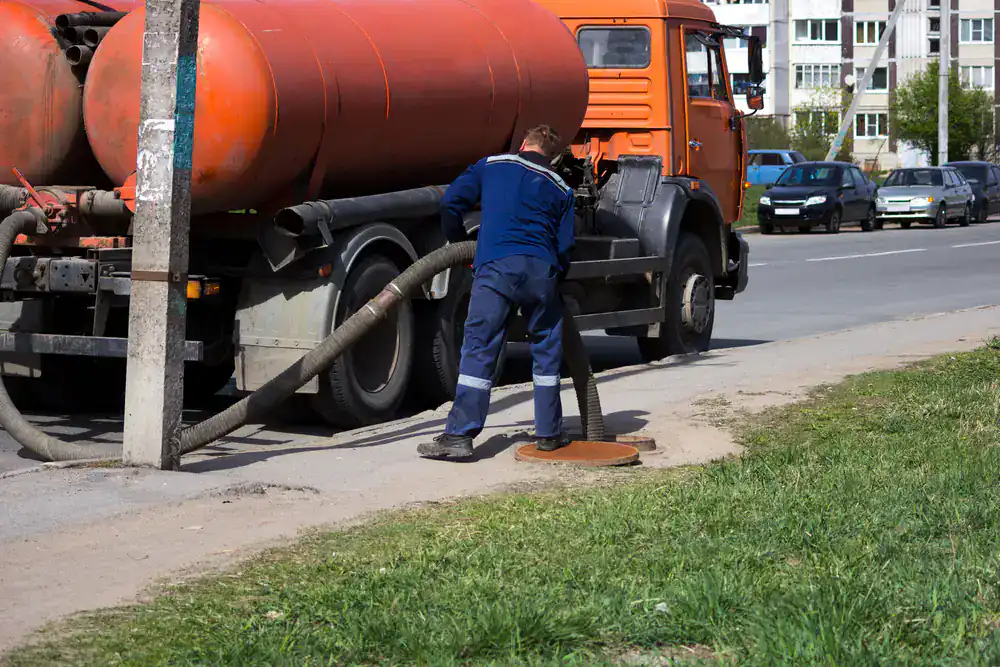
If your Smithtown home needs a new cesspool, this guide covers the full process, including permits, costs, grants, and how to avoid the mistakes that cost homeowners the most.

Most Smithtown homeowners do not think about their cesspool until something goes wrong. A wet spot in the yard. A smell that was not there last week. Or a home inspector’s report that puts your closing date in jeopardy. By that point, you are not researching your options, because you are scrambling.
This guide is for the homeowner who wants to get ahead of it. If you have a 1960s system that is running on borrowed time, a real estate transaction that just got complicated, or you simply want to understand what cesspool installation in Smithtown involves, you are in the right place.
A lot of homeowners picture cesspool installation as a quick swap consisting of pulling out the old tank, dropping in a new one, and finishing up. The reality is more involved, and understanding the process upfront saves you from surprises mid-project.
Installation starts with a site assessment. Before any equipment shows up, the soil needs to be evaluated for percolation, distances to wells and property lines need to be verified, and the existing system needs to be located. In older Smithtown neighborhoods like Kings Park and St. James, it is common for homeowners to have no records of where their system is or how it was originally built. That is not unusual. It just means your contractor needs the right equipment and experience to work with the existing layout.
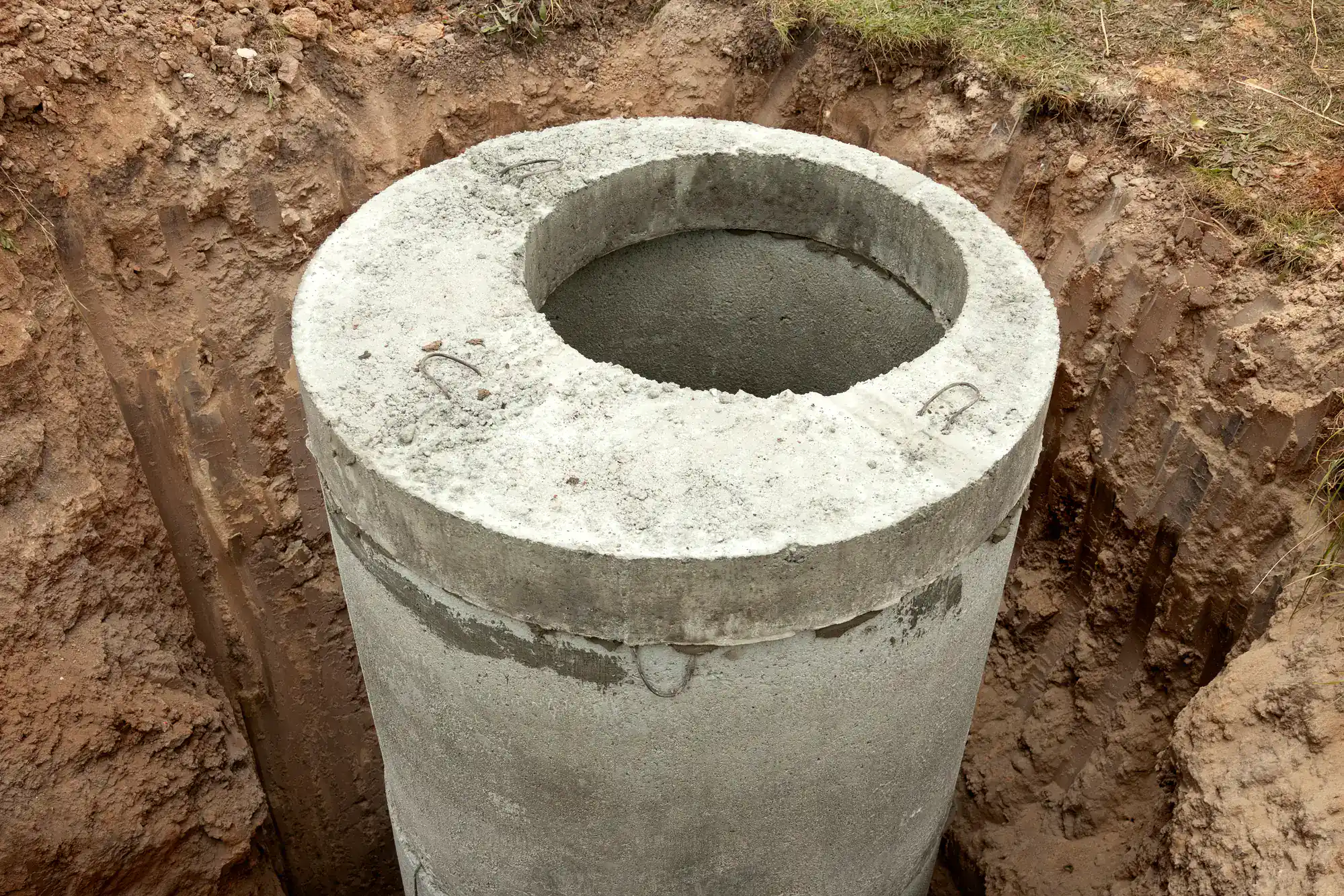
Once the site is assessed and permits are approved, the installation moves through excavation, tank placement, leaching structure setup, connection to your home’s existing sewer line, and backfill. When the work is complete, a final SCDHS inspection is required before the system goes live. That inspection is the checkpoint confirming the installation was done correctly and to code.

Every cesspool installation in Smithtown and across Suffolk County requires a permit through the Suffolk County Department of Health Services. This is not optional, nor is it a formality. Skipping it creates real problems, including fines, forced redo work, and complications when you eventually sell the property. Buyers’ attorneys and mortgage lenders are increasingly thorough about cesspool documentation, and a system installed without permits is a liability rather than an asset.
The permit process typically takes two to four weeks from application to approval. During that window, SCDHS reviews the proposed system design, confirms it meets setback requirements of at least 100 feet from any water well and 20 feet from property lines, and issues the permit before any excavation begins. Permit costs generally run between $200 and $500 depending on the system size and scope of work.
We handle all of the permitting in-house, covering the paperwork, the scheduling, and the inspections, so you do not have to become an expert in Suffolk County sanitary code just to get your system replaced. A company that pulls its own permits and manages SCDHS coordination from start to finish provides a very different experience from one that hands you a permit application and tells you to figure it out.
One critical detail is that Suffolk County banned traditional cesspool installation in 2019. Any new installation or replacement today must meet current standards, requiring at minimum a conventional septic system with a tank and leaching structure. For new construction or major renovations, Suffolk County now requires I/A OWTS (Innovative and Alternative Onsite Wastewater Treatment Systems), which are nitrogen-reducing systems designed to protect Long Island’s groundwater and coastal waters. If you are doing significant work on your property, understanding which standard applies to your situation before you start is essential.
This is the question every homeowner asks first, and the honest answer is that it depends, though not in a vague, unhelpful way. There are specific factors that drive the range, and knowing them helps you understand why quotes can vary significantly from one contractor to the next.
For a standard residential cesspool replacement in Suffolk County, costs typically fall between $4,500 and $9,500. Properties with difficult site conditions, limited access, or more complex system requirements can reach $15,000 or more. If your situation calls for an advanced nitrogen-reducing I/A OWTS system, the cost before grants generally runs between $19,200 and $25,000.
That last number is where a lot of homeowners stop reading, but it should not be, because the Suffolk County Septic Improvement Program changes the math significantly. The program offers a base grant of up to $10,000 toward I/A OWTS installation, plus an additional $1,000 for pressurized shallow drainfield systems. Combined with available state funding, grants can reach up to $30,000. The Town of Smithtown actively participates in this program and maintains its own Residential Septic Improvement Program page through the town government.
Here is what every homeowner needs to understand about the grant program: The money is paid directly to your contractor after installation, meaning you do not pay upfront and wait for a reimbursement check. Second, the grant must be applied for and approved before any work begins. Starting the job without grant approval means forfeiting the funding entirely, as there is no retroactive path back in.
The grant program operates on a first-come, first-served basis. If you have been putting off a system replacement because of cost concerns, the grant window provides a real reason to act sooner rather than later.
Want live answers?
Connect with a Drastic Drainage expert for fast, friendly support.
Smithtown is not just any Suffolk County town. Its position on the North Shore, with groundwater flowing toward the Nissequogue River, Stony Brook Harbor, and Smithtown Bay, puts it squarely in the middle of the county’s water quality conversation. Smithtown Bay is a designated nitrogen priority water, and older cesspools that predate modern treatment standards are a direct contributor to the problem.
However, the environmental picture is not the main reason most homeowners call us. The more immediate reality is the housing stock. Large sections of Smithtown Village, Kings Park, and St. James were built during the postwar era spanning the 1950s through the 1970s, and the cesspools installed back then were never connected to septic tanks. They discharged directly into the soil without any treatment. Many of those systems are now 50 to 70 years old. Some are still functioning, while many are not or will fail soon.
The obvious signs are easy to recognize: slow drains throughout the house, wet or spongy ground over the cesspool area, sewage odors in the yard or near drains, or a system that needs to be pumped far more frequently than it used to. If you are calling for cesspool pumping every few months instead of every year or two, the system is telling you something.
What is less obvious, yet more common in Smithtown’s older neighborhoods, is a system that appears functional but is quietly past its useful life. Pre-1970s cesspools that were not connected to septic tanks did not treat wastewater. They simply allowed it to leach into the surrounding soil. Over decades, that soil becomes saturated and loses its ability to absorb effectively. The system does not fail dramatically, but rather stops working by degrees.
The other trigger we see regularly in Smithtown is real estate. A home inspection flags a failing or non-compliant cesspool, and suddenly a homeowner who had no plans to replace anything faces a strict deadline. In a market where Smithtown homes move quickly and at meaningful valuations, a cesspool issue discovered at closing can delay or kill a deal. Getting ahead of it by having the system inspected, documented, and replaced if needed before you list protects your timeline and your sale price.
For homeowners who genuinely are not sure what they have, we use electronic locating equipment to find systems when records do not exist. In a town like Smithtown where houses change hands multiple times over 60 years and paperwork gets lost, this service matters. We find what is there, assess it honestly, and tell you what you need rather than what generates the largest job.
The cesspool industry on Long Island has a reputation problem. It is not universal, but it is real, and it is why so many homeowners approach contractor conversations with their guard up. Stories about manufactured urgency, inflated quotes, and work done without permits are common enough that healthy skepticism is warranted.
The first thing to verify is licensing. In Suffolk County, cesspool installation requires a Suffolk County Consumer Affairs Liquid Waste License, which is the specific credential that legally authorizes a contractor to perform this work. Ask for the license number before you agree to anything. A legitimate company will provide it without hesitation. We carry Suffolk County Liquid Waste License #LW-63684, and we are fully insured and bonded. If a contractor cannot produce current credentials on request, that gives you your answer.
Beyond licensing, ask if the company pulls its own permits. Some contractors skip this step entirely and hope no one notices, while others tell homeowners permits are not required. Neither practice is acceptable. Every cesspool installation in Suffolk County requires SCDHS permits, and a contractor who tells you otherwise is either uninformed or cutting corners that will become your problem later.
Ask if they subcontract the work. It is more common than homeowners realize when a company takes the job and hands it off to a crew they do not directly supervise. When something goes wrong, accountability evaporates. We use our own crew for every job from start to finish. The same people who pull the permits are the ones doing the excavation, the installation, and the site restoration.
Finally, pay attention to how a contractor talks about what you need. An honest assessment sometimes means telling a homeowner their system is fine and does not need replacement. We do that. If cesspool pumping is all your situation calls for, we will say so. The goal is to provide accurate information rather than maximizing the size of the job.
Cesspool installation in Suffolk County involves more moving parts than most homeowners expect, including permits, regulatory requirements, grant programs, and a contractor selection process where the wrong choice creates problems that outlast the job itself. The good news is that none of it is unmanageable when you work with someone who knows the process and handles it straight.
We have been doing this work on Long Island for over 30 years. We know Smithtown’s housing stock, we know the SCDHS permit process, and we know how to give homeowners a clear picture of what they are dealing with, free of pressure and without handing the job off to someone else once we take your deposit.
Ready to Address Your Cesspool Needs in Smithtown?
Do not wait for a complete system backup or a failed home inspection to address your cesspool issues. Contact Drastic Drainage Long Island today for a free estimate and professional guidance tailored to your property.
Related reading: Septic System Installation in Brookhaven: Law & Costs and Cesspool Maintenance Tips After Installation. You can also see our full cesspool installation service.
Summary:
Article details:
Share: