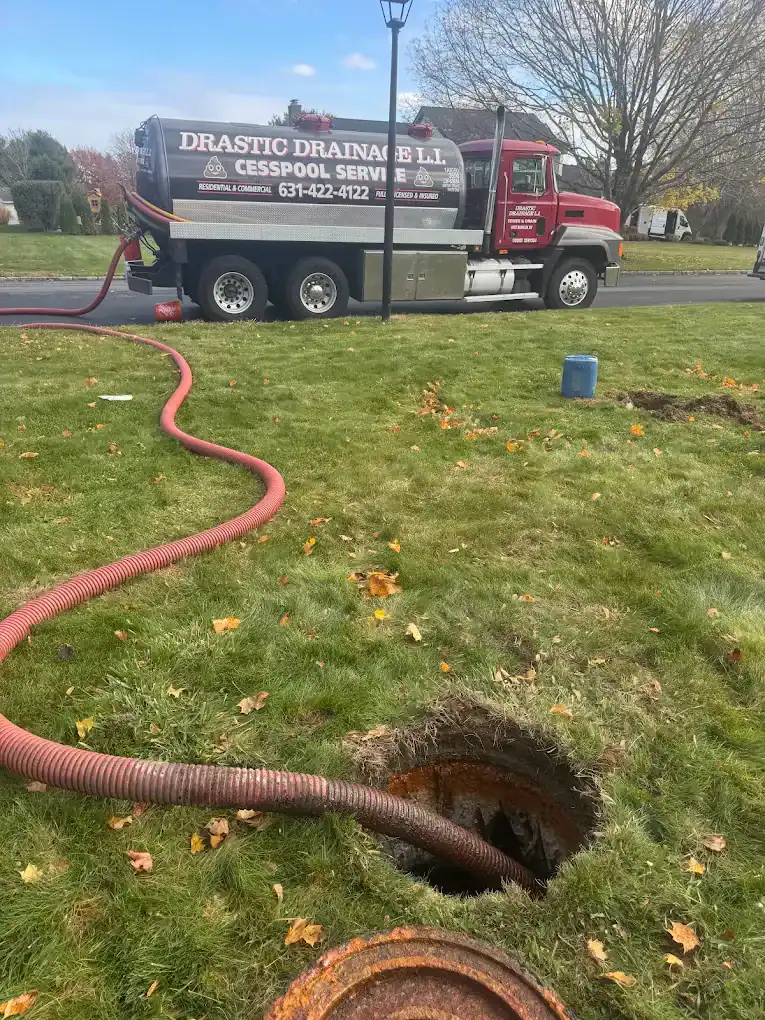
Commercial septic installation in Riverhead comes with rules most property owners don't know about until it's too late. Here's what to expect before you break ground.
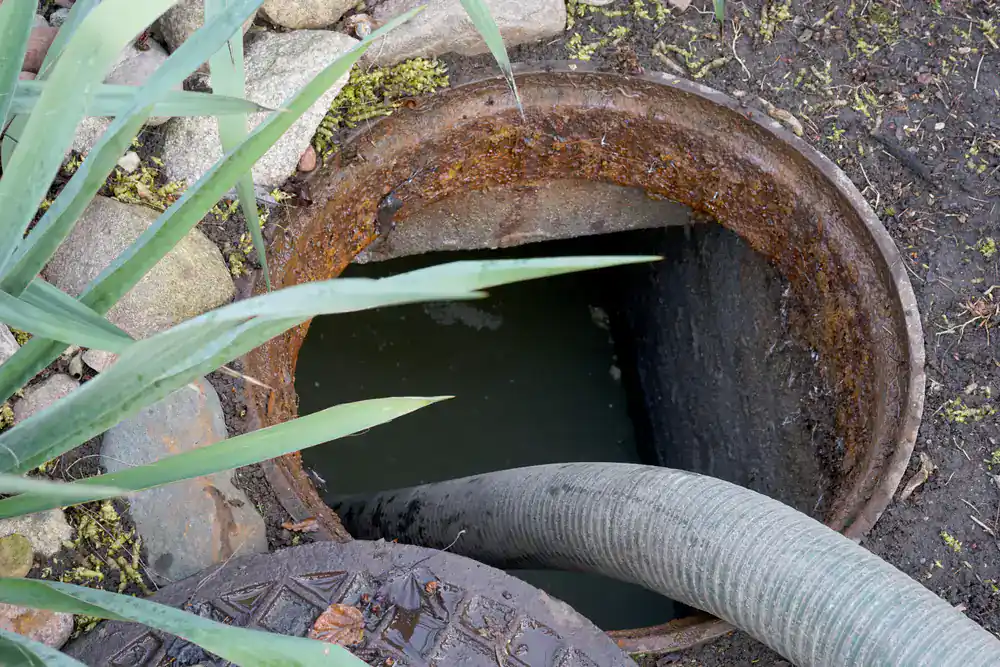
Most of the information out there about septic system installation is written for homeowners. If you’re a commercial property owner, developer, or business operator in Riverhead trying to figure out what a new system actually involves — the permits, the costs, the timeline, the regulations — you’ve probably noticed that nobody seems to be talking directly to you.
That’s the gap this guide is meant to fill. We’ve been working in Suffolk County for over 30 years, and we’ve seen what happens when commercial buyers go into this process without a clear picture. It doesn’t have to be that way. Here’s what you actually need to know.
Commercial septic installation isn’t just residential work scaled up. It’s a different category of project, with different engineering requirements, different permitting pathways, and significantly more at stake if something goes wrong.
For residential properties, system sizing is primarily based on bedroom count. For commercial properties in Suffolk County, it’s based on daily flow rates — the volume of wastewater your building is expected to generate based on its use type. A restaurant, a medical office, and a retail center all produce wastewater at different rates, and the system has to be designed around those specifics.
When projected daily flow exceeds 1,000 gallons, Suffolk County requires engineer-certified plans before any permit will be approved. That’s a hard threshold, and it catches a lot of commercial owners off guard. We’ve seen projects delayed months because the initial design didn’t account for this requirement.

If you haven’t looked into this recently, here’s what changed: as of July 1, 2019, you can no longer replace a failed cesspool with another cesspool anywhere in Suffolk County. The replacement system must include at minimum a conventional septic tank preceding a leaching structure. That rule applies to residential and commercial properties alike.
Then, as of July 1, 2021, new construction in unsewered areas of Suffolk County — which includes most of Riverhead outside the Calverton Sewer District — requires an Innovative and Alternative Onsite Wastewater Treatment System, commonly called an I/A OWTS. These systems are designed to remove nitrogen from wastewater before it reaches the groundwater. Conventional cesspools and older septic systems remove very little nitrogen, which is a serious problem in a county where the groundwater feeds both private wells and the Peconic Bay estuary.
For commercial property owners in Riverhead, this matters in a practical way. If you’re building new, you’re almost certainly required to install an I/A OWTS system. If your existing system fails and triggers a mandatory replacement, the same rules apply. Understanding this before you start planning — not after a contractor has already quoted you for a conventional system — is the difference between a smooth project and an expensive restart.
The Calverton Sewer District, which covers approximately 550 acres of the former Grumman property, is the primary sewered industrial zone in Riverhead. If your commercial property falls outside that boundary, or outside the smaller Riverhead Sewer District, private septic is your only option. Most commercial development in the town — including the active pipeline of retail conversions, medical office builds, and affordable housing projects currently underway — falls into that category.
Many Riverhead neighborhoods are designated by Suffolk County as priority areas for advanced septic systems. That designation exists because of the town’s proximity to sensitive water bodies, including the Peconic Bay. It also means that grant applications for qualifying I/A OWTS installations from Riverhead are prioritized for financial assistance — something we’ll come back to.
The Suffolk County Department of Health Services oversees the permitting process for all new septic installations and replacements in the county. For commercial projects, the process is more involved than for residential work, and the timeline reflects that.
Before any permit application can be submitted, the site needs to be assessed. That means soil testing and percolation testing to understand how the ground will handle drainage, a survey to document setback distances, and — for commercial systems with daily flows over 1,000 gallons — a full set of engineer-certified plans. Setback requirements in Suffolk County include a minimum of 10 feet from property lines for the septic tank itself, 20 feet for the absorption field, and 100 feet from any surface water body or private well.
On a constrained commercial site in Riverhead, those numbers can significantly affect where a system can be placed. We’ve worked on properties where setback requirements eliminated half the available land before design even began.
Once the engineered plans are submitted to SCDHS, the review process takes time. Permit delays are one of the most common sources of frustration for commercial developers in this market, and they’re almost always tied to incomplete submissions or plans that don’t account for site-specific conditions. Having a contractor who has been through this process many times in Suffolk County — and who handles permit acquisition on your behalf — is one of the most practical ways to keep a project on schedule.
After the permit is approved, the installation itself follows a defined sequence: site preparation and excavation, tank placement, connection of inlet and outlet lines, installation of the leaching structure or I/A OWTS components, and final grading. For I/A OWTS systems, the installing contractor must hold a manufacturer-issued installation training certificate before the work can legally proceed. That’s not a technicality — it’s a requirement that disqualifies a meaningful portion of contractors who haven’t kept their credentials current.
We carry a Suffolk County Liquid Waste License (LW-63684) and maintain current I/A OWTS certifications across our team. You can verify our license directly with the Suffolk County Department of Citizen Affairs.
Want live answers?
Connect with a Drastic Drainage expert for fast, friendly support.
Cost is usually the first question, and the honest answer is that it varies — but not randomly. The range is wide because the variables are real: system type, site conditions, daily flow requirements, and whether the project triggers I/A OWTS requirements all affect the final number.
For a conventional septic system installation in Suffolk County, costs typically fall between $8,000 and $15,000. For an I/A OWTS installation — which is now required for new construction in unsewered areas — the range is generally $15,000 to $30,000, and can reach higher on sites with challenging soil conditions or tight setback constraints. These figures are for the installation itself, before any grant funding is applied.
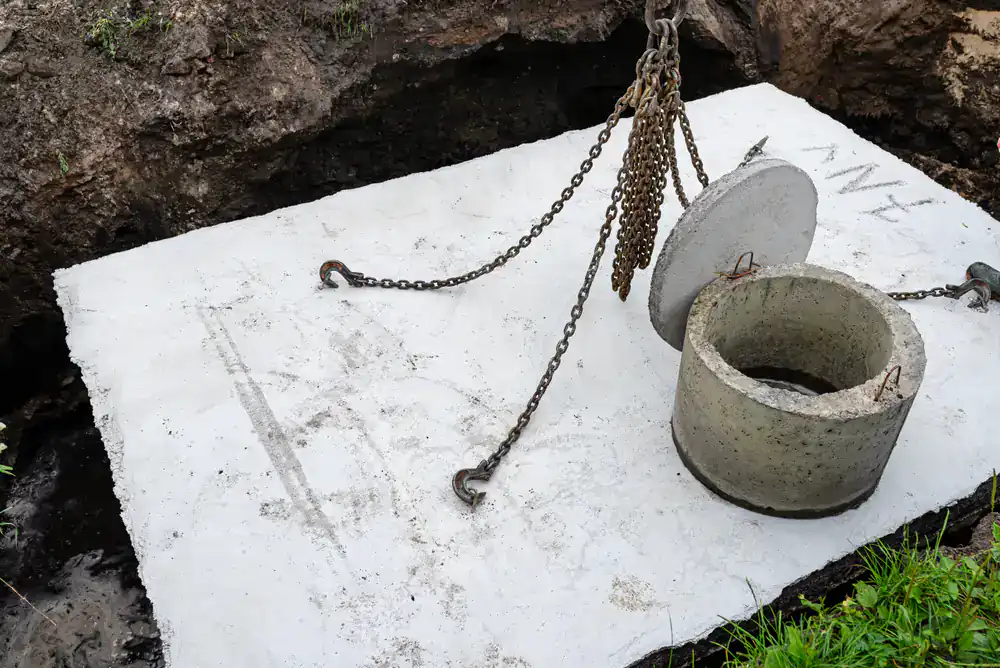
The short answer is: it’s worth asking. The Suffolk County Septic Improvement Program and the New York State Septic System Replacement Program together offer combined grants of up to $20,000 to $30,000 for qualifying I/A OWTS installations. These programs have historically been structured around residential properties, but the financial landscape is shifting.
In July 2025, New York State expanded its septic grant program and increased funding specifically for Suffolk County. Riverhead neighborhoods, given their priority designation for advanced septic systems, are among the areas most likely to see applications approved. The program expansion also signals a broader policy direction — the state is actively trying to accelerate the replacement of outdated wastewater systems on Long Island, and the funding is reflecting that urgency.
If you’re planning a commercial installation and you haven’t asked your contractor about current grant eligibility, it’s a conversation worth having before you finalize your budget. The rules around commercial eligibility are evolving, and a contractor who’s paying attention to the grant landscape — rather than just quoting the installation — is going to give you a more complete picture of what your project actually costs net of available assistance.
The alternative to proactive planning is reactive replacement. A septic system that fails on an active commercial property doesn’t just mean a repair bill. It means potential business interruption, possible health code involvement, and a mandatory replacement that happens on the county’s timeline, not yours. At that point, the grant window may be closed, the permit process is compressed, and your options are limited. The $15,000 to $25,000 you might spend on a planned I/A OWTS installation looks different when the alternative is an emergency replacement with no flexibility on timing or scope.
The first thing to verify is the license. Any contractor doing septic or cesspool installation work in Suffolk County is required to hold a Suffolk County Liquid Waste License issued by the Department of Citizen Affairs. Ask for the license number before you schedule anything. If a contractor can’t provide it, that’s your answer.
Beyond licensing, commercial septic work requires a contractor who understands the specific regulatory environment in Suffolk County — not just general septic knowledge. Article 6, I/A OWTS requirements, SCDHS commercial permitting, engineer certification thresholds, setback documentation — these are not details a contractor can look up on the fly. They need to have navigated this process repeatedly, in this county, on commercial projects, to do it efficiently.
Ask whether the contractor will handle permit acquisition on your behalf. This is standard practice among experienced operators and it matters more on commercial projects, where the permit process is more involved and delays are more costly. Ask whether they’ve worked on commercial properties with similar use types and daily flow requirements. Ask for references from local projects in Riverhead or nearby areas. These aren’t unreasonable questions — they’re the right ones.
It’s also worth asking about electronic locating equipment. Older commercial properties in Riverhead sometimes have buried systems with no documentation — no records, no markers, nothing. Before any design work or permit submission happens, you need to know what’s already in the ground. Electronic locating equipment is how you find it. Not every contractor invests in it, and on a site with an undocumented legacy system, that gap can turn into a significant problem.
Finally, get your estimate in writing before any work begins. Price variation in this market is real — the gap between a low quote and a complete quote can be substantial, and the difference often comes down to permit compliance, system quality, and whether the contractor is doing the work correctly or cutting corners that will surface later. A written estimate that covers the full scope protects you.
Commercial septic installation in Riverhead is manageable when you go into it with the right information. The regulations are real, the permitting process takes time, and the cost range is wide — but none of that is unnavigable if you start planning before you’re in a crisis.
The most important things to take away: know what Article 6 requires for your property type, understand whether your project triggers I/A OWTS requirements, verify your contractor’s Suffolk County license before you commit to anything, and ask about the grant landscape before you finalize your budget. These aren’t complicated steps. They’re just the ones most commercial owners skip because nobody walked them through it first.
If you’re at the planning stage and want a straight answer on what your project involves, Drastic Drainage Long Island is available for free estimates and can walk you through the permit process from start to finish. Call (631) 422-4122 — same-day service is available.
Restaurants and commercial kitchens also need regular grease trap cleaning, and a new system should go on a septic pumping schedule. For the residential side, read Septic System Installation in Brookhaven: Law & Costs.
Summary:


Article details:
Share: